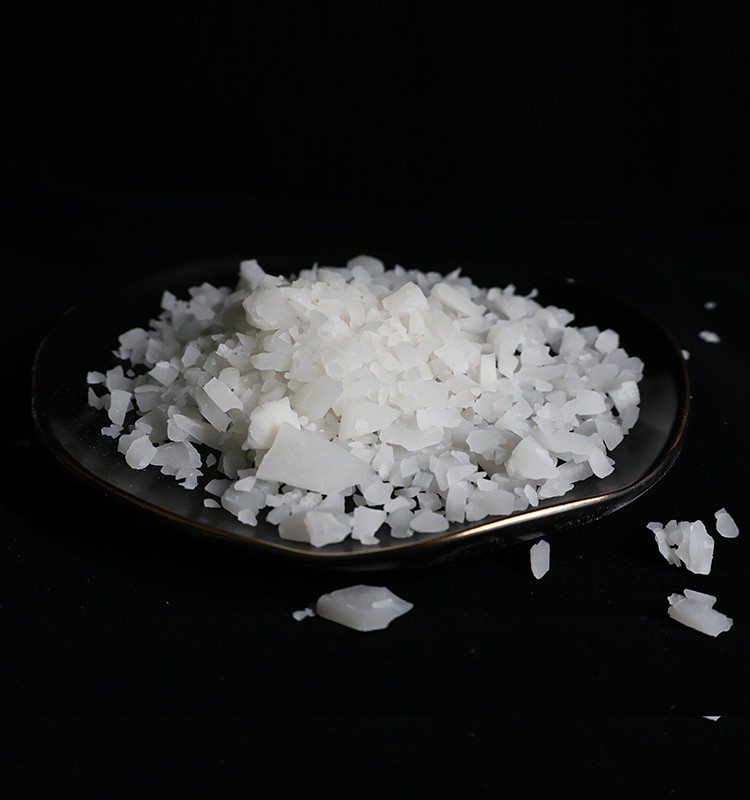


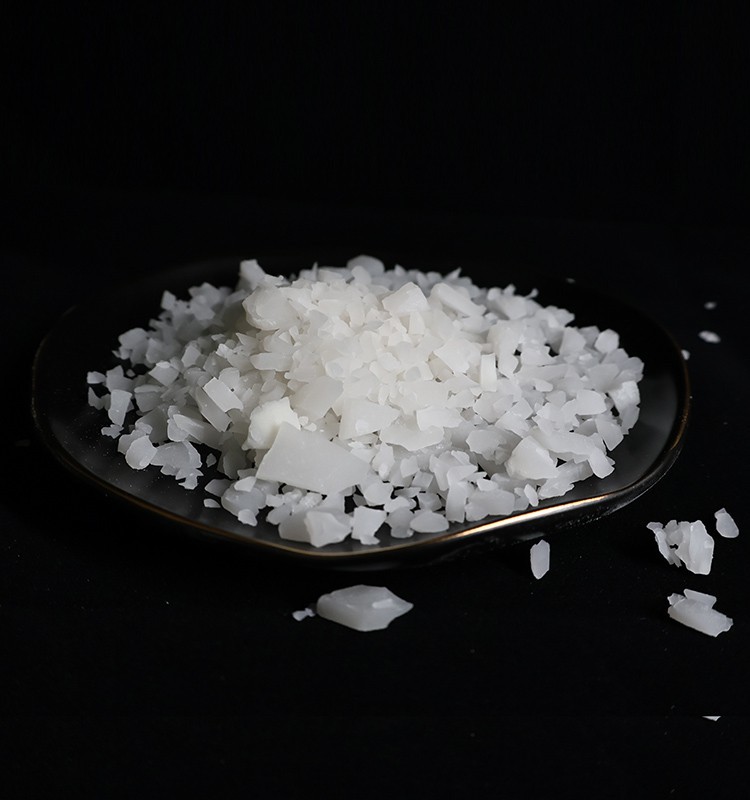
Aluminium sulfate,a compound with the chemical formula Al₂(SO₄)₃,is a substance that has woven itself into the fabric of numerous industrial and environmental processes.Derived from the combination of aluminium ore and sulfuric acid through well-established manufacturing methods,it exists in various forms—most commonly as a white crystalline solid or a colorless to pale yellow aqueous solution.What makes this compound noteworthy is its inherent chemical versatility,which allows it to interact with a wide range of substances under different conditions,making it a staple in sectors where efficiency,reliability,and compatibility are valued.Unlike many specialized chemicals that serve narrow purposes,aluminium sulfate’s utility spans across diverse fields,from water treatment to construction,agriculture to paper manufacturing.Its presence in these industries is not merely a matter of convenience but a result of its ability to deliver consistent performance without excessive complexity or environmental strain when used as directed.As we delve into its properties,advantages,and applications,it becomes clear why aluminium sulfate remains a trusted choice for professionals seeking effective solutions to everyday challenges.
Key Properties and Characteristics
Aluminium sulfate exhibits a set of physical and chemical properties that underpin its widespread use.In its solid form,it typically appears as odorless,crystalline flakes or granules with a slightly bitter,astringent taste—though it is important to note that the compound is not intended for human consumption.Its solubility in water is one of its most defining features:it dissolves readily in both cold and warm water,forming a slightly acidic solution due to the hydrolysis of aluminium ions.This acidic nature plays a crucial role in many of its applications,particularly in pH adjustment and coagulation processes.When heated,aluminium sulfate undergoes dehydration,losing its water of crystallization(often present as Al₂(SO₄)₃·18H₂O in its hydrated form)and transitioning to an anhydrous state at elevated temperatures.This thermal stability,within reasonable temperature ranges,makes it suitable for use in processes where moderate heat is involved.
Chemically,aluminium sulfate is known for its coagulating and flocculating properties,which arise from its ability to form positively charged aluminium hydroxide complexes when dissolved in water.These complexes interact with negatively charged particles in suspensions,causing them to aggregate into larger,heavier flocs that can be easily separated.Additionally,the compound demonstrates mild corrosive properties towards certain metals,a factor that influences storage and handling practices but does not hinder its utility when appropriate precautions are taken.Its compatibility with a range of other chemicals,including bases,oxidizing agents,and some polymers,further expands its application potential,allowing it to be integrated into multi-step processes without compromising performance.
Core Advantages
One of the most significant advantages of aluminium sulfate is its cost-effectiveness.Compared to many alternative chemicals used for similar purposes(such as ferric sulfate or synthetic polymers),aluminium sulfate is often more affordable to produce and purchase,making it an economical choice for large-scale applications where high volumes are required.This cost efficiency does not come at the expense of performance,as it consistently delivers reliable results in coagulation,pH adjustment,and other key functions.
Another key advantage is its environmental compatibility when used responsibly.Aluminium is a naturally occurring element in the Earth’s crust,and aluminium sulfate,when properly applied,does not introduce persistent or highly toxic byproducts into the environment.In water treatment,for example,the flocs formed during coagulation settle out and can be safely disposed of or processed,leaving treated water with minimal residual aluminium levels that meet regulatory standards.Unlike some synthetic chemicals,aluminium sulfate biodegrades over time,reducing long-term environmental impact.
Versatility is yet another strength of aluminium sulfate.Its ability to perform multiple functions—coagulation,flocculation,pH adjustment,mordanting,and soil conditioning—means it can be used across a wide range of industries without the need for specialized formulations.This versatility simplifies inventory management for businesses and allows for cross-application of expertise,reducing the learning curve associated with new chemicals.
Additionally,aluminium sulfate offers ease of use and handling.Its solid forms are easy to store and transport,requiring only standard packaging and storage conditions(cool,dry,and away from incompatible substances).When dissolved,it forms stable solutions that can be easily dosed using standard equipment,without the need for complex mixing or application systems.This simplicity reduces operational costs and minimizes the risk of errors during use,making it accessible to businesses of all sizes,from small local operations to large industrial facilities.
Finally,aluminium sulfate has a long history of proven performance.For over a century,it has been used in water treatment,paper manufacturing,and other industries,with countless case studies and practical applications demonstrating its effectiveness.This track record of reliability provides businesses with confidence in its performance,reducing the risk associated with adopting new or untested chemicals.
Applications(Detailed Table)
|
Application Field |
Specific Uses |
Mechanism of Action |
Key Benefits |
|
Water Treatment (Municipal & Industrial) |
- Drinking water purification- Wastewater treatment (domestic and industrial)- Stormwater management- Swimming pool water clarification |
- Coagulation of suspended solids, organic matter, and colloidal particles- Removal of turbidity, color, and some heavy metals (e.g., arsenic, lead)- Reduction of bacteria and pathogens by enmeshing them in flocs- pH adjustment to optimize disinfection efficiency |
- Produces clear, safe water that meets regulatory standards- Cost-effective for large-scale treatment plants- Compatible with chlorine and other disinfectants- Minimizes sludge volume compared to some alternatives |
|
Paper Manufacturing |
- Pulp bleaching and brightening- Sizing agent (to improve paper strength and water resistance)- Coagulant for suspended fibers and fillers (e.g., kaolin, calcium carbonate) |
- Helps remove lignin and impurities from pulp during bleaching- Reacts with rosin or synthetic sizing agents to form water-insoluble complexes that coat paper fibers- Aggregates fine fibers and fillers, preventing their loss during papermaking |
- Enhances paper brightness and whiteness- Improves printability and durability of paper products- Reduces raw material waste- Compatible with both virgin and recycled pulp |
|
Agriculture |
- Soil pH adjustment (for acid-loving crops)- Soil amendment to improve nutrient availability- Fungicide for certain plant diseases (e.g., powdery mildew)- Defoliant in cotton harvesting |
- Lowers soil pH in alkaline soils, making nutrients like iron, manganese, and phosphorus more accessible to plants- Provides aluminium ions that can bind to excess soil phosphorus, preventing runoff- Creates an acidic environment that inhibits fungal spore germination |
- Improves crop yields for acid-loving plants (e.g., blueberries, azaleas)- Reduces nutrient leaching, protecting water quality- Offers a natural alternative to synthetic fungicides- Cost-effective for large-scale farming operations |
|
Construction |
- Concrete admixture (accelerator or retarder, depending on dosage)- Waterproofing agent for concrete and masonry- Soil stabilization for road bases and foundations |
- Alters the setting time of concrete by interacting with cement hydration products- Forms insoluble aluminium compounds that fill pores in concrete, reducing water penetration- Binds soil particles together, increasing shear strength and reducing erosion |
- Improves concrete workability and durability- Enhances the waterproofing performance of structures- Reduces construction costs by minimizing the need for expensive soil replacement- Suitable for both residential and infrastructure projects |
|
Textile Industry |
- Mordant in natural dyeing (cotton, wool, silk)- Flame retardant treatment for fabrics- Wrinkle-resistant finishing |
- Forms a complex with natural dyes, improving their adhesion to fabric fibers and enhancing color fastness- Decomposes at high temperatures to form a protective char layer, reducing fabric flammability- Cross-links with fabric fibers, reducing their ability to crease |
- Enables vibrant, long-lasting colors in natural dyeing- Improves fabric safety by reducing flammability- Enhances fabric appearance and wearability- Compatible with both natural and synthetic fibers |
|
Other Industrial Uses |
- Wastewater sludge dewatering- Leather tanning (as a pre-tanning agent)- pH adjustment in chemical manufacturing- Production of aluminium-based chemicals (e.g., aluminium hydroxide) |
- Promotes flocculation of sludge particles, reducing moisture content for easier disposal- Precipitates collagen in leather, preparing it for tanning with other agents- Adjusts pH in reaction mixtures to optimize chemical reactions- Serves as a precursor in the synthesis of other aluminium compounds |
- Reduces sludge disposal costs by lowering moisture content- Improves leather quality and durability- Enhances efficiency of chemical manufacturing processes- Provides a cost-effective raw material for chemical synthesis |
Practical Considerations for Use
While aluminium sulfate offers numerous benefits,there are several practical considerations to ensure safe and effective use.Proper storage is essential:it should be kept in a cool,dry,well-ventilated area,away from strong bases(such as sodium hydroxide)and oxidizing agents,as these can react violently.In its solid form,it should be stored in sealed containers to prevent moisture absorption,which can cause caking.For aqueous solutions,plastic or glass containers are recommended,as aluminium sulfate can corrode some metals(e.g.,iron,steel)over time.
Handling precautions include wearing appropriate personal protective equipment(PPE),such as gloves,goggles,and a dust mask when working with solid forms,to avoid skin and eye irritation.In case of contact,affected areas should be rinsed thoroughly with water.When dissolving aluminium sulfate,it is important to add the solid to water slowly,rather than vice versa,to prevent the solution from overheating or splashing.Dosing rates should be carefully calibrated based on the specific application and water or material characteristics,as excessive dosage can lead to unwanted effects(e.g.,increased residual aluminium in water,overly acidic soil).
Regulatory compliance is another key consideration.Different regions have specific standards regarding the use of aluminium sulfate,particularly in drinking water treatment and agriculture.Users should familiarize themselves with local regulations and ensure that their application methods meet these requirements,including residual levels and disposal practices for byproducts(e.g.,treatment sludge).
Conclusion
Aluminium sulfate’s unique combination of properties—solubility,coagulating ability,versatility,and cost-effectiveness—has solidified its position as an indispensable chemical in numerous industries.From purifying drinking water to enhancing crop yields,from producing high-quality paper to stabilizing construction sites,its applications are as diverse as they are impactful.What sets it apart is not just its performance but its ability to deliver results in a way that is both economical and environmentally responsible when used correctly.
Whether you are a municipal water treatment plant seeking a reliable coagulant,a farmer looking to improve soil conditions,a paper manufacturer aiming to reduce waste,or a construction company in need of soil stabilization solutions,aluminium sulfate offers a practical,proven option.Its long history of use,combined with its adaptability to modern processes,makes it a chemical that continues to evolve with the needs of industry and society.
If you are interested in learning more about how aluminium sulfate can meet your specific requirements—whether you need guidance on dosage,storage,application methods,or technical specifications—our team is here to help.We can provide tailored information based on your industry,project scale,and regulatory context.Contact us today to explore how aluminium sulfate can enhance the efficiency,sustainability,and performance of your operations.

 E-mail:jcl@jichanglong.com
 WhatsApp:+8618560709619
 Address:Block B, Polymer Materials Industry Innovation Park,No. 51, Lutai Avenue, High-tech Zone, Zibo City, Shandong Province
China vanadium inhibitors manufacturer Shandong Jichanglong Environmental Engineering Co., Ltd.
Jichanglong specializes in vanadium inhibitor , dehumidification and drying block, calcium hypochlorite disinfectant tablets, polyacrylamide and other products. With over 20 years of experience, we offer quality assurance and wholesale prices.



