Performance and Applications
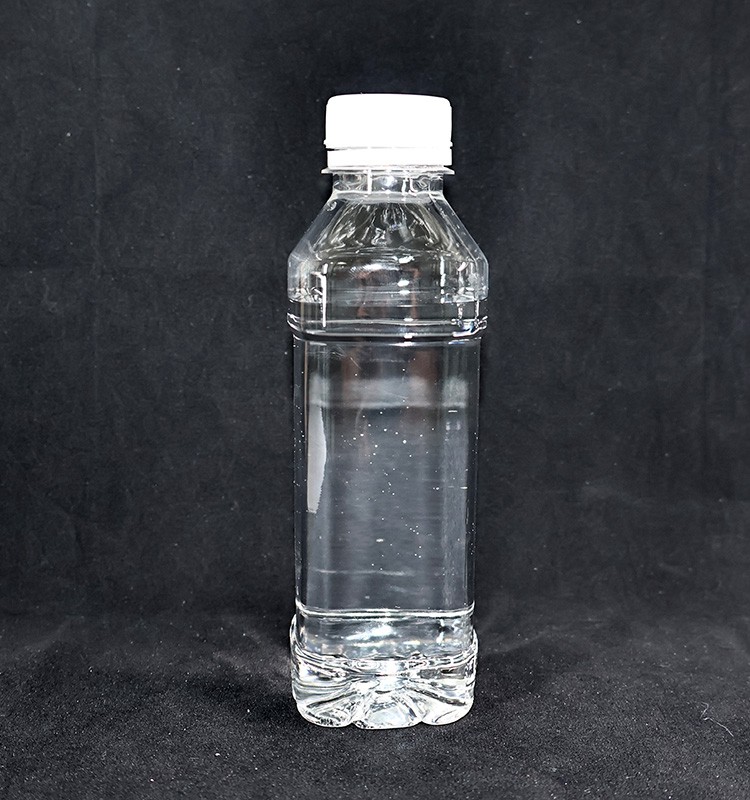
The defluoridator is a highly efficient liquid compound that forms a stable complex with F-in water and adsorbs and co-precipitates,thereby removing fluoride ions from wastewater.Our company's defluoridator has stable performance;after treatment,the fluoride content of the wastewater meets the enterprise's wastewater discharge standards.It does not require changes to the original water treatment process or the addition of large-scale water treatment facilities.It is simple,easy to use,economical,and practical,with a wide range of applications,suitable for treating various types of fluoride-containing wastewater.
Product Features
Forms a stable complex with F-,adsorbing and co-precipitating the complex.
Excellent coagulant aid,producing large,dense flocs with rapid settling speed.
Deep defluorination,reducing fluoride ion concentration to below 1.5 mg/L.
Calcium-free,preventing scaling and blockage in pipes and valves with long-term use.
Simple to use and easy to operate.
Instructions for Use
Add the defluoridator directly to the reagent tank,or add it to the mixing tank of wastewater and reagent using a metering pump.
The general concentration of the reagent used is 100-10000 g/m³.The dosage should be initially determined based on laboratory tests and adjusted during actual use.
Packaging,Transportation,and Storage
This product is packaged in sealed plastic drums,available in three specifications:net content of 25 kg,200 kg,and 1000 kg per drum;or packaged according to customer requirements.
Transportation is by road or rail.Self-pickup or door-to-door delivery is available according to the contract.Handle with care during transportation,avoiding exposure to sunlight and rain or inverting the container.
The product should be stored in a cool,dry warehouse.The product shelf life is twelve months.
Quality indicators
|
project
|
index
|
|
Appearance
|
liquid
|
|
Solid content (%)
|
≥20.0
|
|
pH (1% aqueous solution)
|
≥1.5
|
|
Density (25°C, g/cm3)
|
≥1.10
|
In the intertwined field of industrial production and environmental protection,the problem of fluoride pollution has always been closely related.The excessive presence of fluoride ions(F⁻)not only threatens equipment lifespan and damages the ecological environment,but also directly endangers human health,from the HF cleaning solution in photovoltaic slicing wastewater,to the fluorine-containing developer in electronic etching wastewater,and to the high fluoride groundwater exceeding the standard in drinking water sources.As a"deep cleaner"specialized in treating fluorine-containing wastewater,defluorination agents are opening up an efficient and low-cost solution for fluoride pollution control through cutting-edge technologies such as nano alumina and rare earth modification.
1.Mechanism of action
The process of removing fluoride ions from water by defluorination agents is a complex physicochemical process,and its core mechanism is mainly based on adsorption,precipitation,ion exchange,and other effects.
Adsorption is one of the most widely used mechanisms for fluoride removal.This type of defluorination agent usually has a huge specific surface area and rich pore structure,with a large number of active hydroxyl or other functional groups on its surface.When fluorine-containing water passes through,fluoride ions will be firmly fixed on these active sites through electrostatic attraction or coordination bonding.For example,the defluorination of activated alumina is achieved by ion exchange between the hydroxyl groups on its surface and fluoride ions.The efficiency of adsorption depends on factors such as the surface properties,pore structure,and solution pH of thedefluorination agent material.
Precipitation is another important mechanism,especially suitable for treating industrial wastewater with high fluoride concentration.These types of defluorination agents usually contain metal ions such as calcium,aluminum,iron,magnesium,etc.,which can react with fluoride ions to form fluoride precipitates that are difficult to dissolve in water under specific pH conditions.The most classic method is the lime precipitation method,which uses calcium ions and fluoride ions to form calcium fluoride precipitate.However,calcium fluoride still has a certain solubility in water,and it is usually difficult to reduce the fluoride concentration to below 10 mg/L,so it is often used as a pretreatment method.A more efficient method is to use composite defluorination agents based on aluminum or iron salts,which can not only generate precipitates such as aluminum fluoride and iron fluoride,but also further remove fine fluoride particles through adsorption and sweeping of their hydrolysis products,forming a synergistic defluorination effect.
The ion exchange process relies on the displacement reaction between the exchangeable ions in the defluorination agent material and the fluoride ions in water.For example,certain resins or natural minerals loaded with specific metals can selectively exchange hydroxyl or chloride ions with fluoride ions in their structure.This type of method usually has high selectivity for fluoride ions,but the cost of resin regeneration and the potential competitive adsorption when treating high hardness water are issues that need to be considered.
2.Performance indicators
To evaluate the performance of adefluorination agent product,a series of key technical indicators need to be examined.
Fluoride removal capacity:also known as adsorption capacity,refers to the maximum mass of fluoride ions that can be adsorbed and removed per unit mass ofdefluorination agent,usually expressed in mg F-/g.This is the core indicator for measuring the efficiency ofdefluorination agents.The higher the capacity,the less medication is required to treat the same amount of water,resulting in lower operating costs.The adsorption capacity of high-performance rare earth defluorination agents can reach 20-50 mg/g,which is much higher than traditional activated alumina.
Fluoride removal efficiency and residual fluoride concentration:Refers to the level at which adefluorination agent can reduce the fluoride concentration in water under optimal operating conditions.An efficient defluorination agent should be able to treat high fluoride water to below 1.0 mg/L and maintain a stable effluent concentration.
Action rate:refers to the time required to reach adsorption equilibrium.Fast rate defluorination agents are suitable for treatment processes with short hydraulic retention time,which is beneficial for reducing the volume of reaction structures and saving infrastructure investment.
PH adaptability:Different defluorination agents have their optimal pH range for action.Aluminum salts perform best under acidic to neutral conditions,while calcium salts are advantageous under alkaline conditions.Rare earth materials typically maintain good performance over a wide pH range(5-9).Understanding the pH adaptability of the product is crucial for proper dosing and regulation.
Selectivity:refers to the ability of a defluorination agent to preferentially adsorb fluoride ions in an environment where multiple anions coexist.Chloride ions,sulfate ions,bicarbonate ions,etc.in water compete with fluoride ions for adsorption sites,leading to a decrease in fluoride removal efficiency.Highly selective defluorination agents are less affected by these interfering ions.
3.Selection principle
The application fields of defluorinants are very wide,covering almost all scenarios that require controlling the fluoride content in water.
Drinking water treatment is the most traditional and important application area of defluorinants.In many high fluoride areas around the world,such as parts of North China,Northwest China,and Northeast China,exceeding groundwater fluoride levels is a serious public health problem.In rural water supply stations,community water treatment centers,and even household water purifiers in these areas,defluorination is the core treatment unit.Activated alumina and bone charcoal were once long-standing defluorination media,but now high-performance rare earth composite defluorination agents are being widely used due to their safety and efficiency.
Industrial wastewater treatment is another major application market for defluorinants.The semiconductor and photovoltaic industries extensively use hydrofluoric acid for etching and cleaning in their production processes,and the fluoride concentration in their wastewater can reach hundreds to thousands of mg/L.This type of wastewater is usually pretreated using the lime precipitation method to significantly reduce the fluoride concentration,and then treated with aluminum salts or specialized high-efficiency defluorination agents to ensure that the final effluent fluoride concentration remains stable below the discharge standard of 10 mg/L or even lower.Wastewater from industries such as electroplating,metal surface treatment,and glass and ceramic production also face severe fluoride removal tasks.
With the increasingly strict environmental policies and the continuous improvement of social environmental awareness,defluorinants,as important products in the field of water treatment,will continue to play a key role in pollution prevention and ecological protection.Choosing efficient,economical,and environmentally friendly defluorination agents is not only a necessary means to meet regulatory requirements,but also an important manifestation of fulfilling social responsibility and achieving sustainable development.



 E-mail:jcl@jichanglong.com
 WhatsApp:+8618560709619
 Address:Block B, Polymer Materials Industry Innovation Park,No. 51, Lutai Avenue, High-tech Zone, Zibo City, Shandong Province


