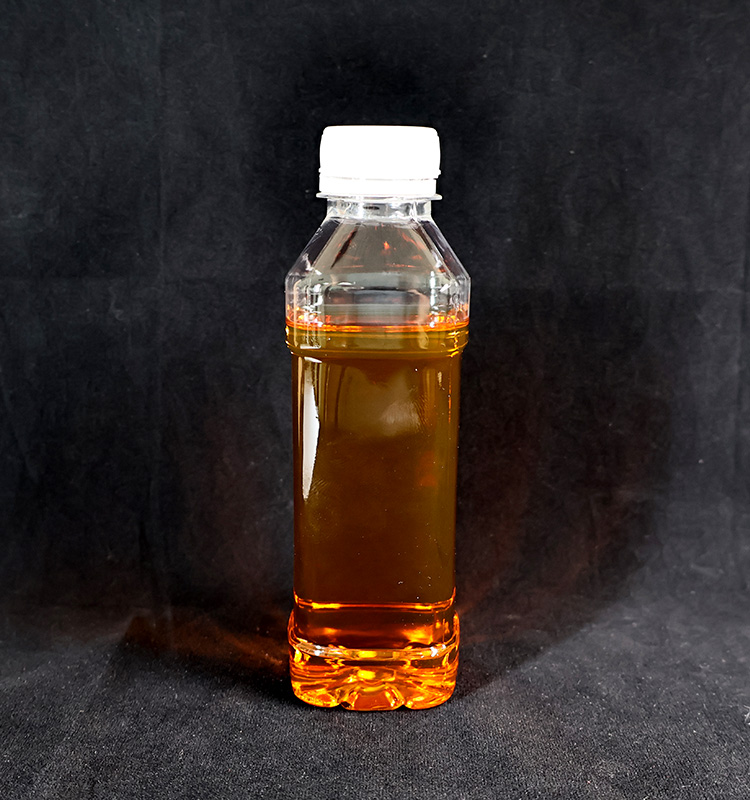


Performance and Application
This product is mainly composed of organic amines and other components, which have strong neutralizing properties and can significantly inhibit acid corrosion in the initial setting zone. At the same time, the salt generated by neutralization is a low melting point salt, which does not form solid deposits and can reduce corrosion under scale, effectively extending the service life of equipment.
This product is particularly suitable for anti-corrosion of HCL-H2S-H2O corrosion system and other similar corrosion systems in the atmospheric and vacuum distillation tower top condensation system. It can completely replace the ammonia injection process in the tower top condensation system to improve the comprehensive anti-corrosion effect.At the same time, it is also suitable for neutralizing acidic substances in tower top condensation systems such as catalysis, reforming, coking, and various hydrogenation units. When processing high sulfur crude oil, the use of this product and matching corrosion inhibitors in distillation, stripping and other processes that produce HCL-H2S-H2O corrosion system can achieve good anti-corrosion effect.
Main features
It can significantly inhibit acid corrosion in the initial setting zone;
Generate low melting point salts;
The generated salt is insoluble in oil;
No solid deposition is generated,which can reduce corrosion under scale;
It has uniform and strong neutralization performance,with a stronger neutralization effect than ammonia;
pH value of easily controllable system
Instructions for use
Depending on the properties of the processed crude oil, sulfur content, and acid value, the amount of organic amine neutralizing agent used varies.Generally, it is 20-50ppm(relative to the crude oil processing volume). It is advisable to control the pH value of the reflux condensate at the top of the tower to be 6.7-7.7. The amount used in processing high sulfur crude oil may increase appropriately.
If conditions permit, it is best to prepare an organic amine neutralizing agent into a 2-10%aqueous solution and inject it into the top oil and gas evaporation line or into the tower top system that needs to be protected using a metering pump.
During use, attention should be paid to adjusting the injection amount in a timely manner to ensure that the pH value of the reflux water at the top of the tower is around 7.0, in order to achieve better performance.
This product has a better effect when used in combination with a matching corrosion inhibitor.
Keep away from sources of fire when using.
This product has a certain degree of toxicity and strong alkalinity. Workers should wear protective gloves, masks, glasses, etc. during operation to avoid skin contact. If there is contact, please rinse with plenty of water as soon as possible. In severe cases, seek medical attention.
Transportation and storage
This product is flammable and volatile; During use, transportation, and storage, attention should be paid to fire prevention and sun exposure. It should be stored in a cool,dry,and well ventilated place.
Quality indicators
|
Project |
Index |
|
Appearance |
Colorless to light yellow or brown transparent liquid |
|
PH |
≥10 |
|
Density (20°C), g/cm3 |
0.90~ 1. 10 |
|
Moisture |
≤5% |
|
Solubility |
Miscible with water |
In the intricate dance of industrial operations,the preservation of metal assets often hinges on an unseen,continuous battle against a relentless adversary:corrosion.This electrochemical degradation,particularly in systems that have undergone acidic cleaning or are exposed to acidic process streams,does not simply cease once the primary chemical treatment is over.Residual acidity can linger,creating a highly corrosive environment that attacks pipelines,vessels,and heat exchangers from within.It is in this critical,post-treatment phase that a specific class of chemical guardians plays a pivotal role.Neutralizing corrosion inhibitors are meticulously formulated products designed to perform a dual function,offering a robust defense mechanism that extends the operational lifespan and integrity of metal equipment.
The fundamental purpose of a neutralizing corrosion inhibitor is twofold.First,it acts to neutralize any residual acidic components present in a system,effectively raising the pH to a less corrosive,mildly alkaline range.This neutralization is crucial for halting the immediate corrosive attack initiated by acidic conditions.Second,and equally important,the inhibitor component provides a protective barrier on the metal surface.This barrier mitigates the corrosive potential of oxygen and other dissolved solids in the water,which can become significant threats even after acidity has been neutralized.Unlike simple neutralizers that only adjust pH,these specialized formulations create a more resilient and lasting protective environment.The chemistry typically involves volatile amines or neutralizing amines,which distribute evenly throughout the steam and condensate systems,ensuring protection even in hard-to-reach areas.By forming a hydrophobic film or promoting passivation on the metal surface,they effectively isolate the substrate from the corrosive aqueous environment.This synergistic action of pH adjustment and surface filming makes them indispensable in boiler water treatment,steam condensate systems,and various process units in refineries and petrochemical plants,where they help maintain system cleanliness,reduce iron oxide transport,and minimize the rate of metal loss.The deployment of these inhibitors represents a proactive approach to asset management,shifting the strategy from reactive repairs to predictive preservation.
The value proposition of a high-quality neutralizing corrosion inhibitor is multi-faceted,addressing several key operational challenges simultaneously.Its benefits are not confined to a single aspect of system maintenance but rather contribute to a holistic improvement in performance,safety,and cost-efficiency.
The following table outlines some of the primary advantages associated with the use of these inhibitors:
|
Advantage |
Description |
|
Comprehensive System Protection |
This approach moves beyond simple pH adjustment. While it neutralizes corrosive acids, it concurrently lays down a protective molecular layer on the metal surface. This dual mechanism helps shield against general corrosion and pitting attack caused by both residual acids and dissolved oxygen, offering a more complete defense for the entire system. |
|
Extended Equipment Service Life |
By consistently mitigating the chemical agents that cause metal degradation, these inhibitors contribute to a reduction in the long-term wear and tear on critical assets. This can help in prolonging the operational lifespan of expensive components like boilers, heat exchangers, and condensate return lines, thereby protecting the capital investment. |
|
Enhanced Operational Efficiency |
The protective film formed by the inhibitor can help reduce the accumulation of corrosion products, such as iron oxides, within the system. This leads to cleaner heat transfer surfaces, which can support improved thermal efficiency and lower fuel consumption. It also contributes to maintaining designed flow rates by minimizing flow-restricting deposits. |
|
Reduction in System Downtime |
A system protected from corrosion typically requires less frequent maintenance interventions for cleaning and repairs. This can lead to a decrease in unplanned shutdowns and associated production losses. The continuity of operations supports more stable and predictable production schedules. |
|
Compatibility and Flexibility |
Many modern neutralizing corrosion inhibitors are designed to be compatible with a range of common system materials and can often be used alongside other water treatment additives, such as oxygen scavengers or scale inhibitors. This allows for a tailored treatment program that can be adapted to specific water chemistry and operational parameters. |
Ultimately,the integration of a neutralizing corrosion inhibitor into a maintenance regimen is more than a chemical application;it is a commitment to operational excellence and long-term asset stewardship.The subtle interplay between neutralization and inhibition creates a stable environment where metal infrastructure can perform reliably under demanding conditions.This not only safeguards the physical plant but also contributes to safer working environments and more predictable operational budgets by mitigating the risk of catastrophic failures.The selection of the appropriate product,however,is a nuanced decision that depends on a deep understanding of your specific system metallurgy,water chemistry,and operational stressors.
We trust this overview has been informative.To explore how a tailored neutralizing corrosion inhibitor program could address the specific challenges within your operations and contribute to your reliability goals,we welcome the opportunity for a deeper discussion.Our technical team is prepared to provide insights and data to assist in your evaluation process.Please do not hesitate to contact us for a more detailed consultation.

 E-mail:jcl@jichanglong.com
 WhatsApp:+8618560709619
 Address:Block B, Polymer Materials Industry Innovation Park,No. 51, Lutai Avenue, High-tech Zone, Zibo City, Shandong Province
China vanadium inhibitors manufacturer Shandong Jichanglong Environmental Engineering Co., Ltd.
Jichanglong specializes in vanadium inhibitor , dehumidification and drying block, calcium hypochlorite disinfectant tablets, polyacrylamide and other products. With over 20 years of experience, we offer quality assurance and wholesale prices.



