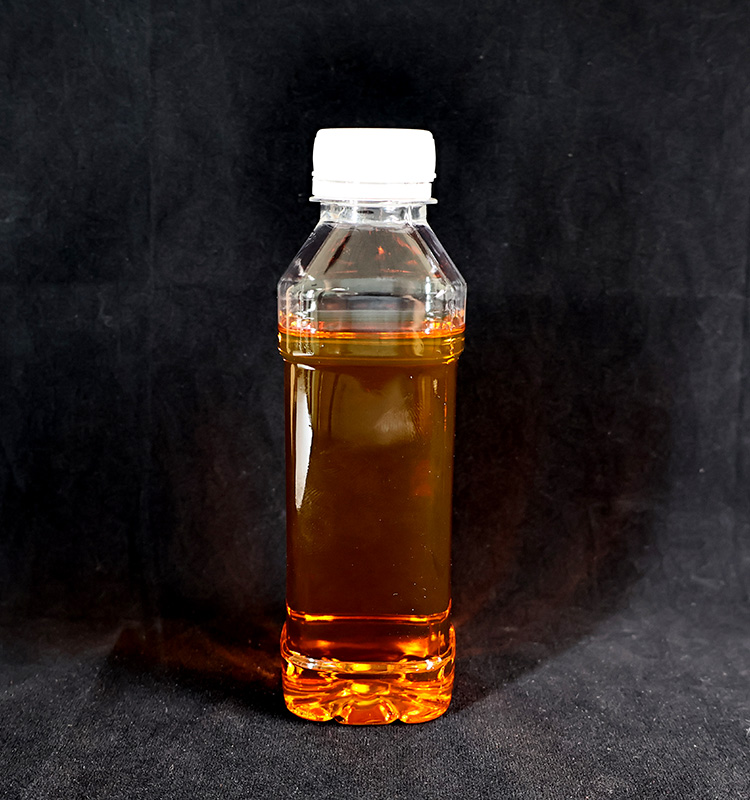


Quality indicators
|
project |
Indicators |
|
Appearance |
Homogeneous liquid |
|
Specific gravity (20℃) g/cm3 |
≥0.8 |
In industrial operations and infrastructure maintenance,gas-related corrosion stands as a persistent challenge that can compromise the integrity of equipment,pipelines,and structural components over time.The gradual degradation caused by corrosive gases not only affects operational efficiency but also increases the risk of unplanned downtime and maintenance costs.Gas corrosion inhibitor emerges as a practical and proactive approach to address this issue,offering a way to mitigate corrosion damage without disrupting regular operations.Designed to interact with metal surfaces and corrosive gas molecules,this product plays a vital role in preserving the lifespan of critical assets across various industries.Unlike conventional protective methods that may involve complex installations or frequent replacements,gas corrosion inhibitors provide a flexible and cost-effective solution that adapts to diverse operational environments.
Gas corrosion inhibitors possess a set of inherent traits that enable them to perform effectively in different gas-rich environments.One key characteristic is their selective adsorption capability—the product molecules have a natural affinity for metal surfaces,forming a thin,adherent film that acts as a barrier between the metal and corrosive gases such as hydrogen sulfide,carbon dioxide,and chlorine.This film is not only compact but also flexible,allowing it to accommodate minor surface irregularities and maintain coverage even during equipment vibration or thermal expansion.
Another notable feature is their chemical stability under varying temperature and pressure conditions.Whether applied in high-pressure pipelines transporting natural gas or low-temperature storage facilities for industrial gases,the inhibitor retains its structural integrity,ensuring consistent corrosion protection without breaking down or losing efficacy.This stability also extends to compatibility with other commonly used industrial fluids,such as lubricants and hydraulic oils,eliminating the risk of adverse chemical reactions that could compromise system performance.
Additionally,gas corrosion inhibitors exhibit controllable release properties in many formulations.Some types are designed to release active ingredients gradually over time,providing long-term protection without the need for frequent reapplication.Others can be adjusted to respond to changes in environmental conditions,such as increases in corrosive gas concentration,by enhancing their protective action when needed.This adaptability makes the product suitable for both static and dynamic systems,from storage tanks to flowing pipelines.
Compared to alternative corrosion protection methods,gas corrosion inhibitors offer several distinct advantages that contribute to their widespread adoption.One significant benefit is their ease of application.Unlike protective coatings that require thorough surface preparation or cathodic protection systems that demand complex installation,gas corrosion inhibitors can be applied through simple methods such as injection,spraying,or mixing with process fluids.This simplicity reduces downtime during application and lowers the need for specialized equipment or skilled labor,making it a convenient option for both planned maintenance and emergency corrosion control.
Another advantage lies in their targeted protection.Rather than covering entire surfaces with thick layers of protective material,the inhibitor focuses on forming a thin film directly on metal surfaces vulnerable to corrosion.This targeted approach minimizes material waste and reduces the impact on system performance—for example,in pipelines,the thin film does not significantly affect fluid flow rates or pressure drops.Additionally,the inhibitor can reach hard-to-access areas,such as internal corners of equipment or narrow pipeline sections,where other protective methods may struggle to provide adequate coverage.
Cost-effectiveness is also a key advantage of gas corrosion inhibitors.By extending the lifespan of equipment and reducing the frequency of maintenance and replacements,the product helps lower long-term operational costs.The initial investment in the inhibitor is often offset by savings in repair expenses,downtime losses,and replacement parts.Furthermore,the ability to adjust the dosage based on specific corrosion risks allows users to optimize their spending,applying higher concentrations in high-risk areas while using lower amounts in less corrosive environments.
Environmental friendliness is another notable benefit.Many modern gas corrosion inhibitors are formulated with low toxicity and biodegradable ingredients,minimizing their impact on the environment and complying with strict environmental regulations.Unlike some corrosive protection chemicals that can contaminate soil or water,these inhibitors break down naturally over time without leaving harmful residues.This makes them suitable for use in environmentally sensitive areas,such as offshore oil and gas operations or industrial facilities near water sources.
Gas corrosion inhibitors find utility across a wide range of industries and operational scenarios,where they protect metal assets from the damaging effects of corrosive gases.The following table provides a detailed overview of key application areas,along with the specific use cases and benefits:
|
Industry/Field |
Specific Applications |
Corrosive Gas Threats |
Key Benefits of Inhibitor Application |
|
Oil and Gas Production |
Downhole equipment, well casings, production pipelines, separators, storage tanks |
Hydrogen sulfide (H₂S), carbon dioxide (CO₂), methane (CH₄) with moisture |
Prevents pitting and stress corrosion cracking; extends equipment lifespan in high-pressure/high-temperature environments; reduces maintenance frequency for downhole tools |
|
Petrochemical Processing |
Refinery pipelines, distillation columns, reactors, heat exchangers |
Hydrogen chloride (HCl), sulfur dioxide (SO₂), organic acids |
Protects against corrosion during crude oil refining and chemical synthesis; maintains heat transfer efficiency in exchangers; minimizes product contamination from corroded metal particles |
|
Natural Gas Transmission |
Cross-country pipelines, compression stations, metering stations, storage facilities |
Carbon dioxide (CO₂), water vapor, trace amounts of H₂S |
Mitigates internal corrosion in pipelines; prevents blockages from corrosion byproducts; ensures consistent gas flow and pressure stability |
|
Power Generation |
Coal-fired power plant flue gas systems, gas turbines, boiler tubes, cooling systems |
Sulfur dioxide (SO₂), nitrogen oxides (NOₓ), water vapor, chlorine (Cl₂) |
Protects boiler and turbine components from high-temperature corrosion; reduces scaling and fouling in cooling systems; extends the service life of flue gas treatment equipment |
|
Chemical Manufacturing |
Chemical reactors, storage tanks for corrosive gases, process pipelines |
Chlorine (Cl₂), ammonia (NH₃), hydrogen fluoride (HF), acidic gas byproducts |
Prevents corrosion in equipment handling aggressive chemicals; maintains product purity by avoiding metal contamination; enhances operational safety by reducing equipment failure risks |
|
Automotive and Transportation |
Fuel tanks, exhaust systems, air conditioning pipelines |
Carbon dioxide (CO₂), water vapor, sulfur compounds from fuel |
Protects exhaust components from rust and corrosion; extends the lifespan of fuel system parts; maintains the efficiency of air conditioning systems |
|
Marine and Offshore |
Offshore platforms, ship hulls (below waterline), ballast tanks, marine pipelines |
Saltwater vapor, hydrogen sulfide (H₂S), carbon dioxide (CO₂) |
Resists corrosion in harsh marine environments; prevents biofouling-related corrosion; protects ballast tanks from internal rust and pitting |
|
Food and Beverage Processing |
Storage tanks for carbonated beverages, process pipelines, sterilization equipment |
Carbon dioxide (CO₂), water vapor, acidic byproducts of fermentation |
Maintains the integrity of food-contact surfaces; prevents metal contamination of food products; complies with food safety regulations |
|
Pharmaceutical Manufacturing |
Stainless steel equipment, gas storage systems, cleanroom pipelines |
Water vapor, trace corrosive gases from chemical processes |
Protects precision equipment from corrosion; ensures compliance with strict hygiene standards; maintains the purity of pharmaceutical products |
While gas corrosion inhibitors offer significant benefits,their effectiveness depends on proper selection and application.Users should consider several factors to ensure optimal results.First,it is essential to conduct a thorough assessment of the operational environment,including the type and concentration of corrosive gases,temperature,pressure,and the type of metal being protected.This assessment helps in selecting the most suitable inhibitor formulation—for example,inhibitors designed for high-temperature environments may not be effective in low-temperature storage facilities.
Dosage control is another critical factor.Applying an insufficient amount of inhibitor may not provide adequate protection,while excessive dosage can lead to unnecessary costs and potential system issues,such as foaming or fluid contamination.Users should follow recommended dosage guidelines based on the manufacturer’s specifications and adjust as needed based on ongoing corrosion monitoring.
Regular monitoring and maintenance are also important to ensure the inhibitor continues to perform effectively.This may involve periodic testing of corrosion rates,inspection of metal surfaces for signs of degradation,and reapplication of the inhibitor when necessary.In some cases,combining the inhibitor with other protective methods,such as protective coatings or regular cleaning,can enhance overall corrosion protection.
Gas corrosion inhibitors have established themselves as a reliable and versatile solution for protecting metal assets from the damaging effects of corrosive gases.Their unique characteristics,including selective adsorption,chemical stability,and adaptability,enable them to perform effectively in diverse environments,while their key advantages—ease of application,targeted protection,cost-effectiveness,and environmental friendliness—make them a preferred choice for many industries.From oil and gas production to pharmaceutical manufacturing,the product plays a crucial role in extending equipment lifespan,reducing maintenance costs,and ensuring operational safety.
If you are facing corrosion challenges in your operations and seeking a practical,cost-effective solution,our gas corrosion inhibitor may be the right choice for you.Our team of experts can provide personalized advice based on your specific operational environment,helping you select the most suitable formulation and dosage to meet your needs.Whether you need protection for pipelines,storage tanks,or specialized equipment,we are committed to delivering high-quality products and reliable support to help you preserve your assets and optimize your operations.Feel free to reach out to us for more information,technical specifications,or a customized quote—we look forward to assisting you in addressing your corrosion protection needs.

 E-mail:jcl@jichanglong.com
 WhatsApp:+8618560709619
 Address:Block B, Polymer Materials Industry Innovation Park,No. 51, Lutai Avenue, High-tech Zone, Zibo City, Shandong Province
China vanadium inhibitors manufacturer Shandong Jichanglong Environmental Engineering Co., Ltd.
Jichanglong specializes in vanadium inhibitor , dehumidification and drying block, calcium hypochlorite disinfectant tablets, polyacrylamide and other products. With over 20 years of experience, we offer quality assurance and wholesale prices.



