Against the backdrop of continuously improving global public health systems, rising industrial production standards, and increasingly stringent ecological and environmental protection requirements, water disinfection and sterilization have evolved from a singular public health necessity into a critical component for ensuring urban safety, industrial system stability, and residents' quality of life. Whether in municipal water supply systems, industrial circulating water, or public venue sanitation management, efficient, stable, and controllable disinfection technologies and products are indispensable. Among numerous disinfection chemicals, trichloroisocyanuric acid tablets (TCCA) stand out for their high chlorine content, stable release properties, convenient application methods, and strong adaptability. They are widely used in drinking water disinfection, swimming pool water treatment, industrial water circulation systems, healthcare, and livestock/aquaculture, establishing themselves as one of the most mature and extensively applied chlorine-based disinfection products on the market today.
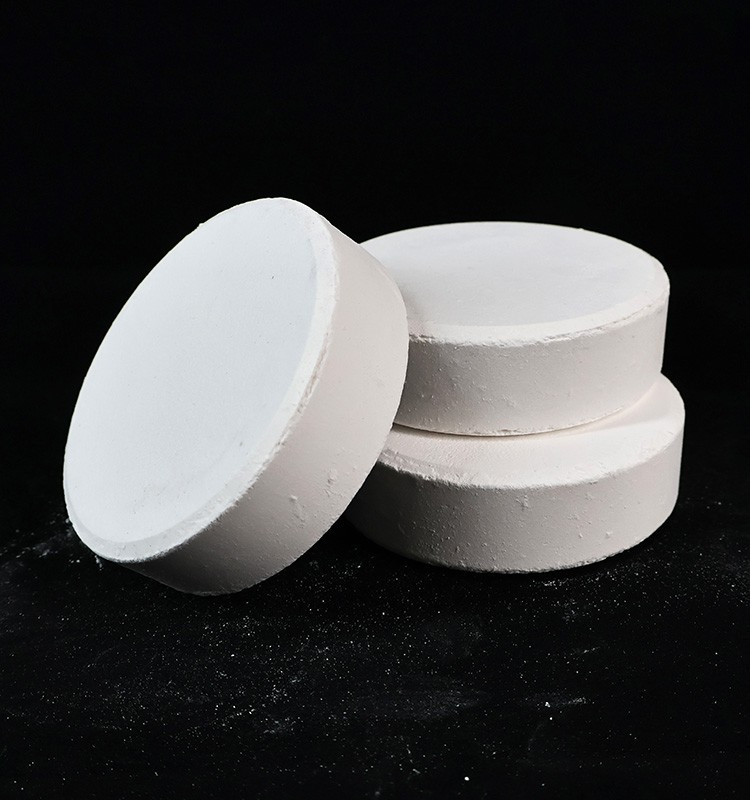
Trichloroisocyanuric acid tablets (TCCA) are solid disinfectants primarily composed of trichloroisocyanuric acid. Their stable chemical structure enables continuous release of effective chlorine in water, delivering potent oxidizing capabilities. With a chlorine content as high as 90%, TCCA tablets rank among the highest chlorine-content disinfectants available. Their superior stability and low usage requirements make them economical and safe for transportation and storage.
Trichloroisocyanuric acid tablets release hypochlorous acid (HOCl) through hydrolysis. This substance rapidly penetrates the cell walls of bacteria, viruses, and algae, disrupting their internal protein structures. This causes microorganisms to lose their metabolic capacity and die. Unlike disinfectants with instantaneous high concentrations, trichloroisocyanuric acid tablets possess a sustained-release characteristic, maintaining stable disinfection effects over an extended period.
In drinking water safety, trichloroisocyanuric acid tablets are widely used in rural centralized water supply projects, small water treatment plants, secondary water supply systems, and temporary water facilities. Through scientific dosing, they effectively eliminate pathogenic bacteria, viruses, and certain parasites in water, ensuring treated water meets national and local health standards.
During natural disasters, public health emergencies, or field operations, trichloroisocyanuric acid tablets are frequently stockpiled as emergency disinfection supplies due to their compact size, portability, and ease of use. They play a critical role in safeguarding basic water safety for residents and rescue personnel.
Swimming pool water treatment represents one of the most established and widespread applications for trichloroisocyanuric acid tablets. Swimming pools remain open for extended periods with high visitor turnover, making them prone to introducing bacteria, viruses, and organic pollutants. This demands exceptional stability and sustained efficacy from disinfection products.
In pool water treatment, trichloroisocyanuric acid tablets continuously release effective chlorine to eliminate aquatic microorganisms while inhibiting algae growth, maintaining crystal-clear water clarity. Their flexible dosing methods—via automatic dosing systems or manual quantitative addition—facilitate control and adjustment by water quality managers, making them widely adopted in public pools, hotel pools, water parks, and hot spring facilities.
In industrial sectors such as power generation, chemical processing, metallurgy, pharmaceuticals, and HVAC systems, circulating cooling water systems are critical for ensuring equipment operation. Improper water management can easily lead to microbial proliferation, slime buildup, and reduced heat exchange efficiency.
As a commonly used bactericide and algicide in industrial water systems, trichloroisocyanuric acid tablets, when added regularly, effectively inhibit bacterial and algal growth, improve water quality, and reduce the impact of biological contamination on pipelines and equipment. This extends equipment lifespan and lowers system operation and maintenance costs.
In public spaces such as hospitals, clinics, schools, hotels, stations, and airports, environmental hygiene and disinfection standards are extremely stringent. Trichloroisocyanuric acid tablets can be used for disinfecting floors, walls, sanitary facilities, drainage systems, and wastewater.
Their highly efficient, broad-spectrum bactericidal properties play a vital role in preventing infectious diseases and reducing cross-contamination, making them particularly suitable for public health environments demanding high disinfection efficacy and prolonged effectiveness.
In modern large-scale livestock and aquaculture operations, water quality and environmental hygiene directly impact animal health and production efficiency. Trichloroisocyanuric acid tablets can be used for disinfecting drinking water in farms, sterilizing aquaculture water bodies, and sanitizing animal housing environments.
Proper application effectively reduces pathogenic microorganisms, minimizes disease transmission risks, and enhances survival rates and overall economic returns, making it an essential auxiliary disinfection product in daily management for many farming enterprises.
Industries such as food processing, beverage production, and cold chain storage impose stringent requirements on hygiene conditions and disinfection management. Trichloroisocyanuric acid tablets can be used to disinfect production equipment, containers, pipelines, floors, and drainage systems, helping enterprises establish stable, controllable sanitary environments that meet food safety regulations and quality management system requirements.
- High-efficiency sterilization: Demonstrates significant killing effects against multiple microorganisms.
- High Stability: Solid form facilitates storage and transportation.
- Cost-Effectiveness: Low usage volume reduces transportation and storage costs.
- Flexible Application: Dosage can be adjusted as needed to suit diverse scenarios.
In practical applications, determine dosage appropriately for different scenarios to avoid excessive effective chlorine concentration affecting equipment or human health. Store the product in a dry, well-ventilated, and light-protected environment, avoiding storage with flammable or reducing substances. Operators must implement basic protective measures during use to ensure safe and standardized operation.
Overall, trichloroisocyanuric acid tablets represent a versatile, mature, and stable high-efficiency disinfectant chemical. From drinking water safety to public health protection, and from industrial water treatment to aquaculture management, its applications span multiple critical sectors of modern society. As water quality standards continue to rise and public health awareness grows, trichloroisocyanuric acid tablets will maintain broad application prospects. They will persistently play a vital role in water treatment and disinfection, serving as a key technological pillar for safeguarding water quality, environmental health, and societal stability.

 E-mail:jcl@jichanglong.com
 WhatsApp:+8618560709619
 Address:Block B, Polymer Materials Industry Innovation Park,No. 51, Lutai Avenue, High-tech Zone, Zibo City, Shandong Province
China vanadium inhibitors manufacturer Shandong Jichanglong Environmental Engineering Co., Ltd.
Jichanglong specializes in vanadium inhibitor , dehumidification and drying block, calcium hypochlorite disinfectant tablets, polyacrylamide and other products. With over 20 years of experience, we offer quality assurance and wholesale prices.