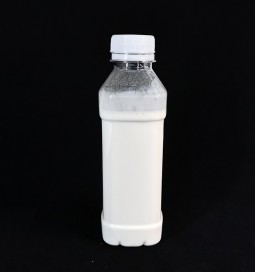
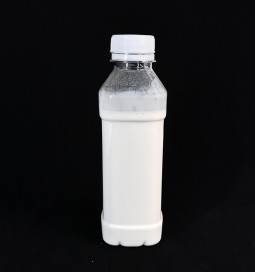
In heavy industries such as petroleum refining and coal chemical,the activity and stability of catalysts directly determine production efficiency and cost.However,the vanadium(V)element in the raw materials will undergo irreversible reactions with the catalyst under high temperature and pressure environments,leading to catalyst poisoning and deactivation,as well as intensified equipment corrosion.As a core additive for solving vanadium pollution,the performance of vanadium corrosion inhibitors directly affects the lifespan of catalysts and process stability.This article will systematically analyze the key indicators for selecting vanadium corrosion inhibitors from five dimensions:thermal stability,chemical passivation ability,dispersibility,environmental friendliness,and cost-effectiveness,providing scientific selection basis for industrial users.
1.Thermal stability:the touchstone of performance in high-temperature environments
1.Definition and Importance
Thermal stability refers to the ability of vanadium corrosion inhibitors to maintain structural integrity and functional effectiveness under high temperature reaction conditions(typically 200-1000℃).In processes such as catalytic cracking(FCC)and hydrocracking,the reaction temperature often reaches 500-800℃.If the thermal stability of the vanadium corrosion inhibitor is insufficient,decomposition,volatilization,or phase transition may occur,leading to the failure of vanadium suppression effect and even exacerbating catalyst coking.
2.Core parameters and evaluation methods
Decomposition temperature:The temperature at which the vanadium corrosion inhibitor begins to decompose is determined by thermogravimetric analysis(TGA).For example,the decomposition temperature of high-quality magnesium based vanadium corrosion inhibitors is usually greater than 800℃,while some organic vanadium corrosion inhibitors begin to decompose below 500℃.
Volatile loss rate:Measure the mass loss rate of vanadium corrosion inhibitor under simulated reaction conditions(such as 800℃,air atmosphere).Products with a volatilization loss rate of less than 5%are more suitable for high-temperature and long-term operation.
Crystal stability:X-ray diffraction(XRD)analysis to determine whether vanadium corrosion inhibitors undergo crystal transformation at high temperatures.For example,Sb₂O3 is easily converted to Sb₂O₄at high temperatures,which reduces passivation efficiency and requires doping modification to improve crystal stability.
3.Selection suggestions
High temperature processes(such as FCC regenerators):Inorganic vanadium corrosion inhibitors(such as MgO,CaO)are preferred,with thermal stability typically greater than 900℃and the ability to withstand extreme temperatures.
Low temperature process(such as hydrogenation refining):Organic inorganic composite vanadium corrosion inhibitors can be used to balance thermal stability and chemical activity.
2.Chemical passivation ability:the core mechanism for blocking vanadium pollution
1.Definition and action path
Chemical passivation ability refers to the ability of vanadium corrosion inhibitors to react chemically with vanadium compounds(such as V₂O₅,VO₂)to generate stable compounds with high melting points and low volatility,thereby preventing vanadium from migrating to the active sites of the catalyst.The core reactions include:
Redox reaction:For example,MgO reduces V⁵⁺to V⁴⁺,generating Mg∝V₂O₈(melting point 1520℃).
Coordination reaction:Organic phosphate esters form a five membered ring coordination structure with V⁵⁺,reducing the oxidation activity of vanadium.
2.Quantitative evaluation indicators
Passivation efficiency:The change in vanadium content on the catalyst surface before and after the reaction was measured by X-ray fluorescence spectroscopy(XRF).Products with passivation efficiency greater than 90%can significantly extend the lifespan of catalysts.
Product stability:Thermodynamic calculations or high-temperature experiments verify the decomposition temperature of passivation products(such as vanadate salts and phosphorus vanadium complexes).Products with decomposition temperature>reaction temperature are more effective in the long term.
Reaction rate:Measure the reaction time between vanadium corrosion inhibitor and vanadium compound under simulated reaction conditions(such as 600℃,H₂atmosphere).Products with a reaction rate of less than 10 minutes are more suitable for rapidly suppressing demand.
3.Selection suggestions
High vanadium content raw materials(such as Middle Eastern heavy oil):Choose magnesium based or antimony based vanadium corrosion inhibitors with passivation efficiency>95%and product decomposition temperature>800℃.
Low vanadium content raw materials:composite vanadium corrosion inhibitors with passivation efficiency≥85%can be selected to balance performance and cost.
3.Dispersion:a key factor affecting the inhibitory effect
1.Definition and Function
Dispersion refers to the ability of vanadium corrosion inhibitors to evenly distribute in catalyst supports or raw materials.Good dispersibility can ensure sufficient contact between vanadium corrosion inhibitors and vanadium compounds,avoiding inhibition failure or catalyst pore blockage caused by excessive local concentration.
2.Evaluation method
Particle size distribution:The D50(median particle size)of vanadium corrosion inhibitor particles is measured using a laser particle size analyzer.Products with D50<5μm are more likely to penetrate into the microporous structure of the catalyst.
Specific surface area:BET method is used to determine the specific surface area of vanadium corrosion inhibitor.Products with a specific surface area greater than 100m²/g have stronger adsorption capacity and better dispersibility.
Scanning electron microscopy(SEM)observation:directly observe the distribution of vanadium corrosion inhibitors on the catalyst surface.Products with uniform coverage and no agglomeration have better dispersibility.
3.Selection suggestions
Microporous catalysts(such as Y-type molecular sieves):Choose nanoscale vanadium corrosion inhibitors with D50<2μm and specific surface area>150m²/g to avoid pore blockage.
Macroporous catalysts(such as alumina supports):Vanadium corrosion inhibitors with D50 5-10μm can be used to balance dispersion and cost.
4.Environmental friendliness:an inevitable requirement for green industry
1.Definition and Importance
Environmental friendliness refers to the potential impact of vanadium corrosion inhibitors on the environment and human health during production,use,and disposal processes.With the tightening of global environmental regulations,low toxicity and biodegradable vanadium corrosion inhibitors have become an industry trend.
2.Core evaluation indicators
Heavy metal content:ICP-MS is used to detect the content of toxic heavy metals such as lead(Pb),mercury(Hg),and cadmium(Cd)in vanadium corrosion inhibitors.The EU REACH regulation requires Pb<100ppm and Hg<5ppm.
Biodegradability:OECD 301 standard tests the degradation rate of vanadium corrosion inhibitors in the environment.Products with a degradation rate greater than 60%(28 days)are more in line with green chemistry principles.
Volatile organic compound(VOC)content:Determination of VOC content in vanadium corrosion inhibitors by gas chromatography.Products with VOC<50ppm can reduce air pollution.
3.Selection suggestions
EU market:Choose products that have passed REACH certification and meet heavy metal content limits.
Closed process:Organic vanadium corrosion inhibitors with high VOC content can be used,but exhaust gas treatment equipment is required.
5.Cost effectiveness:the optimal solution that balances performance and economy
1.Definition and evaluation logic
Cost effectiveness refers to the comprehensive ratio of the unit price of vanadium corrosion inhibitors to the economic benefits they bring,such as extended catalyst life and reduced production interruptions.It is necessary to evaluate from the perspective of the entire life cycle to avoid the long-term cost increase caused by simply pursuing low prices.
2.Quantitative analysis methods
Unit activity cost:Unit price of vanadium corrosion inhibitor÷(passivation efficiency x catalyst life extension ratio).For example,a product with a unit price of 100000 yuan/ton,a passivation efficiency of 95%,and a lifespan extension of 2 times has a unit active cost of 50000 yuan/ton per active unit.
Investment payback period:(Increased cost of vanadium corrosion inhibitor)÷(Annual cost savings).If the use of high-end vanadium corrosion inhibitors reduces annual maintenance costs by 2 million yuan and increases costs by 500000 yuan,the investment payback period is 3 months.
3.Selection suggestions
High value-added products(such as aviation kerosene production):Products with high unit activity cost but excellent performance can be selected to ensure product quality.
Production of bulk chemicals:Priority should be given to products with a cost-benefit ratio of less than 1.5,balancing performance and economy.
The five performance indicators of vanadium corrosion inhibitors-thermal stability,chemical passivation ability,dispersibility,environmental friendliness,and cost-effectiveness-do not exist in isolation,but need to be comprehensively balanced based on specific process conditions(such as temperature,vanadium content,catalyst type)and environmental requirements.For example,high-temperature FCC units should prioritize the selection of magnesium based vanadium corrosion inhibitors with thermal stability>900℃and passivation efficiency>95%;The EU market,which has strict environmental requirements,needs to pay attention to heavy metal content and biodegradability.By systematically evaluating the five major indicators,enterprises can select the most suitable vanadium corrosion inhibitor for their own needs,achieving multiple goals of prolonging catalyst life,improving production stability,and green transformation.

 E-mail:jcl@jichanglong.com
 WhatsApp:+8618560709619
 Address:Block B, Polymer Materials Industry Innovation Park,No. 51, Lutai Avenue, High-tech Zone, Zibo City, Shandong Province