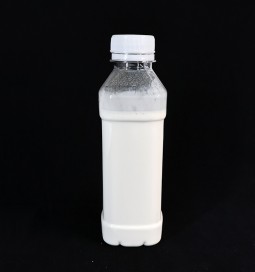
In heavy industries such as petroleum refining and coal chemical, catalysts are the core materials for improving reaction efficiency and reducing energy consumption. However, the vanadium (V) element in the raw materials is like a double-edged sword - under high temperature and high pressure environments, vanadium compounds will undergo irreversible reactions with the active components of the catalyst, leading to catalyst poisoning and deactivation, causing chain problems such as equipment corrosion and production interruption. Vanadium inhibitors, as chemical additives specifically designed for vanadium pollution, have become a key technology for extending catalyst life and ensuring industrial production stability through mechanisms such as physical adsorption, chemical passivation, or reaction blocking. This article will systematically analyze the technical value and industry significance of vanadium inhibitors from four dimensions: principle of action, core functions, technical classification, and application scenarios.
1.The hazards of vanadium pollution: the 'invisible killer' of catalyst deactivation
Vanadium is a common metal impurity in raw materials such as crude oil and coal tar, with a content typically ranging from 0.1 to 100 ppm. During high-temperature reactions such as catalytic cracking (FCC) and hydrocracking, vanadium compounds (such as V ₂ O ₅, VO ₂) undergo the following destructive reactions:
1. Destruction of active components: Vanadium reacts with rare earth elements (such as La, Ce) or precious metals (such as Pt, Pd) in the catalyst to form low or inactive vanadate salts, leading to blockage of catalyst pores and a decrease in specific surface area.
2. Deactivation of acidic sites: Vanadium oxide covers the acidic centers on the catalyst surface, weakening the catalytic ability of key reactions such as cracking and isomerization, and reducing the yield of target products.
3. Equipment corrosion intensifies: Vanadium reacts with steam at high temperatures to generate volatile vanadic acid (such as H3VO ₄), which condenses and deposits in the regenerator, corroding the inner walls of the equipment and shortening the maintenance cycle of the device.
Taking the FCC unit as an example, if vanadium inhibitors are not used, the activity of the catalyst can decrease by 5% -15% per month due to vanadium poisoning, directly increasing raw material consumption and production costs.
2.The mechanism of action of vanadium inhibitors: multidimensional blockade of vanadium pollution pathways
Vanadium inhibitors intercept or passivate vanadium compounds before they migrate to the active sites of the catalyst through physical, chemical, or composite mechanisms. Their core pathways of action include:
1. Physical adsorption and spatial barrier
Partial vanadium inhibitors (such as silicon aluminum based and molecular sieves) preferentially adsorb vanadium compounds from raw materials due to their high specific surface area and porous structure, forming a physical barrier. For example, modified diatomaceous earth vanadium inhibitor can capture V ₂ O ₅ particles through its microporous structure, reducing their diffusion towards the catalyst surface. This type of vanadium inhibitor is suitable for raw materials with low vanadium content (<10ppm), but its adsorption capacity is limited and needs to be regularly regenerated or replaced.
2. Chemical passivation and stabilization
Chemical vanadium inhibitors (such as magnesium, calcium, antimony based compounds) react chemically with vanadium to generate stable compounds with high melting points and low volatility, blocking the migration and corrosion of vanadium from the source. For example:
-Magnesium based: MgO reacts with V ₂ O ₅ to generate Mg ∝ V ₂ O ₈ (melting point>1500 ℃), which fixes vanadium on the surface of the catalyst support to prevent its volatilization and corrosion of the equipment.
-Antimony based: Sb ₂ O3 forms SbVO ₄ solid solution with V ₂ O ₅ at high temperatures, reducing the redox activity of vanadium and delaying the catalyst deactivation rate.
The chemical passivation mechanism is applicable to high vanadium content (>50ppm) raw materials, but the amount of additives needs to be controlled to avoid excessive introduction of impurities that affect catalyst activity.
3. Reaction pathway regulation
Partial vanadium inhibitors inhibit the formation or transformation of vanadium compounds by changing reaction conditions such as temperature and hydrogen partial pressure. For example, in the process of hydrocracking, the addition of phosphorus containing vanadium inhibitors can promote the deposition of vanadium in the form of phosphate at the edge of the catalyst support, rather than at the active center, thereby reducing interference with the cracking reaction. This type of mechanism needs to be coordinated with process parameter optimization to achieve the best suppression effect.
3.Technical classification of vanadium inhibitors: from single function to composite synergy
According to their composition and mode of action, vanadium inhibitors can be divided into the following three categories:
1. Inorganic
Mainly composed of metal oxides (such as MgO, CaO, Sb ₂ O3) or minerals (such as bentonite, kaolin), it exerts its effects through physical adsorption or chemical passivation. Its advantages lie in low cost and high temperature resistance (able to withstand 800-1000 ℃), but strict control of particle size and dispersion is required to avoid blocking the catalyst pores.
2. Organic
Organic compounds containing phosphorus, sulfur, or nitrogen (such as phosphate esters and thiols) achieve chemical passivation by forming coordination or covalent bonds with vanadium. For example, triphenylphosphine (TPP) can react with V ₂ O ₅ to form stable phosphorus vanadium complexes, inhibiting the migration of vanadium. Organic vanadium inhibitors have high activity and low dosage (usually<1wt%), but poor thermal stability (<500 ℃), and need to be used in combination with inorganic vanadium inhibitors.
3. Composite
By combining the advantages of inorganic and organic components, the comprehensive performance is improved through a multi-level inhibition mechanism. For example, in the MgO-TPP composite vanadium inhibitor, MgO is responsible for high-temperature physical adsorption, while TPP provides low-temperature chemical passivation, achieving vanadium pollution prevention and control over the entire temperature range (200-800 ℃). Composite vanadium inhibitors have become the mainstream in the industry, and their formulations need to be customized according to the characteristics of raw materials and process conditions.
4.Application scenarios of vanadium inhibitors: full chain coverage from oil refining to coal chemical industry
The technical value of vanadium inhibitors has penetrated into multiple industrial fields, becoming a key additive to ensure production safety and economy:
1. Catalytic Cracking (FCC) Unit
FCC is the largest application market for vanadium inhibitors, accounting for over 60% of global usage. When processing high vanadium content crude oil (such as Middle Eastern heavy oil), vanadium inhibitors can extend the catalyst life by 2-3 times, while reducing regenerator corrosion and lowering equipment maintenance frequency.
2. Hydrocracking and Hydrorefining
During the hydrogenation process, vanadium will synergistically interact with sulfides to accelerate catalyst deactivation. Vanadium inhibitors stabilize the vanadium form, reduce its coverage of hydrogenation active centers, and improve the yield and product quality of light oil.
3. Coal chemical industry field
In the processes of coal tar hydrogenation and direct coal liquefaction, vanadium, nickel and other metal impurities in coal will lead to rapid deactivation of the catalyst. Vanadium inhibitors can work synergistically with demetalizers to achieve efficient impurity removal and catalyst protection.
4. Environmental Protection and New Energy Sector
In emerging scenarios such as waste catalyst regeneration and biomass catalytic conversion, vanadium inhibitors promote resource recycling and green process development by controlling metal pollution.
5.Technological Trends: Efficiency, Environmental Protection, and Intelligence
With the increasing demand for energy conservation, emission reduction, and sustainable development in industry, vanadium inhibitor technology is evolving in the following directions:
1. Efficiency: Develop nanoscale vanadium inhibitors to improve dispersion and adsorption capacity by reducing particle size (<100nm), reducing dosage and cost.
2. Environmental Protection: Develop non-toxic and biodegradable organic vanadium inhibitors to reduce secondary pollution to the environment and catalysts.
3. Intelligence: By combining AI algorithms with online monitoring technology, the amount of vanadium inhibitor added can be adjusted in real time to achieve dynamic and precise prevention and control of vanadium pollution.
From crude oil refining to coal chemical industry, from traditional energy to new energy, vanadium inhibitors have become a key material for ensuring industrial production stability, economy, and environmental protection through their unique mechanism of action and technological advantages. With the continuous advancement of technology, vanadium inhibitors will develop towards more efficient, environmentally friendly, and intelligent directions, providing solid support for the green transformation of global industries. For enterprises, choosing vanadium inhibitors that are suitable for their own process needs is not only a strategy to enhance competitiveness, but also an inevitable choice to fulfill social responsibility.

 E-mail:jcl@jichanglong.com
 WhatsApp:+8618560709619
 Address:Block B, Polymer Materials Industry Innovation Park,No. 51, Lutai Avenue, High-tech Zone, Zibo City, Shandong Province