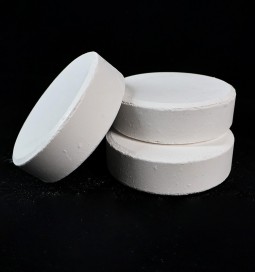
In today’s world, where global public health and water security are receiving increasing attention, disinfection technology has evolved from an “optional measure” to an “essential safeguard.” Whether in urban water supply systems, swimming pool management, industrial recirculating water systems, or agricultural aquaculture environments, stable and efficient disinfection solutions are a core component of maintaining safe system operations. Among the many disinfection products available, calcium hypochlorite tablets have gradually emerged as a key solution in water treatment and environmental disinfection due to their high efficiency, stability, and convenience. These seemingly ordinary white tablets act as “invisible guardians,” continuously releasing active chlorine into water bodies and the environment to silently eliminate bacteria, viruses, and algae. They are capable of addressing routine water treatment needs while also rapidly establishing a safety barrier during emergencies.
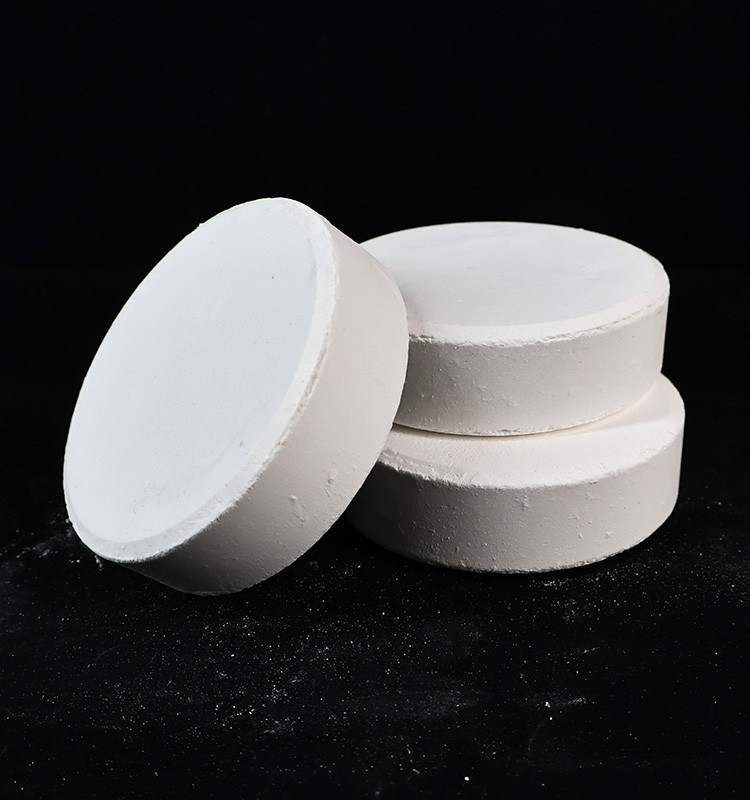
Calcium hypochlorite is a typical inorganic chlorine-based disinfectant with the chemical formula Ca(ClO)₂. It is usually available in granular or tablet form and has a high active chlorine content, typically ranging from 65% to 70%. Formulating it into tablets not only enhances product stability but also significantly improves ease of use.
Visually, calcium hypochlorite tablets are typically white or light gray solids with a faint chlorine odor. Their core value lies in their ability to continuously release active chlorine into water, thereby creating a long-lasting disinfected environment.
Compared to liquid disinfectants, the tablet form offers distinct advantages:
- More stable storage, with reduced volatility and decomposition.
- Safer transportation, suitable for long-distance supply.
- More precise dosing, facilitating concentration control.
- Wider range of applications, suitable for use across multiple industries.
For these reasons, calcium hypochlorite tablets are widely used in water treatment and sanitation systems worldwide.
Calcium hypochlorite’s disinfecting power stems from the active chlorine it releases in water. Upon dissolution, it generates hypochlorous acid (HOCl) and hypochlorite ions (ClO⁻). Of these, hypochlorous acid is the component with the strongest bactericidal activity.
(1) Cell Structure Destruction Mechanism
Hypochlorous acid can rapidly penetrate the cell walls of microorganisms and disrupt the structure of their cell membranes. Once the cell membrane loses its integrity, internal substances leak out, leading to the rapid death of the microorganisms.
(2) Enzyme System Inactivation Mechanism
The vital activities of microorganisms depend on various enzyme systems. Hypochlorous acid can oxidize these enzymes, rendering them inactive and thereby interrupting the microorganisms’ metabolism.
(3) Mechanism of Genetic Material Destruction
For viruses, hypochlorous acid can destroy their DNA or RNA structures, preventing them from replicating and spreading, thereby fundamentally inhibiting the spread of infection.
(4) Multi-Pronged Synergistic Bactericidal Effect
Unlike disinfectants with a single mode of action, calcium hypochlorite acts on microorganisms through multiple pathways simultaneously, giving it broad-spectrum bactericidal capabilities effective against bacteria, viruses, fungi, algae, and parasite eggs. This “multi-pathway attack” characteristic ensures it remains highly effective even in complex aquatic environments.
In the field of drinking water safety, calcium hypochlorite tablets serve as a “first line of defense.” Their role is particularly prominent in areas with inadequate water supply infrastructure or during emergency situations.
(1) Disinfection of Urban and Rural Water Supply Systems: In small-to-medium-sized water treatment plants or rural drinking water projects, calcium hypochlorite tablets are commonly used for source water pretreatment and point-of-use disinfection. By continuously releasing available chlorine, they effectively eliminate pathogenic microorganisms in the water.
(2) Emergency Water Treatment Solutions: During natural disasters or water supply system failures, water sources are prone to contamination. Calcium hypochlorite tablets can be rapidly added to purify water within a short timeframe, providing safe drinking water to disaster-stricken areas.
(3) Outdoor and Mobile Water Treatment: Due to their portability, calcium hypochlorite tablets are also widely used in wilderness expeditions, military operations, and emergency rescue scenarios. Simply adding the tablets transforms natural water sources into usable water.
Swimming pool water is subject to high-frequency use and is highly susceptible to contamination from humans, the environment, and microorganisms. Therefore, stable and continuous disinfection is particularly important.
(1) Continuous Disinfection: Calcium hypochlorite tablets release chlorine continuously through a slow-release mechanism, maintaining a stable state of disinfection in the water.
(2) Inhibiting Algal Growth: Under the influence of sunlight and temperature, algae can multiply rapidly. Calcium hypochlorite effectively inhibits algal growth, keeping the water clear.
(3) Improving Water Quality: By eliminating organic pollutants, calcium hypochlorite also reduces odors, making the water fresher and more transparent.
Industrial circulating water systems are like the “circulatory system of equipment”; once contaminated by microorganisms, they directly impact production efficiency.
(1) Disinfection of Cooling Water Systems: In cooling towers and circulating water systems, calcium hypochlorite prevents microorganisms from forming biofilms, thereby avoiding a decline in heat transfer efficiency.
(2) Pipe Blockage Prevention and Corrosion Protection: By controlling the growth of algae and bacteria, it effectively reduces pipe blockages and corrosion issues.
(3) Improving Equipment Operational Stability: Stable water quality translates to lower maintenance costs and a longer equipment lifespan.
In public settings, calcium hypochlorite tablets are commonly used to prepare disinfectant solutions for cleaning various surfaces.
(1) Medical and Educational Facilities: Places such as hospitals and schools have extremely high hygiene standards; calcium hypochlorite can be used to disinfect floors, walls, and equipment.
(2) Transportation and Public Facilities: In high-traffic areas like airports and train stations, regular disinfection can reduce the risk of disease transmission.
(3) Epidemic Prevention and Control: During public health emergencies, calcium hypochlorite tablets serve as essential disinfection supplies, playing a crucial role in ensuring public safety.
Agricultural environments are equally sensitive to microbial control. The application of calcium hypochlorite in this field is gradually expanding.
(1) Disinfection of Animal Husbandry Facilities: Disinfecting animal pens, equipment, and water sources can effectively reduce the spread of disease.
(2) Irrigation System Treatment: Using disinfectants in agricultural irrigation can reduce harmful microorganisms in water sources.
(3) Hygiene Assurance in Agricultural Product Processing: During the initial processing of food products, disinfectant solutions can be used to clean equipment and environments.
Although calcium hypochlorite tablets have a wide range of applications, they are classified as strong oxidizing agents and must be used in accordance with established guidelines.
- Dosage must be strictly adhered to; avoid excessive concentrations.
- Avoid mixing with acidic or reducing substances.
- Wear protective gear during handling.
- Store in a cool, dry environment.
- Keep away from children and flammable materials.
Proper operation not only affects disinfection efficacy but also directly impacts safety.
As environmental and safety requirements increase, calcium hypochlorite products are evolving toward higher standards.
Future trends include: environmentally friendly technologies with low by-product generation, high-purity and high-stability products, slow-release smart disinfection tablets, and the integration of automated dosing systems. At the same time, the growing global demand for clean water resources will continue to drive the expansion of this product market.
As an efficient, reliable, and widely used disinfection product, calcium hypochlorite tablets play a vital role in modern society. From drinking water safety to industrial operations, and from public health to agricultural production, they form an invisible yet robust protective barrier. As technology continues to advance and application scenarios expand, these small white tablets will continue to safeguard water purity and environmental safety in the future, quietly fulfilling a vital mission concerning health and life behind the scenes.

 E-mail:jcl@jichanglong.com
 WhatsApp:+8618560709619
 Address:Block B, Polymer Materials Industry Innovation Park,No. 51, Lutai Avenue, High-tech Zone, Zibo City, Shandong Province
China vanadium inhibitors manufacturer Shandong Jichanglong Environmental Engineering Co., Ltd.
Jichanglong specializes in vanadium inhibitor , dehumidification and drying block, calcium hypochlorite disinfectant tablets, polyacrylamide and other products. With over 20 years of experience, we offer quality assurance and wholesale prices.