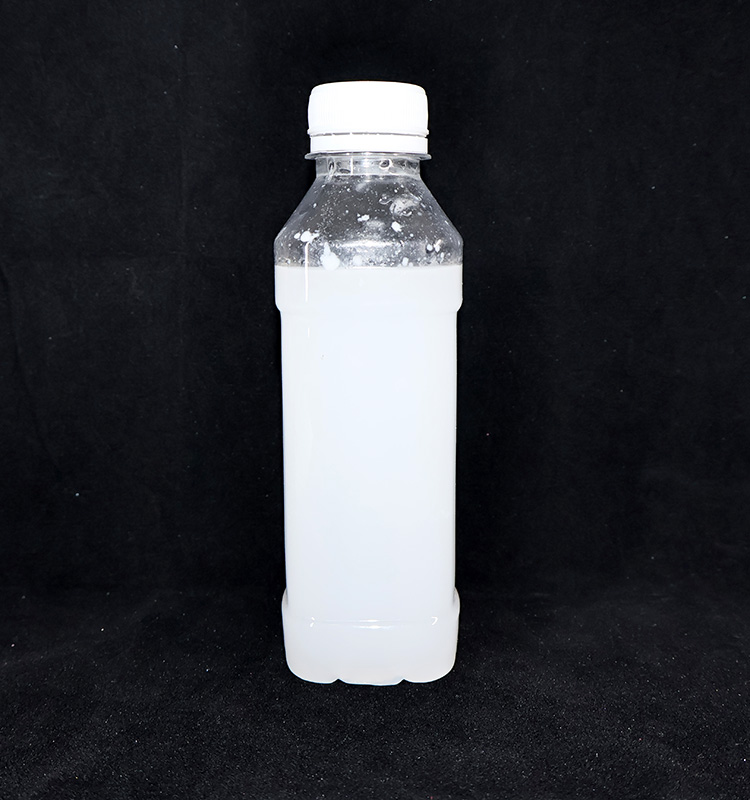


Usage and Performance
This product is an efficient defoamer composed of multiple components such as alcohol ether and various surfactants, and has a wide range of applications The advantages of high reliability, non toxicity, not affected by temperature, low dosage, good defoaming and anti foaming effect. Mainly applicable to wires PCB process; Chemical industry; electroplate; Printing and dyeing; papermaking; Medicine; Water-based ink; Ceramic cutting; Cleaning of steel plates; Aluminum processing; Defoaming and foam suppression in various wastewater treatment and industrial water systems.
Main features
Fast defoaming and good foam suppression performance.
It does not affect the basic properties of the foaming system.
Good diffusion and permeability.
Chemical stability.
No physiological activity, no corrosion, non-toxic, no adverse side effects, non flammable, non explosive, high safety.
Instructions for use
Dosage concentration: usually 0.01-1%, adjusted according to on-site conditions. Addition method: Add medication The pump can be continuously added or centrally added.
Packaging, transportation, and storage
Packaged in 25kg, 200kg, 1000kg plastic drums, or according to customer requirements ine packaging.
Transport by car or train, and pick up or deliver to the door according to the contract.
Store at room temperature(0-30℃) and atmospheric pressure, away from light, with a shelf life of 12 months.
Quality indicators
|
project |
Index |
|
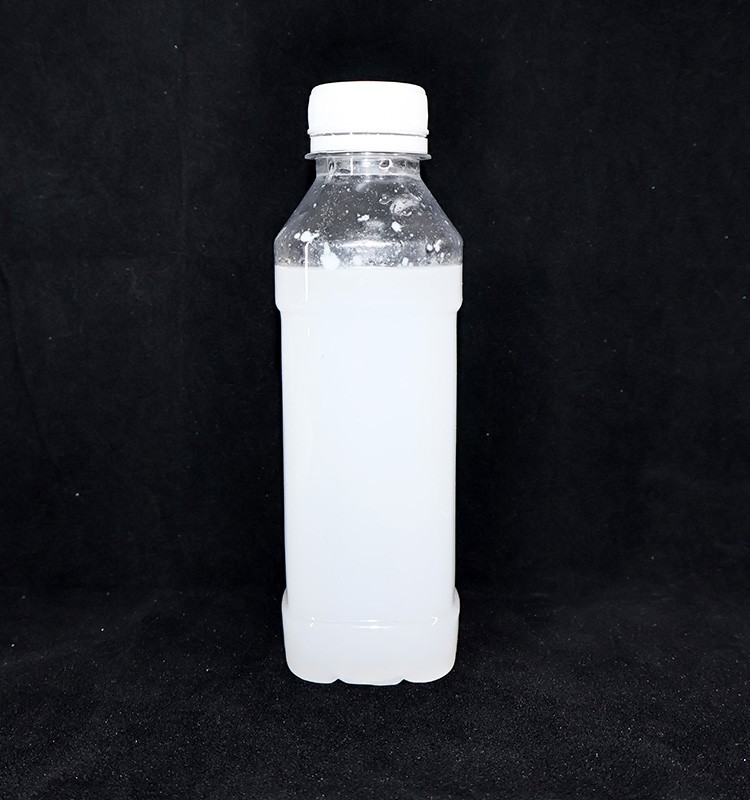
Appearance |
Iiquid |
|
Density (20°C, g/cm3) |
≥0.80 |
In the bustling world of industrial processes,from the vibrant stirring of a pharmaceutical brew to the relentless churning of wastewater treatment,foam often emerges as an uninvited guest.It starts innocuously,a cascade of bubbles,but left unchecked,it can disrupt operations,reduce quality,and create significant inefficiencies.This is where the subtle yet crucial role of defoaming agents comes into play.These specialized chemical additives are designed to manage and control foam,not through loud intervention,but through a quiet,sophisticated science that breaks foam's delicate structure and prevents its formation.They are the unsung heroes in the background,ensuring that processes run smoothly,tanks do not overflow,and product integrity remains intact.The development and application of these agents represent a deep understanding of surface chemistry,tailored to meet the silent challenges posed by froth and foam across a diverse spectrum of industries.
Defoaming agents,also known as antifoaming agents,function through a clever interplay of physical and chemical mechanisms.Their primary task is to counteract the stability of foam,which is typically maintained by surfactants that reduce the surface tension of the liquid and form resilient films around gas bubbles.A defoamer,often in the form of a liquid or a powder,is formulated with active components that have a lower surface tension than the foaming medium.When introduced into a foaming system,these agents spread rapidly across the surface of the foam films.The spreading action creates a localized imbalance in surface tension,leading to a Marangoni effect that thins and stretches the bubble wall.Simultaneously,the hydrophobic particles or oils within the defoamer penetrate the foam lamella,acting as bridges that allow the air trapped inside the bubble to escape.This dual action of spreading and bridging causes the bubbles to coalesce and rupture,leading to the collapse of the foam structure.Furthermore,some defoaming agents work proactively as antifoams,preventing the initial formation of foam by occupying the air-liquid interface and making it difficult for stable bubbles to generate.The effectiveness of a defoamer is not a simple matter;it depends on its ability to remain finely dispersed in the system,its chemical compatibility with the base medium,and its persistence under specific process conditions such as temperature,pressure,and pH.Incompatibility can lead to issues like surface defects or hazing,which is why the selection of the right defoamer is a nuanced decision.
The composition of defoaming agents is meticulously crafted to achieve these effects.They are rarely single-component substances but are rather sophisticated blends.A typical formulation includes active ingredients,carriers,and auxiliary components.The active ingredients are the workhorses responsible for the actual defoaming action.These can include hydrophobic silica,which provides the piercing points for bubble rupture,and various oils that facilitate spreading.Carrier fluids,often mineral oil,white oil,or vegetable oils,serve as the medium to disperse the active ingredients evenly throughout the system,ensuring they reach the foam interfaces effectively.Auxiliary components might include emulsifiers to help the defoamer mix into water-based systems,thickeners to control viscosity,and stabilizers to prevent separation during storage.The specific combination and ratio of these components are adjusted based on the target application,ensuring the defoamer performs reliably in environments ranging from highly acidic to strongly alkaline,or from ambient temperature to high-heat processes.This tailored approach allows for the creation of products that are both effective and minimally disruptive to the primary process.
The utility of defoaming agents spans an impressively wide range of sectors.Their application is critical in maintaining efficiency and quality.To provide a clearer overview,the following table outlines some common application areas and the general types of defoamers that might be considered for use,illustrating the versatility of these products.

 E-mail:jcl@jichanglong.com
 WhatsApp:+8618560709619
 Address:Block B, Polymer Materials Industry Innovation Park,No. 51, Lutai Avenue, High-tech Zone, Zibo City, Shandong Province
China vanadium inhibitors manufacturer Shandong Jichanglong Environmental Engineering Co., Ltd.
Jichanglong specializes in vanadium inhibitor , dehumidification and drying block, calcium hypochlorite disinfectant tablets, polyacrylamide and other products. With over 20 years of experience, we offer quality assurance and wholesale prices.



