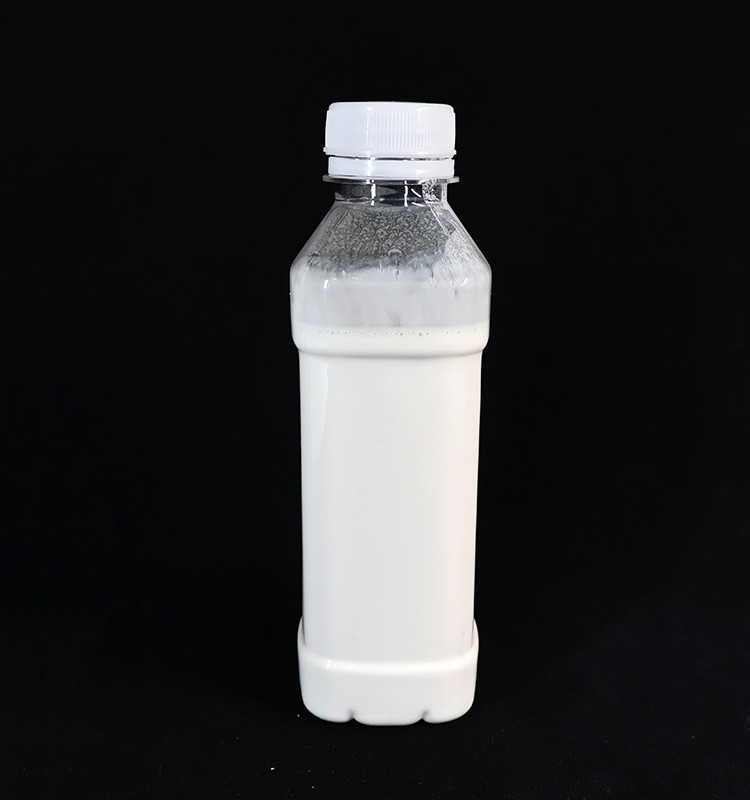


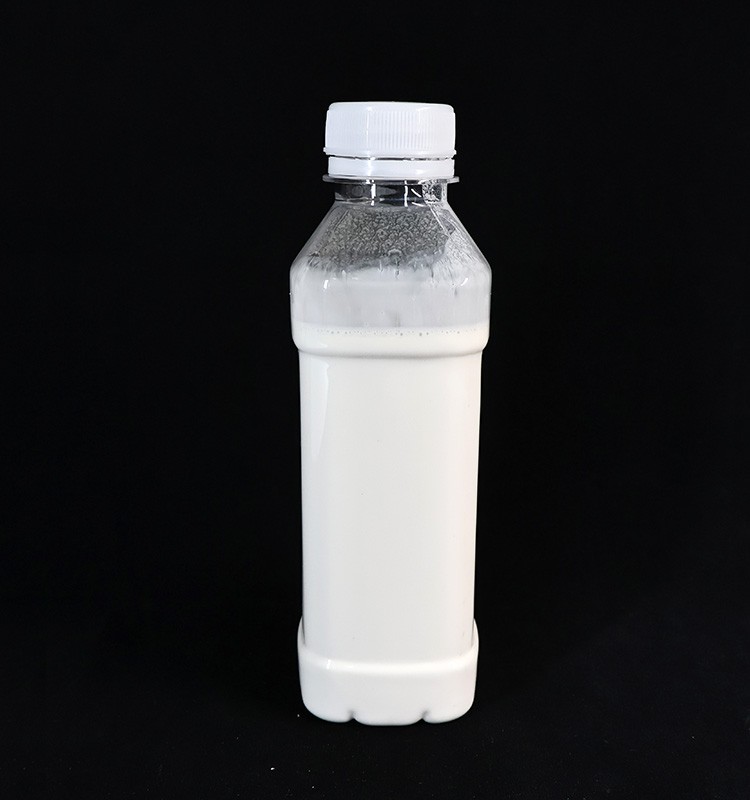
In countless industrial processes,from the fermentation of a beloved beverage to the furious mixing of a wastewater treatment tank,foam is an inevitable byproduct.While the image of a frothy cappuccino or a bubble bath may bring comfort,the same phenomenon in an industrial setting can be a significant obstacle.It can reduce the capacity of vessels,impede heat transfer,slow down reaction rates,lead to product loss,and even create safety and environmental hazards.This is where the silent,yet crucial,work of antifoaming agents,or defoamers,comes into play.These specialized chemical formulations are designed not to prevent the formation of foam,but to control and collapse it efficiently,ensuring processes run smoothly,efficiently,and as intended.Their development and application represent a fine balance of chemistry and engineering,tailored to meet the specific challenges posed by different foaming systems across a diverse range of industries.
An antifoaming agent is a chemical additive that reduces and hinders the formation of foam in industrial process liquids.The term is often used interchangeably with"defoamer,"though a subtle distinction sometimes exists:a defoamer is typically added to break existing foam,while an antifoamer may be added to prevent its formation in the first place.Modern formulations often serve both purposes.The science behind their function is fascinating.Foam is essentially a dispersion of a gas in a liquid,stabilized by surfactants that form elastic films at the bubble interfaces.Defoamers work by being immiscible with the foaming liquid and having a low surface tension.They operate through a mechanism that involves spreading across the foam film,penetrating the lamella,and disrupting its stability,which leads to the rupture of bubbles.This process can involve bridging-dewetting,where the defoamer droplet bridges the two sides of a foam film,and due to its low surface tension,the liquid drains away,causing the film to thin and eventually break.The effectiveness of a defoamer depends on its ability to enter and spread across the foam film faster than the stabilizing surfactants can repair it.It is a dynamic battle at the microscopic level.Selecting the appropriate defoamer requires a deep understanding of the foaming system,including its composition,pH,temperature,and shear forces.An incompatible defoamer can be ineffective or,in some cases,might even stabilize the foam further.Therefore,the choice is rarely one-size-fits-all but is instead a careful selection process to find the most suitable candidate for a specific application.
The chemistry of defoamers is diverse,leveraging various active ingredients to achieve the desired antifoaming effect.The following table provides a summary of some common types,their typical compositions,key characteristics,and examples of where they might be applied.
|
Chemical Type |
Primary Components |
Key Properties & Behavior |
Common Application Areas |
|
Oil-Based Defoamers |
Mineral oils, vegetable oils, or white oils, often combined with hydrophobic silica particles. |
These are generally considered workhorse defoamers. The oil acts as a carrier, while the silica particles provide the points of entry for rupturing the foam films. They can offer cost-effectiveness and are often used in scenarios where high-purity is not the primary concern. |
Pulp and paper processing, adhesive manufacturing, wastewater treatment, and paint and latex production. |
|
Silicone-Based Defoamers |
Polydimethylsiloxane (PDMS) oils or emulsions, frequently compounded with silica. |
Silicone defoamers are known for their high efficiency and stability across a wide range of temperatures and pH levels. They are effective at low concentrations and are often considered for their inertness in many systems. Their durability can make them a preferred choice in challenging conditions. |
Chemical processing, fermentation in pharmaceutical and biofuel production, textile dyeing, and oil and gas drilling fluids. |
|
Water-Based Defoamers |
Emulsions of oils (mineral, vegetable, or silicone) in water, along with emulsifiers and stabilizers. |
These ready-to-use emulsions are easy to handle and disperse quickly in water-based systems. They are designed for convenience and can be effective for controlling foam in aqueous processes without introducing excessive oil or silicone into the product. |
Waterborne coatings, ink formulations, food processing, and agricultural chemicals. |
|
EO/PO Based Defoamers |
Block copolymers of ethylene oxide (EO) and propylene oxide (PO). |
These are synthetic, non-ionic surfactants that function by destabilizing foam at the air-liquid interface. They are known for their good dispersibility in water and can be tailored to have different solubility properties based on the EO/PO ratio, allowing for customization. |
Detergent manufacturing, pesticide formulations, and certain types of chemical synthesis. |
|
Alkyl Polyacrylates |
Polymers derived from acrylic acid and long-chain alkyl acrylates. |
These defoamers are particularly useful in non-aqueous, organic systems where silicone-based products may be incompatible or cause issues with surface defects. They are designed to be effective in solvents, resins, and lubricants. |
Printing inks, lubricant oils, plastics processing, and solvent-based coatings. |
The journey of a defoamer from a laboratory concept to an industrial solution involves meticulous formulation.A typical defoamer is not just the active ingredient;it is a carefully balanced mixture that may include carriers to facilitate dispersion,emulsifiers to stabilize the formulation(especially in water-based emulsions),and other auxiliary agents to enhance shelf-life or compatibility.The performance can be influenced by factors such as particle size in the case of silica,the viscosity of the oil carrier,and the hydrophilic-lipophilic balance(HLB)of the emulsifiers used.For instance,in a sensitive application like food processing or pharmaceutical manufacturing,the defoamer must not only be effective but also comply with strict regulatory standards for safety and purity.This has led to the development of certified defoamers based on food-grade oils,silicones,or other approved substances.Similarly,in the paint and coating industry,the defoamer must collapse air bubbles without causing surface imperfections like craters or fish-eyes,which requires a precise balance between its compatibility and incompatibility with the coating system.The development process,therefore,is one of continuous refinement and testing to ensure reliability under real-world operating conditions.
Beyond the laboratory,the practical application of defoamers is an art in itself.The method of addition is critical;it is often more effective to add a defoamer continuously or in small,metered doses rather than in a single,large slug.The point of addition should be chosen where mixing is sufficient to disperse the agent throughout the foaming liquid,but not so turbulent that it incorporates more air.Over-treatment is a common pitfall,which can lead to secondary issues such as surface defects in coatings or films,reduced efficiency in filtration processes,or even the creation of de-foamed spots that can stabilize the surrounding foam.In some closed-loop systems,the durability of the defoamer is a key consideration,as a product that gets depleted quickly would require more frequent dosing,increasing operational costs.For this reason,some high-performance silicone and polymer-based defoamers are engineered for persistence,providing long-term foam control even under strenuous conditions.
In conclusion,the management of foam through the judicious use of antifoaming agents is a critical,though often overlooked,aspect of modern industrial operations.These sophisticated formulations help maintain process integrity,enhance product quality,and improve overall operational efficiency across a spectrum that includes food and beverage production,pharmaceuticals,chemicals,water treatment,and beyond.They are a testament to how a deep understanding of interfacial chemistry can solve practical,large-scale problems.The selection of the right defoamer is a technical decision that can have a noticeable impact on productivity and cost.We have a range of tailored solutions designed to address specific foam challenges in different environments.Our technical team is available to help you identify the most appropriate product for your needs.For more detailed information or to discuss your specific application,please do not hesitate to contact us for a consultation.

 E-mail:jcl@jichanglong.com
 WhatsApp:+8618560709619
 Address:Block B, Polymer Materials Industry Innovation Park,No. 51, Lutai Avenue, High-tech Zone, Zibo City, Shandong Province
China vanadium inhibitors manufacturer Shandong Jichanglong Environmental Engineering Co., Ltd.
Jichanglong specializes in vanadium inhibitor , dehumidification and drying block, calcium hypochlorite disinfectant tablets, polyacrylamide and other products. With over 20 years of experience, we offer quality assurance and wholesale prices.



