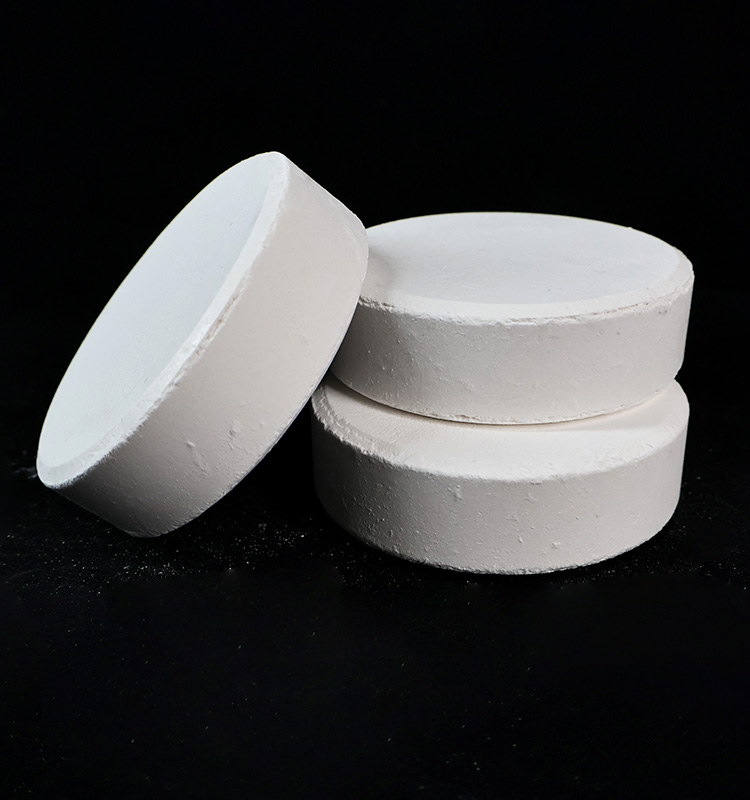


Performance and Applications:
Dehumidifying blocks absorb moisture from the surrounding environment using specific materials,thus achieving a dehumidifying effect.These materials typically have strong moisture absorption capabilities,reducing the humidity of air or materials within a certain range.In daily life,dehumidifying blocks can be placed in damp environments such as wardrobes,shoe cabinets,and drawers to prevent clothing,shoes,and other items from becoming damp and moldy.They can also be used to preserve grains,seasonings,tea,and other food items,preventing them from becoming damp and spoiling.In industrial production,dehumidifying blocks are widely used in chip manufacturing,circuit board assembly,and aging testing of electrical products to ensure that the humidity of the production environment is controlled within a suitable range,improving product quality and reliability.
Features:
High efficiency and energy saving;strong moisture absorption;environmentally friendly and safe,producing no harmful substances during use and easy to handle and recycle,meeting environmental protection requirements.
Instructions for Use:
Open the packaging of the dehumidifying block and remove the block.Place the dehumidifying block in the predetermined location,ensuring a certain distance from surrounding items to avoid direct contact that could cause contamination or affect the dehumidification effect.
Packaging,Transportation,and Storage
300g/block,500g/block,or customized according to customer requirements,packaged in cardboard drums.
Alternatively,packaging can be customized according to customer requirements,with a certificate of conformity affixed.Transportation is by road or rail;self-pickup or door-to-door delivery is available according to the contract.Store in a cool,dry place,protected from moisture,water,rain,and fire.Shelf life is one year.
Quality indicators
|
project |
Indicators |
|
Appearance |
solid |
|
Solid content %≥ |
80 |
Dehumidifying and drying block are functional materials that absorb ambient moisture and reduce air humidity through physical or chemical means.They are widely used in homes,industries,warehousing,and electronics manufacturing.Their core value lies in controlling humidity and preventing items from becoming damp,moldy,corroded,or experiencing performance degradation.
Dehumidifying and drying block are solid or granular products consisting of moisture-absorbing materials(such as calcium chloride,silica gel,and molecular sieves)encapsulated in breathable packaging(such as non-woven fabric or PE film).They actively absorb water vapor from the air to control humidity in a localized space.Their core functions include:
Reducing humidity:Maintaining the relative humidity(RH)within a safe range(e.g.,electronic component storage requires RH<40%);
Preventing mold growth:Inhibiting the growth of bacteria and fungi,extending the shelf life of food and medicine;
Protecting equipment:Preventing metal oxidation and short circuits,improving the reliability of industrial equipment;
Improving comfort:Improving air quality in enclosed spaces such as homes and offices.
The mechanisms of action of Dehumidifying and drying block can be categorized into three types:physical adsorption,chemical absorption,and complex reactions.Their principles are closely related to the material properties.
1.Physical Adsorption Type:Represented by Molecular Sieves
Molecular sieves are porous crystalline aluminosilicates with uniform pore size(typically 0.3-1 nm),selectively adsorbing water molecules through van der Waals forces.The process consists of three steps:
Diffusion:Water vapor enters the interior of the molecular sieve through the packaging material;
Adsorption:Water molecules are adsorbed onto the pore surface,forming a monolayer;
Desorption:When the ambient humidity decreases,the adsorbed water molecules are reversibly released(requiring heating for regeneration).
Advantages:High adsorption selectivity(can remove gases such as CO₂and N₂),reusable after regeneration,suitable for low humidity environments(RH<30%).
2.Chemical Absorption Type:Based on calcium chloride.
The reaction consists of two stages:
Rapid Moisture Absorption:Anhydrous calcium chloride(granular)is exposed to air,forming a hydrated layer on its surface;
Continuous Moisture Absorption:The hydrated layer diffuses,and the internal calcium chloride continues to combine with water,eventually forming a hexahydrate(white crystals).
Advantages:Fast moisture absorption rate(200%-300%moisture absorption by weight in 24 hours),low cost,suitable for high humidity environments(RH>60%).3.Composite Reaction Type:Synergistic Effect of Silica Gel and Activated Carbon
Composite dehumidifiers are typically made from a mixture of silica gel(physical adsorption)and activated carbon(chemical adsorption).Their working principle includes:
Silica Gel Adsorption:Captures water molecules through its microporous structure,absorbing 30%-50%of its own weight in moisture;
Activated Carbon Desorption:Adsorbed organic matter(such as VOCs)decomposes under the action of a catalyst,releasing adsorption sites;
Synergistic Effect:Silica gel reduces humidity,while activated carbon purifies the air,forming a closed loop of"dehumidification-purification."
Advantages:Versatile functionality,suitable for scenarios with high air quality requirements(such as museums and archives).
Dehumidifying and drying block,as a highly efficient functional material for controlling humidity,play a crucial role in homes,industries,and warehouses.To ensure maximum performance and extend service life,their use must be standardized across five dimensions:selection and adaptation,placement,replacement cycle,safety protection,and maintenance.
I.Selection and Adaptation:Precise Matching Based on Environmental Needs
1.Humidity Range
High Humidity Environments(RH>60%):Such as basements,coastal warehouses,and homes during the rainy season,calcium chloride Dehumidifying and drying block are the preferred choice.Their moisture absorption capacity can reach 200%-300%of their own weight,quickly reducing humidity to a safe level.For example,in a southern home wardrobe during the rainy season,500g of calcium chloride blocks can protect a 2㎡space,effective for 1-3 months.
Medium Humidity Environments(RH 30%-60%):Such as ordinary offices and pharmaceutical storage,silica gel Dehumidifying and drying block are the ideal choice.Their moisture absorption capacity is 30%-50%,and they can be reused through heat regeneration(120℃),offering high cost-effectiveness.1.**Low Humidity Environments(RH<30%):**Molecular sieve type desiccant blocks are required for environments such as electronics manufacturing workshops and precision instrument laboratories.They have a moisture absorption capacity of 15%-25%,high adsorption selectivity,and can remove gases such as CO₂and N₂,ensuring stable environmental humidity.
2.Temperature Conditions:**
High Temperature Environments(>40℃):**Calcium chloride type desiccant blocks absorb moisture faster,but may leak due to rapid evaporation.Leak-proof packaging(such as double-layer PE film)is necessary.For example,in tropical warehouses,the integrity of the packaging needs to be checked regularly.
Low Temperature Environments(<5℃):**The adsorption efficiency of molecular sieve type desiccant blocks decreases,requiring the use of heating equipment or an extended service life.For example,in cold chain warehouses in northern winters,preheating the molecular sieve blocks can improve performance.
3.Special Needs:**
Air Quality Sensitive Scenarios:**Composite desiccant blocks(silica gel+activated carbon)are required for environments such as museums and archives.It not only controls humidity but also adsorbs pollutants such as VOCs,forming a closed loop of"dehumidification-purification".
For food packaging scenarios:such as rice and dry goods storage,mineral-based(montmorillonite,bentonite)Dehumidifying and drying block are a safe choice.They have a moisture absorption capacity of 10%-20%,are naturally non-toxic,and meet food-grade standards.
II.Placement:Optimizing Layout for Improved Efficiency
1.Home Scenarios
Wardrobe:Hang Dehumidifying and drying block on the top or side walls of the wardrobe to avoid direct contact with clothing and prevent excessively low humidity from causing fiber brittleness.For example,placing a 500g calcium chloride block on the upper layer of the wardrobe can cover the entire space.
Bathroom:Place in a corner or under the exhaust fan to accelerate moisture absorption using airflow.For example,hanging a silicone dehumidifier bag behind the bathroom door in conjunction with the exhaust fan can reduce RH to below 50%.
Car:Hang behind the front seats or place in the door storage compartment to avoid direct sunlight causing packaging deformation.For example,placing small calcium chloride Dehumidifying and drying block inside the car during the rainy season can prevent interior mold growth.
2.Industrial Scenarios
Electronics Manufacturing Workshop:Place molecular sieve blocks 1-2 meters away from SMT placement machines and reflow soldering equipment to create a localized low-humidity environment.For example,deploying a molecular sieve dehumidification system near a chip packaging line can stabilize RH below 10%.**Pharmaceutical Storage:**Place silica gel and activated carbon composite blocks on the top shelf or under vents to ensure even airflow.For example,in a GMP pharmaceutical warehouse,placing 2 kg of composite blocks on each shelf can simultaneously control humidity and VOC concentration.
Metalworking Workshops:**Place calcium chloride blocks 0.5-1 meter away from precision machine tools to prevent cutting fluid deterioration and equipment corrosion.For example,placing 1 kg of calcium chloride blocks next to a CNC machining center can extend tool life by 30%.
3.Warehousing and Logistics Scenarios:**
Food Warehouses:**Hang mineral-based dehumidifying blocks on top of grain stacks or on walls,spaced 2-3 meters apart.For example,in rice storage,placing 5 kg of bentonite blocks per 100 square meters can extend the storage period to 6 months.
Cold Chain Transportation:**Place silica gel dehumidifying blocks inside refrigerated truck doors or between cargo compartments to prevent condensation and packaging damage.For example,when transporting frozen food,placing 10 kg of silica gel blocks in each refrigerated truck can reduce cargo loss by 15%.Cross-border e-commerce packaging:Embed small dehumidifying tablets(e.g.,5g/tablet)inside export packaging boxes to ensure goods remain dry during sea transport.For example,placing two dehumidifying tablets in the export box of electronic products can prevent short circuits.
The use of Dehumidifying and drying block requires comprehensive consideration of factors such as selection, appropriate placement, and other factors. By precisely matching environmental needs, optimizing layout, dynamic monitoring, risk mitigation, and standardized maintenance, their dehumidification effect can be maximized.

 E-mail:jcl@jichanglong.com
 WhatsApp:+8618560709619
 Address:Block B, Polymer Materials Industry Innovation Park,No. 51, Lutai Avenue, High-tech Zone, Zibo City, Shandong Province
China vanadium inhibitors manufacturer Shandong Jichanglong Environmental Engineering Co., Ltd.
Jichanglong specializes in vanadium inhibitor , dehumidification and drying block, calcium hypochlorite disinfectant tablets, polyacrylamide and other products. With over 20 years of experience, we offer quality assurance and wholesale prices.



