

In the current booming development of the mineral processing industry,the treatment of mineral processing wastewater has become a key link related to the sustainable development and environmental protection of the industry.During the beneficiation process,a large amount of wastewater containing suspended particles,heavy metal ions,and beneficiation agents is continuously generated.If discharged directly without effective treatment,it will cause serious damage to the surrounding ecological environment,affect water quality,soil fertility,and even threaten human health.
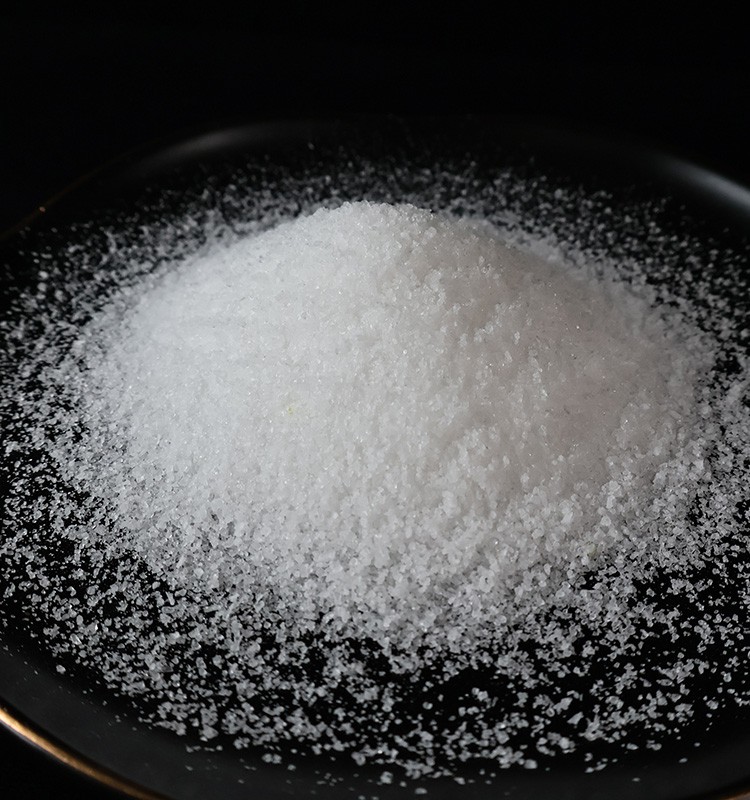
As the core agent in the treatment of mineral processing wastewater,special special flocculant for Mineral processing waters play an irreplaceable role in the process of wastewater purification,like a powerful"cleaning guard".It has a wide variety of types,including inorganic flocculants,organic flocculants,and microbial flocculants,each with unique characteristics and advantages.It can accurately achieve solid-liquid separation for different types of mineral processing wastewater,effectively remove various pollutants from the wastewater,and purify and reuse the mineral processing wastewater,saving water resources and reducing production costs.
1.Types and characteristics of coagulants
There are various types of coagulants,mainly divided into three categories:inorganic coagulants,organic coagulants,and microbial coagulants,each with its unique characteristics and applicable scope.
Inorganic flocculants are a type with a long history of application.Common aluminum salts include aluminum sulfate and polyaluminum chloride(PAC).Aluminum sulfate can ionize aluminum ions in water,which can neutralize the negative charges on the surface of suspended particles,reduce the electrostatic repulsion between particles,and thus aggregate and precipitate.Polyaluminum chloride is an inorganic polymer flocculant that has the advantages of fast hydrolysis rate,good flocculation effect,and wide applicability.Polyaluminum chloride can quickly play a role in treating acidic mineral processing wastewater,reducing the turbidity and suspended solids content of the wastewater.Iron salt inorganic flocculants,such as ferric chloride and polyferric sulfate(PFS),are also commonly used in the treatment of mineral processing wastewater.The iron hydroxide colloid generated by the hydrolysis of ferric chloride has strong adsorption capacity and can adsorb suspended particles and heavy metal ions in wastewater.Polymeric iron sulfate has the characteristics of fast settling speed and good treatment effect,especially suitable for treating high turbidity and high suspended solids in mineral processing wastewater.
Organic flocculants mainly include polyacrylamide(PAM)and its derivatives.Polyacrylamide can be classified into cationic,anionic,and non-ionic types based on its ionicity.Cationic polyacrylamide(CPAM)is suitable for suspended particles with negative charges,such as fine-grained mineral mud.It can quickly aggregate and settle these particles through electrostatic adsorption.Anionic polyacrylamide(APAM)is suitable for particles with positive charges and is commonly used to treat slurries containing more positively charged substances.Non ionic polyacrylamide(NPAM)is suitable for neutral or near neutral slurries and has good flocculation effect.The advantages of organic flocculants are low dosage,large flocs,and good dehydration performance.However,some synthetic polymer flocculants have potential toxicity from residual monomers(such as acrylamide),and the dosage needs to be controlled.
Microbial flocculant is a new type of flocculant developed in recent years,which is a substance secreted by microorganisms with flocculation activity.This type of flocculant has the advantages of non toxicity,degradability,and no secondary pollution,and is suitable for the treatment of mineral processing wastewater with high environmental requirements.For example,certain microbial flocculants can be used to treat algae containing wastewater,utilizing the algae flocculants to adsorb algae themselves and achieve algae removal.
2.The application effect of flocculants
In the actual treatment of mineral processing wastewater,coagulants have shown significant application effects.In a large copper ore beneficiation plant,the original beneficiation wastewater treatment process has problems such as poor treatment effect and low utilization rate of return water.After using a new type of polyaluminum chloride and polyacrylamide composite flocculant,the turbidity of the wastewater decreased from several hundred NTU to below 10 NTU,the removal rate of suspended solids reached over 95%,and the removal rate of heavy metal ions was also significantly improved.At the same time,the treated return water can be recycled for mineral processing production,and the utilization rate of return water has increased from 60%to over 85%,greatly saving water resources and reducing production costs.
In the coal industry,the coal preparation wastewater from a certain coal base contains a large amount of sediment and impurities,with high water turbidity and chromaticity.After using coagulants,the turbidity of the effluent remained stable below 5NTU,and the recovery rate of clean coal increased by 12 percentage points.This not only improved the utilization rate of coal resources,but also reduced environmental pollution.
3.Selection and usage precautions of flocculants
When selecting,it is necessary to comprehensively consider factors such as slurry properties,processing objectives,cost-effectiveness,and environmental requirements.If the pH value of the slurry is acidic,iron salt flocculants can be preferred;If the slurry contains a large number of negatively charged suspended particles,cationic polyacrylamide may be a better choice.At the same time,the type of flocculant should be determined according to the processing target.If efficient sedimentation is required,a flocculant with fast sedimentation rate can be selected;If specific pollutants such as heavy metal ions need to be removed,coagulants with targeted removal effects can be selected.
When using coagulants,pay attention to controlling the dosage.The dosage is too small to achieve the desired flocculation effect;Excessive dosage not only increases costs,but may also lead to loose floc structure,affecting the settling effect.In addition,the stirring speed and time can also affect the flocculation effect.Appropriate stirring speed and time can fully mix the flocculant with the wastewater,promoting the coagulation reaction.At the same time,attention should be paid to the storage conditions of flocculants to avoid moisture and deterioration,which may affect their effectiveness.
Overall,as a key link in the efficient utilization of water resources and clean production in the field of mineral processing,the value of coagulants is self-evident.They not only significantly improve the solid-liquid separation efficiency and water quality reuse rate through efficient physical and chemical interactions,but also optimize tailings management and reduce overall costs.With the continuous advancement of technology,specialized,environmentally friendly,and intelligent flocculant products will provide stronger support for the sustainable development of the mineral processing industry.

 E-mail:jcl@jichanglong.com
 WhatsApp:+8618560709619
 Address:Block B, Polymer Materials Industry Innovation Park,No. 51, Lutai Avenue, High-tech Zone, Zibo City, Shandong Province
China vanadium inhibitors manufacturer Shandong Jichanglong Environmental Engineering Co., Ltd.
Jichanglong specializes in vanadium inhibitor , dehumidification and drying block, calcium hypochlorite disinfectant tablets, polyacrylamide and other products. With over 20 years of experience, we offer quality assurance and wholesale prices.



