In modern public health systems and the water treatment industry, disinfection technology has always played a vital role. With accelerated urbanization and heightened public health awareness, various highly effective disinfection products are increasingly being widely adopted. Among these, trichloroisocyanuric acid disinfection tablets hold a significant position globally in water treatment and environmental disinfection due to their potent bactericidal capabilities, ease of use, and high stability.
Trichloroisocyanuric acid disinfection tablets are a highly effective chlorine-based disinfectant capable of rapidly eliminating bacteria, viruses, and other microorganisms in water. They are suitable not only for drinking water purification but also widely used in swimming pool water treatment, public facility disinfection, industrial circulating water systems, and agricultural aquaculture. Proper use of trichloroisocyanuric acid disinfection tablets not only enhances disinfection efficacy but also ensures water quality safety and environmental hygiene.
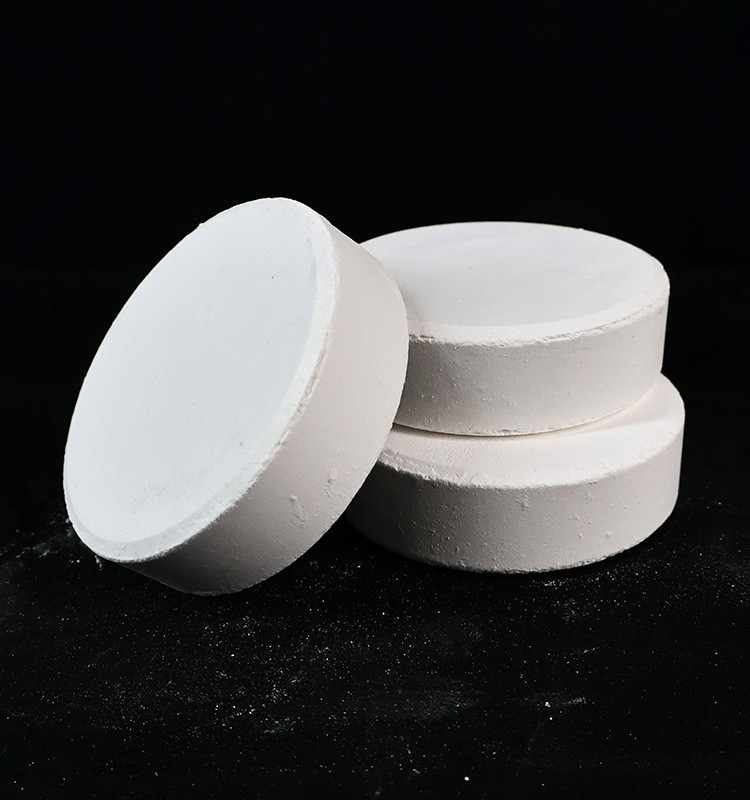
Trichloroisocyanuric acid is an organic chlorine compound with the chemical formula C₃Cl₃N₃O₃, serving as a highly effective and stable chlorine-based disinfectant. Typically appearing as white crystalline powder or tablets, it possesses a high available chlorine content, generally reaching 85% to 90% or higher. When dissolved in water, this substance slowly releases chlorine to form disinfecting components with strong oxidizing power.
Compared to traditional liquid chlorine disinfectants, trichloroisocyanuric acid offers distinct advantages: superior storage stability, easier transportation and handling, high available chlorine content, broad spectrum of microbial control, and relatively lower operational costs. Due to its excellent stability, trichloroisocyanuric acid does not readily decompose during storage, making it highly suitable for long-term stockpiling and long-distance transportation. Furthermore, its tablet form facilitates easy dispensing and precise dosing, enabling straightforward use in households, public facilities, and industrial settings.
The disinfecting efficacy of trichloroisocyanuric acid primarily stems from the available chlorine it releases in water. When disinfection tablets dissolve in water, they generate hypochlorous acid (HOCl) and hypochlorite ions. These substances possess potent oxidizing capabilities, rapidly disrupting microbial cell structures.
Its germicidal mechanism manifests in the following aspects:
(1) Hypochlorous acid penetrates bacterial cell walls, disrupting cell membrane structures and compromising cellular integrity. Once the cell membrane is damaged, vital intracellular substances leak out, leading to microbial death.
(2) Hypochlorous acid oxidizes proteins and enzyme systems within cells, preventing microorganisms from performing normal metabolic activities. With metabolic functions disrupted, microorganisms lose their ability to survive.
(3) The active chlorine released by trichloroisocyanuric acid also disrupts viral nucleic acid structures, preventing viral replication and transmission. Due to this multi-faceted mechanism, trichloroisocyanuric acid effectively eliminates various pathogenic microorganisms, including bacteria, viruses, fungi, algae, and certain parasites. Consequently, it is widely applied in water treatment and environmental sanitation.
Different application scenarios require varying usage methods and dosage requirements for disinfection tablets. Proper usage ensures disinfection efficacy while preventing waste or safety risks.
In drinking water treatment, trichloroisocyanuric acid disinfection tablets are commonly used for emergency water supply systems or rural drinking water disinfection. By adding the appropriate dosage of tablets, harmful microorganisms in the water can be rapidly eliminated, enhancing water quality safety.
The usage steps include: First, prepare a clean container or tank and ensure the water source shows no obvious contamination. Add the disinfection tablets to the water according to the specified dosage. Wait for the tablets to dissolve completely, allowing the available chlorine to distribute evenly. Allow the water to stand for approximately 30 minutes before use. In practical applications, adjust the dosage based on water volume and quality to ensure the free chlorine concentration meets safety standards.
Swimming pool water is prone to bacterial and algal growth in warm environments, necessitating continuous disinfection. Trichloroisocyanuric acid tablets are commonly used to maintain pool water hygiene.
Common usage methods include: Placing disinfection tablets into dedicated dosing dispensers or floating dosing devices. Allowing the tablets to dissolve slowly and release available chlorine. Regularly testing the residual chlorine concentration in the pool water. Adjusting the dosage of disinfection tablets based on test results. This approach ensures sustained disinfection efficacy, preventing excessive bacterial and algal proliferation.
In public settings such as schools, hospitals, hotels, and offices, trichloroisocyanuric acid disinfection tablets can be used to disinfect floors, walls, and equipment.
Typical usage involves dissolving the tablets in water to prepare a disinfectant solution at a specified concentration. Surfaces are then cleaned and disinfected using mops or spray equipment. A sufficient contact time must be maintained to ensure disinfection efficacy. This method effectively reduces bacterial populations in the environment, thereby lowering disease transmission risks.
In industrial production, circulating water systems are prone to algae and bacterial growth, which can impair equipment efficiency. Trichloroisocyanuric acid disinfection tablets can control microbial proliferation in water bodies. Dosage is typically calculated based on system water volume and administered periodically. Continuous disinfection prevents pipe blockages, equipment corrosion, and water quality deterioration.
- Public Health Sector: Used for disinfection in hospitals, schools, airports, and public transportation facilities.
- Drinking Water Treatment: Employed in rural water supply systems, emergency water treatment equipment, and outdoor water purification.
- Recreational and Sports Facilities: Commonly used in swimming pools, water parks, and hot spring venues to maintain water hygiene.
- Industrial sector: Many enterprises utilize trichloroisocyanuric acid to control microbial growth in circulating water systems.
- Agriculture and animal husbandry: It can also be used for disinfecting farm environments and equipment to reduce disease transmission.
Although trichloroisocyanuric acid disinfection tablets offer high disinfection efficiency, safety precautions must be observed during use. Strictly adhere to dosage instructions in the product manual. Overuse may lead to excessively high chlorine levels in water, posing health risks. When preparing disinfectant solutions, use clean containers and avoid mixing with other chemicals, as certain substances may react with chlorine. Wear protective gear such as gloves during handling to prevent direct skin contact with high-concentration disinfectants.
For storage, keep disinfection tablets in a cool, dry environment away from direct sunlight. Keep them distant from fire sources and flammable materials, and store them out of reach of children.
Trichloroisocyanuric acid disinfection tablets are a highly effective, stable, and convenient disinfection product playing a vital role in modern water treatment and public health systems. From drinking water disinfection to swimming pool management, and from public environment sanitation to industrial circulating water treatment, they provide reliable disinfection solutions. Through scientifically sound usage methods, their bactericidal properties can be fully leveraged while ensuring water quality safety and environmental hygiene. With ongoing technological advancements and growing market demand, trichloroisocyanuric acid disinfection tablets will continue to be a vital disinfection product in the future, providing robust safeguards for human health and environmental safety.

 E-mail:jcl@jichanglong.com
 WhatsApp:+8618560709619
 Address:Block B, Polymer Materials Industry Innovation Park,No. 51, Lutai Avenue, High-tech Zone, Zibo City, Shandong Province
China vanadium inhibitors manufacturer Shandong Jichanglong Environmental Engineering Co., Ltd.
Jichanglong specializes in vanadium inhibitor , dehumidification and drying block, calcium hypochlorite disinfectant tablets, polyacrylamide and other products. With over 20 years of experience, we offer quality assurance and wholesale prices.