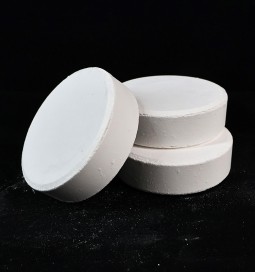
In today's era of heightened public health awareness, the selection of disinfection products directly impacts environmental safety, disease prevention, and the quality of production and daily life. As a highly effective, stable, and widely used chlorine-based disinfectant, trichloroisocyanuric acid (TCCA) disinfection tablets have seen steadily increasing usage across medical, industrial, agricultural, and household settings in recent years. Compared to traditional bleaching powder, sodium hypochlorite, or other solid disinfectants, trichloroisocyanuric acid disinfection tablet is becoming the primary choice for an increasing number of users due to its outstanding bactericidal capacity, excellent stability, and convenient application methods. This article comprehensively explores the core value of trichloroisocyanuric acid disinfection tablets from aspects including technical principles, functional advantages, application fields, ease of use, and safety, helping readers gain a deeper understanding of this modern, highly effective disinfection product.
Trichloroisocyanuric acid (TCCA) is a highly reactive organic chlorine compound. When dissolved in water, it releases available chlorine to form hypochlorous acid (HClO), the primary active ingredient responsible for its strong oxidizing and bactericidal properties.
Unlike ordinary bleaching powder with only 20%–30% available chlorine content, TCCA typically achieves 85%–90% available chlorine. This means:
- Equal weight of disinfectant tablets produces more available chlorine;
- Faster disinfection speed and higher efficiency;
- Greater suitability for large spaces and complex environments.
Studies show trichloroisocyanuric acid disinfection tablet rapidly inactivates diverse microorganisms including bacterial vegetative cells, viruses, fungi, and spores. It demonstrates particularly potent efficacy against enteric pathogens, Staphylococcus aureus, Escherichia coli, and avian viruses.
TCCA is a slow-release chlorine-based disinfectant with a relatively slow dissolution rate, enabling continuous release of available chlorine. This characteristic allows it to maintain effective chlorine concentrations for extended periods in applications such as swimming pools, recirculating water systems, aquaculture water bodies, and wastewater treatment, reducing the costs and labor associated with frequent replenishment.
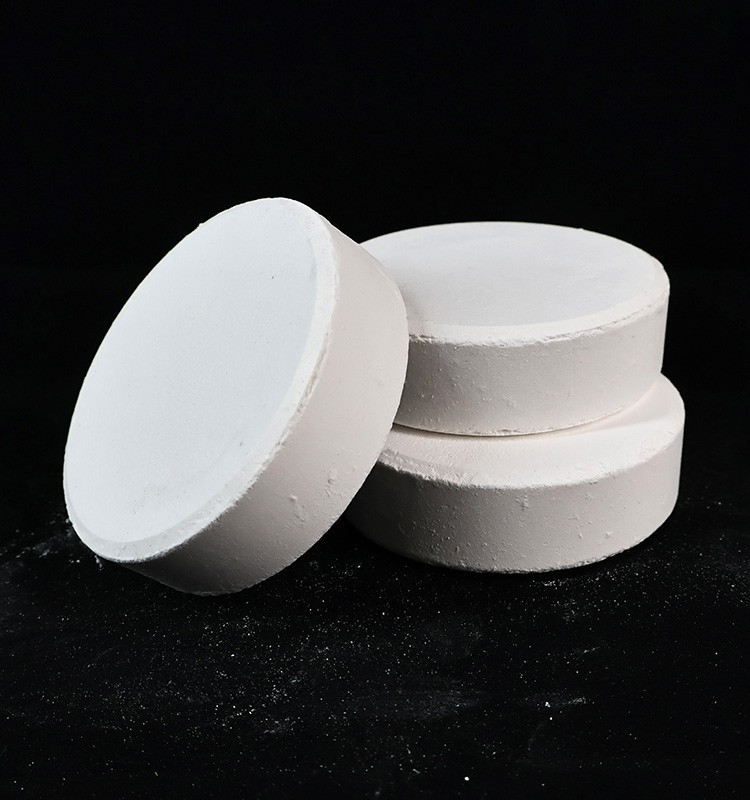
Compared to liquid disinfectants, trichloroisocyanuric acid disinfection tablets offer significant convenience advantages.
Liquid bleach faces high transportation costs, volatility, and leakage risks. Trichloroisocyanuric acid disinfection tablets:
- Resist breakage or leakage;
- Exhibit high storage stability;
- Can be stored long-term with a shelf life of 2–3 years;
- Are compact, reducing transportation costs.
This makes them highly suitable for bulk institutional purchases or cross-regional transport.
Traditional chlorine-based liquids require manual dilution, where inaccurate ratios can lead to:
- Excessive disinfection concentrations causing corrosion damage;
- Insufficient concentrations resulting in incomplete sterilization.
TCCA tablets, however, are precisely compressed. Simply adding the required number of tablets for the application rapidly achieves the desired effective chlorine concentration, enhancing operational convenience and accuracy.
Tablets dissolve in water with minimal residue, causing no significant deposits on equipment or containers. Unlike bleaching powder, they do not generate large amounts of irritating dust, reducing respiratory system irritation.
As a broad-spectrum disinfectant, TCCA tablets are suitable for nearly all scenarios requiring sterilization and water disinfection.
Including hospitals, clinics, schools, stations, hotels, etc., for:
- Floor surface disinfection;
- Odor elimination and sterilization of trash bins and restrooms;
- Cleaning the outer surfaces of medical instruments;
- Maintaining air and environmental hygiene.
During periods of high public health risk, TCCA serves as a critical emergency disinfection resource.
TCCA is extensively used for disinfecting swimming pool water, offering advantages such as:
- Continuous release of effective chlorine, reducing dosing frequency;
- Effective inhibition of algae growth;
- Maintains clear and transparent water quality.
It is also extensively used in water treatment plants, sewage treatment, and domestic water pretreatment systems.
In aquaculture, it is used for disinfection in fish ponds, shrimp ponds, recirculating aquaculture systems, and livestock farms, effectively preventing common diseases such as saprolegniasis and gill rot. In agriculture, it is applied for disinfecting greenhouse facilities, fruit and vegetable packing rooms, and irrigation water.
TCCA enhances food safety standards by disinfecting processing equipment, work surfaces, cold storage facilities, and piping systems.
In industrial applications:
- Sterilization of cooling water systems;
- Treatment of industrial recirculating water;
- Pipe disinfection and algae removal.
For personal use:
- Kitchen countertop and bathroom disinfection;
- Floor cleaning and sterilization;
- Disinfection of drinking cups and pet supplies;
- Emergency environmental disinfection (e.g., during viral outbreaks).
Its lightweight and easy-to-store properties make it particularly suitable for long-term household stockpiling.
Many traditional chlorine-based disinfectants emit strong irritating odors or generate byproducts, whereas trichloroisocyanuric acid disinfectant tablets exhibit milder properties in these aspects.
The active chlorine released when TCCA dissolves in water is more stable than that in liquid bleach, which is prone to volatilization and degradation. Consequently, it produces significantly less irritating odor during use.
The primary decomposition products of TCCA are cyanuric acid and trace amounts of chloride ions—both low-toxicity substances meeting environmental standards without causing secondary pollution.
Compared to highly corrosive disinfectants like sodium hypochlorite, TCCA exhibits lower corrosion rates on metals such as steel, copper, and aluminum, making it more acceptable for industrial applications.
A key reason many purchasers choose TCCA disinfection tablets is their high cost-effectiveness.
With chlorine content reaching approximately 90%, fewer tablets are required to achieve equivalent disinfection, resulting in lower overall costs compared to bleach or liquid chlorine products.
TCCA's slow-release properties maintain effective chlorine concentration over extended periods, minimizing manual dosing and maintenance frequency. This makes it particularly suitable for swimming pools, large water bodies, or industrial recirculating water systems.
Solid tablets resist volatilization and do not degrade in concentration over time like liquids, lowering disposal rates.
TCCA disinfectant tablets are typically categorized by application:
- 0.5g small tablets: Suitable for household and small-scale hospital disinfection
- 5g–20g tablets: Suitable for environmental disinfection in hotels, schools, and workplaces
- 50g–200g large tablets: Suitable for water treatment, swimming pools, and industrial circulating water systems
Users simply dispense the required amount to complete disinfection without complex preparation.
Although trichloroisocyanuric acid disinfectant table is relatively safe, proper usage rules must be followed:
(1) Avoid mixing with acids or ammonia-based substances to prevent harmful gas formation;
(2) Store in a cool, dry, well-ventilated area;
(3) Wear gloves when preparing solutions;
(4) Keep out of reach of children;
(5) Adhere to national sanitary standards for water concentration control.
Proper usage ensures safe and effective disinfection.
As a modern disinfectant combining high efficacy, stability, safety, and cost-effectiveness, trichloroisocyanuric acid disinfectant tablets are increasingly adopted by public institutions, industrial enterprises, farms, and households. Their high chlorine content, broad-spectrum bactericidal capability, ease of use, and low-corrosion, eco-friendly properties set them apart from other disinfection products. Whether used for public health prevention, water treatment, industrial environments, or daily household cleaning, trichloroisocyanuric acid disinfection tablets provide reliable, stable, and sustainable disinfection assurance, offering robust support for healthy living and safe production.

 E-mail:jcl@jichanglong.com
 WhatsApp:+8618560709619
 Address:Block B, Polymer Materials Industry Innovation Park,No. 51, Lutai Avenue, High-tech Zone, Zibo City, Shandong Province
China vanadium inhibitors manufacturer Shandong Jichanglong Environmental Engineering Co., Ltd.
Jichanglong specializes in vanadium inhibitor , dehumidification and drying block, calcium hypochlorite disinfectant tablets, polyacrylamide and other products. With over 20 years of experience, we offer quality assurance and wholesale prices.