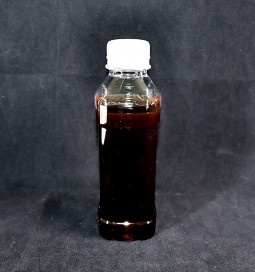
In today’s world of increasingly scarce water resources, reverse osmosis technology has become a core process in the field of water treatment. From seawater desalination to the production of industrial-grade pure water, and from drinking water purification to wastewater reuse, reverse osmosis membranes provide a reliable supply of high-quality water for various industries thanks to their desalination rates exceeding 99%. Reverse osmosis scale inhibitors are chemical additives specifically designed for reverse osmosis systems. By acting at extremely low concentrations, they effectively prevent scaling on the membrane surface, ensuring the long-term stable operation of RO systems.
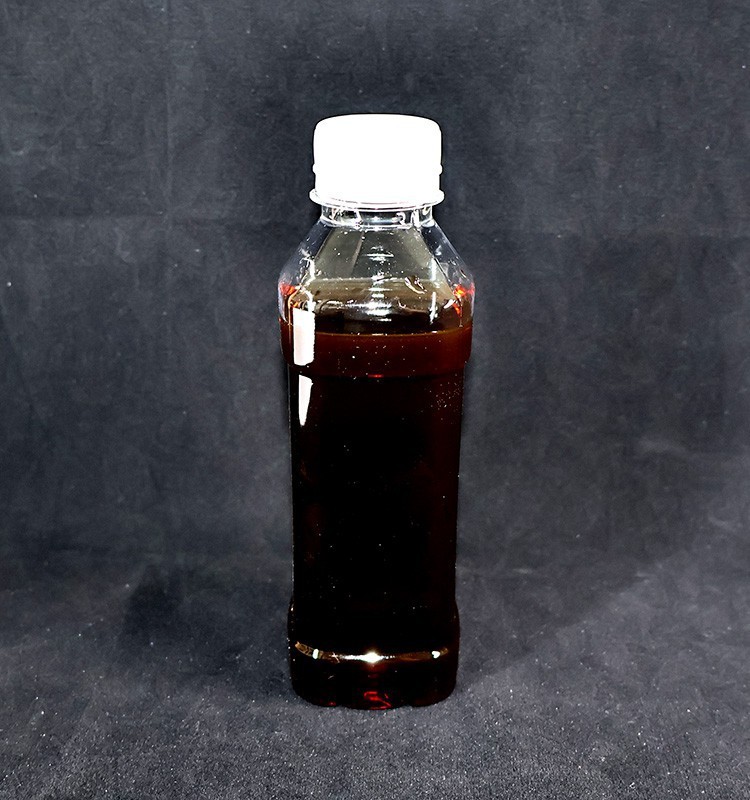
Reverse osmosis antiscalants are water treatment chemicals specifically designed for reverse osmosis (RO), nanofiltration (NF), and ultrafiltration (UF) systems. By inhibiting the crystallization and precipitation of insoluble salts and dispersing microscopic particles, they prevent scaling on the membrane surface, thereby ensuring the stable operation of the membrane system. Essentially, a reverse osmosis antiscalant is a “scale inhibitor and dispersant.” It does not directly remove scale-forming ions from the water but instead alters the crystallization behavior of these ions through chemical action, making it difficult for them to form strongly adherent scale layers even under supersaturated conditions. This characteristic allows the inhibitor to achieve significant scale inhibition at extremely low dosages (typically 2–8 mg/L).
High-quality reverse osmosis antiscalant possess the following notable characteristics:
- Broad-spectrum scale inhibition: Effectively controls the formation of various inorganic salt scales, including calcium carbonate, calcium sulfate, barium sulfate, strontium sulfate, calcium fluoride, and silica;
- Excellent compatibility: Does not form insoluble precipitates by co-precipitating with iron, aluminum oxides, or silicon compounds, thereby preventing secondary contamination of the membranes;
- Highly effective silica inhibition: Effectively suppresses silica polymerization and deposition, enabling stable operation even when the SiO₂ concentration in the concentrate stream reaches 185–290 mg/L;
- Broad applicability: Suitable for various membrane materials, including RO reverse osmosis membranes, nanofiltration membranes, ultrafiltration membranes, and MBR membranes;
- Wide pH adaptability: Maintains stable performance under water conditions with a pH range of 5–10.
The scale inhibition effect of reverse osmosis scale inhibitors is not based on a single mechanism but is achieved through the synergistic action of multiple chemical and physical effects. The primary mechanisms include the following four aspects:
- Complexation and solubilization: Upon dissolution in water, the RO scale inhibitor ionizes to form negatively charged molecular chains. These chains form soluble complexes or chelates with metal ions such as calcium and magnesium in the water, thereby significantly increasing the solubility of inorganic salts and preventing precipitation at saturation concentrations.
- Lattice distortion: Functional groups in the scale inhibitor molecules can adsorb onto active growth sites on the surfaces of inorganic salt nuclei or microcrystals, occupying lattice sites and thereby hindering and disrupting the normal growth of inorganic salt crystals. This mechanism causes the crystal structure to become distorted—transforming the originally regular, dense hard scale into loose, irregular soft scale, with a significant reduction in adhesion. Experiments have shown that after adding scale inhibitors, the size of calcium sulfate crystals can be reduced from 50 μm to less than 5 μm, and the adhesion of the scale decreases by approximately 75%. These loose, microscopic crystals are easily washed away by water flow and do not adhere firmly to the membrane surface.
- Electrostatic repulsion: After scale inhibitor molecules adsorb onto the surfaces of inorganic salt microcrystals, they impart a negative charge to the microcrystal particles. Due to like-repels-like, electrostatic repulsive forces arise between the microcrystals, preventing them from aggregating, growing, and depositing. Zeta potential tests show that scale inhibitors can increase the repulsive force between silica particles by 2–3 times. This dispersion mechanism is particularly effective in preventing the deposition of colloidal particles (such as iron oxides and silicates).
- Dispersion and Surface Protection: In addition to the three primary mechanisms mentioned above, modern reverse osmosis scale inhibitors also possess excellent dispersion properties, capable of stably dispersing already-formed microscopic scale particles in water to prevent their aggregation, growth, and deposition on the membrane surface. Simultaneously, the scale inhibitor forms a protective adsorbed layer on the membrane surface, physically blocking direct contact between the scale and the membrane surface.
The synergistic action of these four mechanisms forms the technical foundation for the high-efficiency scale inhibition of reverse osmosis scale inhibitors, enabling them to achieve exceptional scale inhibition at extremely low dosing concentrations.
Seawater desalination is one of the most important application areas for reverse osmosis scale inhibitors. Seawater is characterized by high salinity (TDS ≥ 35,000 mg/L), and specialized scale inhibitors can effectively control the scaling of insoluble salts such as calcium sulfate and barium sulfate. The Middle East and North Africa region accounts for nearly 50% of global seawater desalination capacity and is the core market for scale inhibitor demand.
Scale inhibitors play an irreplaceable role in industrial wastewater reuse and zero-discharge projects. Membrane scale inhibitors for reclaimed water reuse are suitable for various membrane systems, including ultrafiltration (UF), nanofiltration (NF), reverse osmosis (RO), and membrane bioreactor (MBR) membranes. They effectively inhibit the formation of scale caused by carbonates, sulfates, silicates, and calcium fluoride, and are particularly suitable for wastewater with high organic content.
In the treatment of boiler feedwater and cooling water at thermal power plants, scale inhibitors prevent silicate deposition on the concentrate side of reverse osmosis systems (where SiO₂ concentrations can reach 185–290 mg/L), thereby extending membrane lifespan and ensuring the stable operation of power generation systems.
Semiconductor chip cleaning and pharmaceutical production require ultrapure water with a resistivity of ≥18 MΩ·cm. Scale inhibitors are used to prevent contamination by silicate and metal scale in RO systems. The pharmaceutical sector’s demand for scale inhibitors has a compound annual growth rate (CAGR) of 9.2%, making it the fastest-growing among all downstream industries.
In processes such as juice concentration and beverage production, food-grade scale inhibitors are used to ensure the treated water meets drinking water hygiene standards. Products used for drinking water treatment must obtain international certifications such as NSF and meet strict hygiene and safety requirements.
In advanced treatment of municipal tap water and bottled water production, scale inhibitors are used to prevent scaling on reverse osmosis membranes, ensuring water quality and system operational efficiency.
As global environmental regulations become stricter, the scale inhibitor industry is accelerating its transition toward phosphorus-free and biodegradable formulations. Technological innovations are transforming how scale inhibitors are used. Modern intelligent dosing systems, integrated with online water quality monitoring sensors and AI algorithms, can automatically adjust scale inhibitor dosage based on real-time water quality changes, reducing chemical consumption by 20–30% while maintaining effective scale prevention. This trend aligns with the direction of Industry 4.0 and delivers significant economic benefits to users.
As a critical water treatment chemical, reverse osmosis scale inhibitors play an indispensable role in modern industrial production. Through the combined action of multiple principles—including electrostatic forces, complexation mechanisms, lattice distortion, charge barriers, dispersion effects, and corrosion protection—they effectively prevent the deposition and fouling of dissolved salts and impurities on the surface of reverse osmosis membranes. Additionally, their broad-spectrum scale inhibition capabilities, stability against metal oxides and silicate compounds, and excellent solubility and stability enable them to perform exceptionally well under various complex water quality conditions. When using reverse osmosis antiscalant, it is important to ensure precise dosing, regularly monitor water quality parameters, and perform routine system cleaning and maintenance. By selecting and using reverse osmosis scale inhibitors appropriately, one can not only significantly improve the efficiency and reliability of water treatment systems but also effectively reduce maintenance costs, ensuring the long-term stable operation of the equipment.

 E-mail:jcl@jichanglong.com
 WhatsApp:+8618560709619
 Address:Block B, Polymer Materials Industry Innovation Park,No. 51, Lutai Avenue, High-tech Zone, Zibo City, Shandong Province
China vanadium inhibitors manufacturer Shandong Jichanglong Environmental Engineering Co., Ltd.
Jichanglong specializes in vanadium inhibitor , dehumidification and drying block, calcium hypochlorite disinfectant tablets, polyacrylamide and other products. With over 20 years of experience, we offer quality assurance and wholesale prices.