In industrial scenarios such as coating spraying, fermentation production and papermaking process, the excessive production of foam often leads to product quality degradation, production efficiency reduction and even equipment damage. As the "invisible guard" of foam control, defoaming agent achieves accurate defoaming through unique physical and chemical mechanisms. Its principle involves three core mechanisms, namely, surface tension control, membrane elastic damage and liquid membrane drainage acceleration. This article will systematically analyze the scientific connotation and industrial value of defoaming agents from four dimensions: chemical essence, mechanism of action, performance requirements, and industrial applications.
1.The chemical nature of defoaming agents: the "reactive force" of surfactants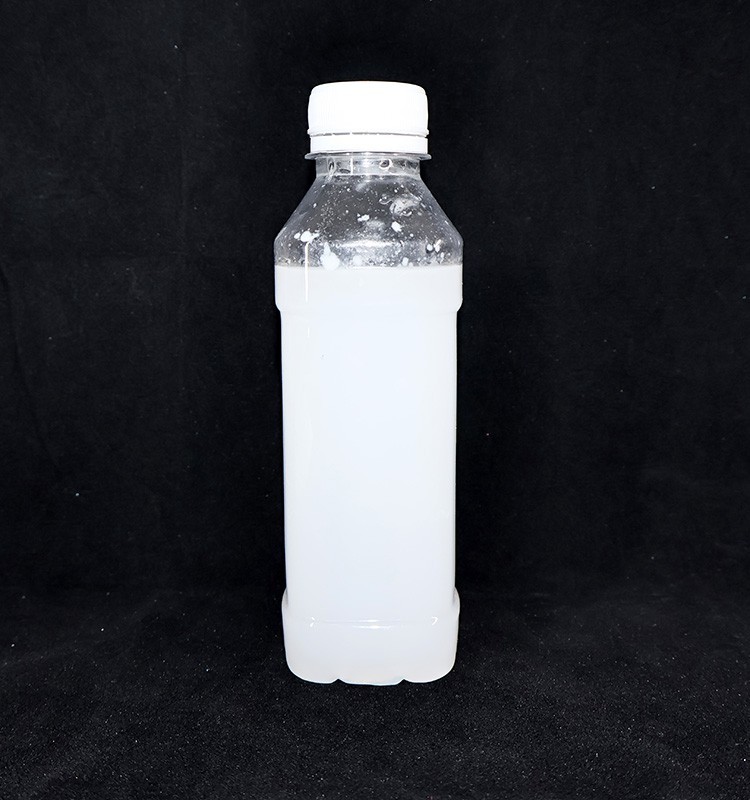
Defoaming agent is a kind of chemical substance that can reduce the surface tension of liquid and destroy the stability of foam. Its core component is usually a composite system of low surface tension substances (such as higher alcohols, polysiloxanes, mineral oils) and dispersion carriers (such as emulsifiers, carrier solvents). Unlike foaming agents (such as surfactants), which form foam by reducing surface tension, defoaming agents achieve defoaming function through local surface tension differences and membrane elastic damage.
1.1 Surface tension control: from "stabilizing foam" to "destroying foam"
The stability of foam depends on the directional adsorption film formed by surfactant at the gas-liquid interface. This film reduces the system energy by reducing the surface tension (γ), and endows the film with elasticity to resist external force impact. The mechanism of action of defoaming agents can be summarized as follows:
Local surface tension reduction: the surface tension (γ _d) of defoaming agent droplets (such as polysiloxane) is significantly lower than that of foam liquid film (γ _f). When they contact the liquid film, γ _d< will form at the contact point; The local region of γ _f. According to the Marangoni effect, the surrounding high surface tension liquid film will be pulled towards the low surface tension area, causing the liquid film to stretch and thin until it ruptures.
Surfactant displacement: Defoaming agent molecules can competitively adsorb at the gas-liquid interface, displacing the original surfactant molecules and disrupting their directional arrangement structure, thereby reducing membrane strength. For example, low molecular alcohols such as octanol can be inserted into the surfactant adsorption layer to reduce the intermolecular tightness and weaken the stability of foam.
1.2 Membrane elastic failure: from "repairable" to "irreversible"
The elasticity of foam liquid film is derived from the interaction forces between surfactant molecules (such as hydrogen bond and van der Waals force). When the liquid film is stretched by external forces, these forces can restore the film to its original state. Defoaming agents destroy membrane elasticity through the following methods:
Extremely low surface tension induced instability: The surface tension of polysiloxane defoaming agents can be as low as 20-21 mN/m (water is 72 mN/m). When they enter the liquid film, it will cause the local surface tension to drop to an extremely low level, resulting in the inability of the liquid film to recover its elasticity through the surface tension gradient under external tension, and ultimately rupture.
Hydrophobic particle adsorption: Some defoaming agents (such as colloidal silica) adsorb the hydrophobic end of surfactants through hydrophobic particles, causing the particles to become hydrophilic and enter the water phase, thereby disrupting the membrane structure. For example, EBS particles can adsorb hydrophobic tail chains of sodium dodecyl sulfate (SDS), leading to a decrease in membrane strength.
2.Action mechanism of defoaming agent: three ways to solve the foam problem
The process of action of defoaming agents can be divided into three stages: diffusion permeation bubble rupture. Its core mechanism includes reducing local surface tension, breaking membrane elasticity, and accelerating liquid film drainage. The specific path is as follows:
2.1 Reducing Local Surface Tension: The "First Impact Force" for Rapid Bubble Breaking
When defoaming agent droplets contact the foam liquid film, their low surface tension characteristics will immediately form a surface tension gradient at the contact point. According to the formula:
[Delta P=gammaleft(frac{1}{R_1}+frac{1} {R_2}right )]
(where Δ P is the additional pressure, R ₁, R ₂ are the curvature radii of the liquid film), the additional pressure in the low surface tension region (γ d_d) is significantly lower than that of the surrounding liquid film (γ _f), causing the liquid film to be pulled and stretched, and the thickness to decrease from the micrometer level to the nanometer level, ultimately leading to rupture due to the imbalance of van der Waals force or electrostatic repulsion.
2.2 Breaking film elasticity: "long-term mechanism" to inhibit foam regeneration
The regeneration of foam depends on the elastic recovery ability of the liquid film. Defoaming agents destroy membrane elasticity through the following methods:
Insertion displacement mechanism: Low molecular weight alcohols (such as ethanol and octanol) can be inserted into the surfactant adsorption layer, displacing the original molecules and reducing the density of the adsorption layer, thereby weakening the membrane elasticity. For example, the insertion of octanol into SDS solution can reduce the elastic modulus of the membrane by more than 50%.
Crosslinking curing mechanism: some defoaming agents (such as polyether modified siloxane) can form a three-dimensional network structure through intermolecular crosslinking, solidify the liquid film and prevent its flow, thus inhibiting the regeneration of foam.
2.3 Accelerate liquid membrane drainage: "time dimension" to shorten the life of foam
The stability of foam is closely related to the discharge rate of liquid film. Defoaming agents accelerate drainage through the following methods:
Reduce liquid film viscosity: Replacing hydrogen bonding stabilizers (such as polyvinyl alcohol) with defoaming agents (such as polydimethylsiloxane) that cannot generate hydrogen bonds can reduce the surface viscosity of the liquid film and accelerate the drainage rate. For example, adding polysiloxane defoaming agent to papermaking wastewater can shorten the drainage time by 30% -50%.
Promote gas diffusion: Defoaming agent droplets can be used as gas diffusion channels to accelerate the diffusion of gas in the liquid film to the main liquid phase, so as to reduce the internal pressure of foam and promote fracture.
3.Performance requirements for defoaming agents: precise matching from "effective" to "efficient"
The performance of defoaming agents needs to meet four core indicators: strong defoaming power, low dosage, high stability, and no side effects. The selection should comprehensively consider the properties of the foaming system (such as water/oil, temperature, pH value) and the requirements of the application scenario (such as rapid defoaming/long-term foam suppression).
3.1 Chemical stability: Compatibility with the system
Defoaming agents need to maintain chemical inertness in the foaming system to avoid reactions with system components that may cause failure or the production of harmful substances. For example:
Fermentation industry: requires the use of oil-based defoaming agents (such as polyether modified silicone) to avoid reaction with microbial metabolites;
Waterborne paint: water-based defoaming agent (such as silicone lotion) shall be selected to prevent film defects due to poor compatibility.
3.2 Physical properties: Balance between dispersibility and permeability
The dispersion state (such as particle size) and surface properties (such as spreading coefficient) of defoaming agents significantly affect their defoaming efficiency:
Particle size control: A particle size that is too large (>100 μ m) can cause difficulty in dispersion, while a particle size that is too small (<1 μ m) is easily discharged by the liquid film. The optimal particle size range is usually 5-50 μ m;
Spread coefficient: The spread coefficient (S=γ _f - γ d_df - γ d_d) needs to be positive to ensure that the defoaming agent can quickly spread on the surface of the liquid film. For example, the spreading coefficient of polysiloxane can reach 10-15 mN/m, much higher than that of mineral oil (2-5 mN/m).
3.3 Environmental adaptability: tolerance to temperature and pH values
The temperature and pH value of the foaming system can affect the stability and activity of defoaming agents:
High temperature system (such as paper cooking): high temperature resistant defoaming agent (such as mineral oil+metal soap composite system) shall be used to avoid lotion demulsification failure;
Strong acid/strong alkali system (such as fermentation tank cleaning): Acid and alkali resistant defoaming agents (such as polyethers) should be used to prevent failure due to hydrolysis or saponification reactions.
4.Industrial application of defoaming agents: value transformation from laboratory to production line
Defoaming agents are widely used in fields such as coatings, textiles, fermentation, papermaking, water treatment, and petrochemicals, and their selection needs to be customized and matched according to specific scene requirements.
4.1 Coating Industry: Key Additives for Eliminating Coating Defects
In the process of coating, foam will lead to film shrinkage, pinhole and other defects. Water based coatings require the use of organic silicon defoaming agents (such as polyether modified silicon), which achieve efficient defoaming through rapid spreading and low surface tension characteristics; Solvent based coatings require the use of mineral oil defoaming agents to avoid a decrease in coating adhesion caused by the migration of silicone oil.
4.2 Fermentation industry: "microbial protectants" to improve yield
In the fermentation process of antibiotics, amino acids, etc., foam will reduce the liquid loading, pollute the air filter, and even cause bacteria contamination. Fermentation specific defoaming agents (such as polyethers) need to meet the requirements of high temperature resistance, shear resistance, and non toxicity. They ensure stable operation of the fermentation process by balancing continuous foam suppression and rapid defoaming.
4.3 Paper Industry: Process Optimization Agent for Optimizing Pulp Quality
In the process of pulping, washing and paper making, foam will cause pulp loss, poor paper evenness and other problems. Papermaking defoaming agents (such as fatty alcohols) need to have acid and alkali resistance and high temperature resistance. They significantly improve pulp quality and production efficiency by reducing liquid film viscosity and accelerating drainage.
The action mechanism of defoaming agent is the cross integration of surface chemistry, fluid mechanics and material science. It realizes the scientific transformation from "foam generation" to "foam elimination" by precisely regulating the surface tension, membrane elasticity and liquid membrane drainage. With the development of nanotechnology, green chemistry, and smart materials, defoaming agents are evolving towards high efficiency, environmental friendliness, and multifunctionality, providing key support for the high-quality development of industrial production.

 E-mail:jcl@jichanglong.com
 WhatsApp:+8618560709619
 Address:Block B, Polymer Materials Industry Innovation Park,No. 51, Lutai Avenue, High-tech Zone, Zibo City, Shandong Province