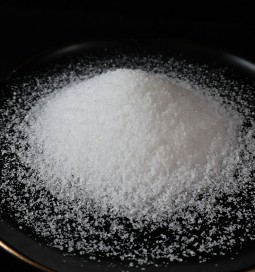
Polyacrylamide is a synthetic water-soluble polymer with unique properties such as thickening, flocculation, and drag reduction. It plays a crucial role in numerous fields including water treatment, oil extraction, papermaking, textile printing and dyeing, and pharmaceuticals. With technological advancements and heightened environmental demands, polyacrylamide has become an indispensable chemical additive across multiple industries, favored for its high efficiency, stability, and cost-effectiveness.
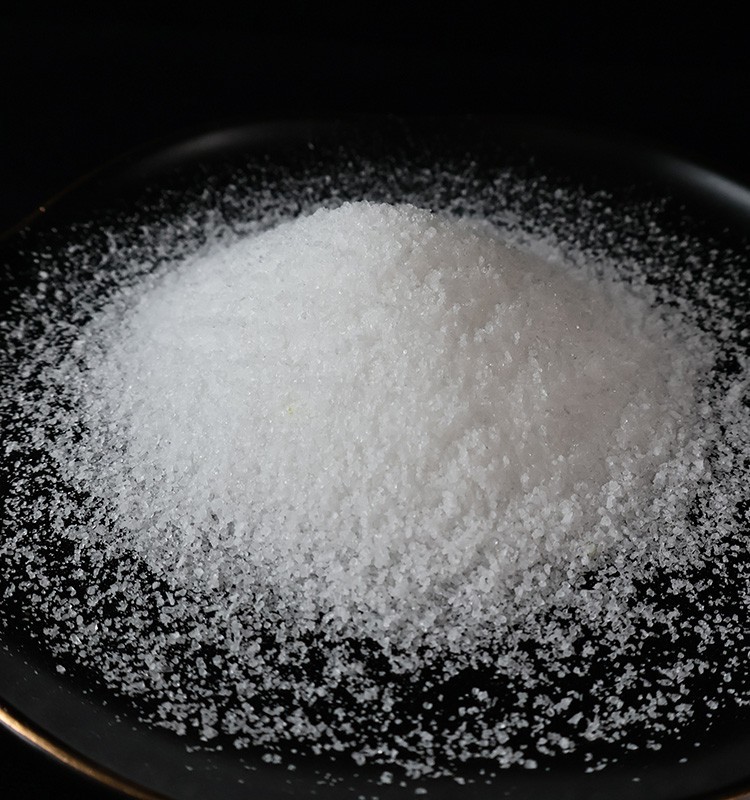
Polyacrylamide is a linear polymer formed by the polymerization of acrylamide monomers. Characterized by long molecular chains and abundant active groups, its properties can be tailored through structural and ionic modifications, granting it exceptional adaptability across industries.
Based on ionic charge, PAM is primarily categorized into four types:
- Anionic PAM (APAM): Suitable for systems containing high levels of silt and inorganic suspended solids.
- Cationic PAM (CPAM): Suitable for sludge and wastewater systems with high organic content.
- Nonionic PAM (NPAM): Used for flocculation and thickening in highly acidic or saline environments.
- Amphoteric PAM: Combines anionic and cationic properties, offering broader applicability but at higher cost.
These variations in type correspond to distinct application scenarios, earning PAM the reputation as an “industrial all-rounder.”
Polyacrylamide delivers effectiveness across numerous industries primarily through four fundamental mechanisms:
(1) Powerful Flocculation: With high molecular weight and long chains, PAM adsorbs particles in water and forms bridges, rapidly aggregating suspended solids into large flocs for sedimentation or flotation. Its flocculation capacity far exceeds traditional aluminum or iron salts.
(2) Thickening and Rheology Control: PAM exhibits significant thickening properties, increasing liquid viscosity and altering system flow characteristics. This makes it highly valuable in industries such as coatings, construction materials, oilfields, and mining.
(3) Strong Adsorption and Binding Capabilities: PAM can bind to various particle surfaces, serving as a binder to enhance the forming strength of powders, such as in pelletized ore and ceramic powder granulation.
(4) Dispersion and Scale Inhibition: PAM prevents particle agglomeration, maintains system stability, and reduces scale deposition. It is thus commonly used in cleaning agents, water injection systems, and circulating water systems.
These mechanisms of action make polyacrylamide a nearly universal additive across industrial sectors.
Water treatment represents one of polyacrylamide's most extensive application areas, playing an irreplaceable role particularly in sewage treatment, industrial wastewater treatment, and drinking water purification. In these applications, polyacrylamide primarily enhances water clarity and removes suspended solid impurities. Specifically, polyacrylamide functions in water treatment through the following mechanisms:
- Flocculant action: The molecular chain structure of polyacrylamide effectively adsorbs minute particles in water, forming flocs that cause suspended solids to settle, thereby achieving solid-liquid separation. Due to its high molecular weight and strong adsorption capacity, polyacrylamide significantly improves water treatment efficiency, making it an ideal flocculant for municipal sewage, paper mill wastewater, textile wastewater, and mining wastewater treatment.
Coagulant Aid Function: During water treatment, polyacrylamide also serves as a coagulant aid. It synergizes with inorganic coagulants (such as aluminum sulfate or ferric sulfate) to enhance solid particle removal. This combined application not only improves wastewater purification but also reduces coagulant consumption, lowering treatment costs.
- Sludge Dewatering: Polyacrylamide demonstrates significant efficacy in sludge dewatering. Leveraging its flocculation and coagulation properties, it effectively removes moisture from sludge, reduces sludge volume, and facilitates subsequent sludge treatment and disposal in a more convenient and environmentally friendly manner.
Polyacrylamide is also extensively used in petroleum extraction, playing a particularly crucial role in tertiary oil recovery and drilling operations. As petroleum extraction becomes increasingly challenging, the enhanced recovery capabilities of polyacrylamide become more pronounced. Its primary uses in the petroleum industry include:
- Oil Displacement Agent: By increasing the viscosity of injected water and enhancing its sweep efficiency, polyacrylamide improves oil recovery. This technique, known as polymer flooding, constitutes tertiary recovery. The thickening effect of polyacrylamide solutions effectively reduces interfacial tension between oil and water in formations, displacing trapped crude oil and significantly boosting recovery rates.
- Filtration loss reducer: During drilling operations, polyacrylamide serves as a mud loss reducer, minimizing water migration from drilling fluids into formations. This effectively protects wellbore integrity, prevents wall collapse, and enhances drilling safety and efficiency. Additionally, polyacrylamide stabilizes drilling mud, reduces fluid loss, and improves drilling quality.
- Water Blocking Agent: During later stages of oil extraction, significant injection water accumulates in the wellbore, leading to reduced oil production. As an excellent water blocking agent, polyacrylamide selectively seals high-permeability formations, reducing water phase permeation and thereby boosting oil well output.
In the pulp and paper industry, polyacrylamide holds significant application value, primarily used to enhance both dry and wet strength of paper while improving pulp dewatering efficiency. It performs the following functions during papermaking:
- Retention Aid: As a retention aid, polyacrylamide effectively anchors fine fibers, fillers, and other solid particles within the paper structure, reducing loss and improving pulp utilization.
- Strengthening Agent: Through its adhesive properties, polyacrylamide increases both dry and wet strength of paper, making finished products more resilient and tear-resistant. Its strengthening effect is particularly pronounced in high-strength paper products like toilet paper, industrial packaging paper, and tissues.
- Efficiency enhancers: Polyacrylamide also improves pulp flowability and dewatering properties, shortening drying times to boost production efficiency and reduce energy consumption.
Beyond water treatment, oil extraction, and papermaking, polyacrylamide plays irreplaceable roles in other industrial sectors:
- Textile and Dyeing Industry: In textiles and dyeing, polyacrylamide is widely used as a sizing agent, thickener, and adhesive for fabrics. It enhances yarn strength and smoothness while reducing breakage rates. Additionally, as a thickener in dyeing processes, it ensures uniform color distribution and vibrant hues.
- Pharmaceutical Industry: In pharmaceutical formulations, polyacrylamide serves as a film-forming agent, binder, and stabilizer, widely applied in tablet production and sustained-release formulations. Furthermore, it is used to prepare hydrogel materials for medical contact lenses, offering excellent biocompatibility.
- Cosmetics Industry: Due to its excellent moisturizing and thickening properties, polyacrylamide is used as an emulsifier and stabilizer in cosmetics. It enhances product texture, making it smoother and more spreadable, and is widely applied in skincare products, shampoos, and body washes.
- Construction Materials Industry: The thickening properties of polyacrylamide are also applied in construction materials. For instance, in cement mortar and gypsum board production, it enhances workability and adhesion, facilitating construction operations.
With its diverse modification characteristics and extensive application fields, polyacrylamide demonstrates remarkable market vitality and innovation potential. Whether in traditional industries, modern agriculture, or emerging materials sectors, polyacrylamide provides robust support for production efficiency and product quality across diverse fields. With technological advancements and heightened environmental awareness, its applications will continue expanding toward eco-friendly, health-conscious, and multifunctional directions, delivering efficient, low-consumption solutions for an increasing number of industries.

 E-mail:jcl@jichanglong.com
 WhatsApp:+8618560709619
 Address:Block B, Polymer Materials Industry Innovation Park,No. 51, Lutai Avenue, High-tech Zone, Zibo City, Shandong Province
China vanadium inhibitors manufacturer Shandong Jichanglong Environmental Engineering Co., Ltd.
Jichanglong specializes in vanadium inhibitor , dehumidification and drying block, calcium hypochlorite disinfectant tablets, polyacrylamide and other products. With over 20 years of experience, we offer quality assurance and wholesale prices.