Against the backdrop of increasingly scarce global water resources and rising industrial environmental standards, various high-efficiency water treatment materials are gradually entering the public eye. Among them, polyacrylamide (PAM) has become an irreplaceable functional polymer material in the environmental protection, petroleum, papermaking industries, and numerous industrial processing fields. This is due to its excellent flocculation properties, broad industry applicability, and high economic value. So, what exactly is polyacrylamide? Why is it so crucial in modern industrial systems? This article provides a comprehensive analysis covering its structural characteristics, production methods, main types, core functions, and industry applications.
Polyacrylamide, abbreviated as PAM, is a linear polymer formed through the polymerization of acrylamide monomers. Its molecular chains are rich in amide groups, endowing it with strong polarity and adsorption capabilities. Consequently, it demonstrates exceptional efficiency in water treatment, solution thickening, flocculation, sedimentation, and related fields.
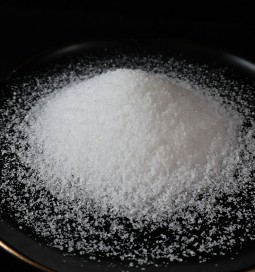
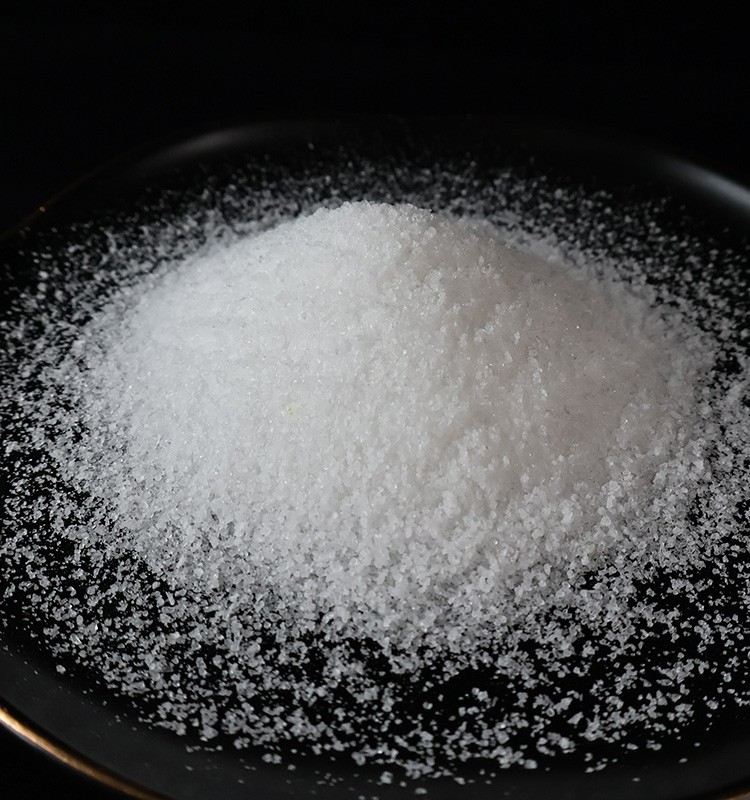
Visually, polyacrylamide typically appears as a white powder or transparent granules. It dissolves readily in water to form highly viscous solutions but is insoluble in most organic solvents. Its key characteristics include:
(1) High molecular weight: Common molecular weights range from several million to tens of millions.
(2) Excellent solubility: Rapid dispersion and polymer chain formation upon dissolution in water.
(3) Abundant active groups: The amide groups confer adsorption, bridging, and enhanced adhesion capabilities.
(4) High stability: Remains stable under ambient temperature and pressure, facilitating storage and transportation.
As a polymeric flocculant, it exerts extensive influence across industrial sectors.
To meet diverse industrial requirements, polyacrylamide is typically categorized into three main types, each with unique functions and applicable conditions.
Anionic PAM is one of the most widely used types. Its molecular chains carry negative charges, making it suitable for treating positively charged suspended solids, minerals, and organic matter.
- Key Features: Strong flocculation capability, promotes rapid solid-liquid separation, dominates the wastewater treatment industry.
- Applicable Industries: Municipal sewage, chemical wastewater, mineral processing, papermaking, metallurgical wastewater treatment, etc.
Cationic PAM carries a positive charge and is specifically designed for treating wastewater containing high levels of organic matter. It is commonly used in food processing, pharmaceuticals, slaughterhouses, fermentation, and similar industries.
- Key Features: Exceptional adsorption of organic suspended solids, simultaneously reduces sludge moisture content and enhances dewatering efficiency.
- Applicable Industries: Sludge dewatering, papermaking additives, municipal sewer sludge treatment, etc.
Non-ionic PAM is electrically neutral, relying primarily on hydrogen bonding for flocculation.
- Key Features: Performs well in neutral environments with low sensitivity to metal ions.
- Applicable Industries: Textile sizing, mineral flotation, treatment of weakly acidic or alkaline wastewater, etc.
The selection of different types directly impacts treatment effectiveness and operational costs. Therefore, enterprises typically conduct targeted selection based on water quality composition, treatment objectives, and application scenarios.
Polyacrylamide's widespread recognition stems from its unique polymer chain structure and active groups. Its primary mechanisms include:
(1) “Bridging” action: PAM's long-chain structure adsorbs multiple particles simultaneously, linking fine suspensions into larger flocs for easier sedimentation or filtration.
(2) “Electro-neutralization”: Depending on the PAM type, it can neutralize oppositely charged suspended particles, accelerating aggregation.
(3) “Adsorption”: Its surface possesses highly polar groups that rapidly adsorb particles and accelerate flocculation.
(4) “Filtration Aid” and “Thickening”: In industries like papermaking and mining, PAM enhances pulp forming properties, increases filtration rates, and improves slurry rheological characteristics.
It is precisely these properties that enable polyacrylamide to deliver exceptional efficiency across numerous industries, boosting production capacity while reducing operational costs.
Polyacrylamide boasts an exceptionally broad range of applications, with the most significant including:
This represents PAM's largest application sector, accounting for approximately 60% of usage.
Primary uses:
- Flocculation and sedimentation of municipal sewage and industrial wastewater;
- Raw water treatment in municipal water plants;
- Sludge dewatering to increase cake solids content;
- Accelerating solid-liquid separation and enhancing water purification rates;
Polyacrylamide rapidly aggregates vast quantities of minute suspended particles, significantly boosting sedimentation efficiency. It serves as a critical material in environmental protection for treating highly turbid and polluted water.
During tertiary oil recovery (chemical flooding), PAM serves as a water-soluble thickener to enhance oil displacement efficiency.
Primary functions:
- Increases injected water viscosity to elevate reservoir pressure;
- Prevents water breakthrough;
- Improves crude oil recovery rates;
In the oilfield sector, PAM holds immense value as an indispensable production aid.
PAM plays a prominent role in papermaking processes:
- As a retention aid, improving fiber and filler retention rates;
- As a strengthener, enhancing paper burst strength and toughness;
- As a dispersant, improving pulp distribution;
- Accelerating sheet dewatering to boost production efficiency;
It elevates overall paper quality while reducing raw material consumption.
In mineral processing, PAM enhances flotation, sedimentation, and filtration efficiency.
Applicable minerals include:
- Iron ore, copper ore;
- Bauxite;
- Gold ore, tin ore;
- Coal washing;
It significantly accelerates pulp clarification.
Used as a sizing agent and thickener for:
- Adjusting textile paste viscosity;
- Stabilizing printing and dyeing processes;
- As fiber treatment auxiliaries;
Ensuring more stable production processes and higher-quality finished products.
PAM enhances soil water retention capacity and structural stability, reducing soil erosion. It is used in agricultural irrigation and soil remediation.
Used as thickening, stabilizing, and suspending agents in detergents, cosmetics, and other products.
(1) High flocculation efficiency with low dosage: Its extremely high molecular weight achieves significant results with minimal addition.
(2) Strong adaptability: APAM, CPAM, or NPAM can be selected based on water quality and requirements, offering broad compatibility.
(3) Stable performance: Safe and convenient to use, requiring only room-temperature storage.
(4) Low overall cost: Minimal usage combined with excellent treatment results significantly reduces operational expenses, making it a highly cost-effective industrial material.
As environmental regulations tighten globally, demand for high-efficiency flocculants and water treatment products continues to rise. Future developments in polyacrylamide will focus on:
- Newer PAM variants that are more environmentally friendly and biodegradable;
- High-performance polymer modified products;
- Customized specialty PAMs tailored for specific industries;
- More efficient and energy-saving water treatment aid systems.
Industry forecasts indicate the global PAM market will maintain steady growth.
Polyacrylamide is a versatile functional polymer material serving as a critical additive in water treatment, petroleum, papermaking, and diverse industrial sectors. With its high-efficiency flocculation properties, cost-effectiveness, and strong adaptability, PAM has become indispensable in modern industrial production and environmental treatment. As environmental standards continue to rise, its market value and industry significance will steadily increase.

 E-mail:jcl@jichanglong.com
 WhatsApp:+8618560709619
 Address:Block B, Polymer Materials Industry Innovation Park,No. 51, Lutai Avenue, High-tech Zone, Zibo City, Shandong Province
China vanadium inhibitors manufacturer Shandong Jichanglong Environmental Engineering Co., Ltd.
Jichanglong specializes in vanadium inhibitor , dehumidification and drying block, calcium hypochlorite disinfectant tablets, polyacrylamide and other products. With over 20 years of experience, we offer quality assurance and wholesale prices.