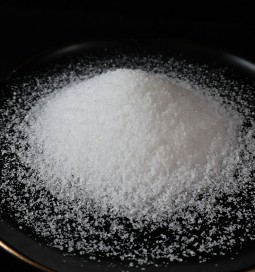
Polyacrylamide (abbreviated as PAM) is a polymeric chemical material widely used across multiple industries including water treatment, petrochemicals, mining, and environmental remediation. Its unique flocculation, sedimentation, dewatering, and reinforcement properties make it one of the most commonly used water treatment chemicals. Despite its extensive applications, many people lack a thorough understanding of its raw materials and production process. This article provides an in-depth analysis of polyacrylamide's raw materials, production processes, performance characteristics, and application fields, helping readers gain a comprehensive understanding of its composition and key functions.
Polyacrylamide is a polymeric compound synthesized through the polymerization of acrylamide monomers, with the chemical formula (C₃H₅NO)_n. Its molecular structure contains numerous amide groups (-CONH₂), which are polar functional groups conferring excellent water solubility and properties such as adsorption, flocculation, and sedimentation. Polyacrylamide can be tailored to meet diverse industrial needs by modifying its molecular structure and charge characteristics. Based on charge properties, polyacrylamide is classified into four types:
- Anionic polyacrylamide (APAM): Primarily used for treating wastewater systems carrying positive charges.
- Cationic polyacrylamide (CPAM): Suitable for treating negatively charged wastewater systems, widely applied in mining, petroleum extraction, and related fields.
- Nonionic polyacrylamide (NPAM): Suitable for use in neutral or near-neutral wastewater environments.
- Amphoteric polyacrylamide: Possesses both cationic and anionic charge characteristics, suitable for specialized wastewater treatment requirements.
The production process of polyacrylamide involves a complex series of chemical reactions utilizing multiple raw materials. The following are the primary raw materials commonly used in polyacrylamide manufacturing:
Acrylamide (C₃H₅NO) serves as the fundamental monomer for polyacrylamide. It is typically produced through the catalytic hydrolysis of acrylonitrile or the enzymatic hydration reaction. The double bond structure within the acrylamide molecule endows it with strong polymerization activity, enabling highly efficient polymerization reactions.
During polymerization, initiators trigger the radical reaction, promoting the polymerization of acrylamide monomers. Commonly used initiators include ammonium persulfate (APS), hydrogen peroxide (H₂O₂), and sodium persulfate (Na₂S₂O₈). The choice of initiator affects the polymerization reaction rate, degree of polymerization, and the properties of the final product.
To adjust the charge characteristics and properties of polyacrylamide, different copolymer monomers or modifying components can be incorporated during production:
- Acrylic acid: Used to prepare anionic polyacrylamide (APAM).
- Dimethyldiallylammonium chloride (DMDAAC): Used to prepare cationic polyacrylamide (CPAM).
- Allylamine: Used to prepare zwitterionic polyacrylamide.
- Organic salt modifiers: Enhance polyacrylamide's water solubility and improve its properties.
Water serves as a crucial solvent in polyacrylamide production. Polymerization typically occurs in aqueous solutions, making water both a solvent and reaction medium.
To ensure smooth polymerization, additives and stabilizers are incorporated, such as pH adjusters, buffers, antioxidants, and chain transfer agents. These modulate reaction conditions, prevent side reactions, and enhance product stability and performance.
Polyacrylamide manufacturing primarily involves the following steps:
Prior to production, acrylamide monomer must be prepared and purified through filtration to remove impurities and residual monomers, ensuring product quality.
Acrylamide monomer is mixed with initiators, copolymerizable monomers, additives, stabilizers, and other chemical reagents in specific proportions. The mixture undergoes polymerization within a reactor. Reaction conditions such as temperature, pH, and initiator concentration influence polymerization rate, degree of polymerization, and final product properties.
The polymerized polyacrylamide typically exists as a gel. Moisture is removed through processes like freeze-drying, hot-air drying, or vacuum drying, followed by grinding into a finished powder with a particle size of 20-100 mesh. The drying process ensures the stability and long-term storage of polyacrylamide.
Polyacrylamide powder is hygroscopic, necessitating moisture-proof measures during packaging and storage to prevent deliquescence or degradation. Additionally, maintaining good ventilation is essential to ensure product quality and stability.
The molecular structure of polyacrylamide directly determines its properties, particularly its effectiveness in water treatment applications. Polyacrylamide consists of long-chain macromolecules formed by linking multiple acrylamide monomers through polymerization reactions, with molecular weights reaching hundreds of thousands or even millions. The following are the primary structural features of polyacrylamide:
The amide group serves as a crucial structural unit within the polyacrylamide molecule. Due to its strong polarity, it significantly enhances water solubility while conferring excellent adsorption capacity and chemical stability to polyacrylamide.
Longer molecular chains in polyacrylamide result in stronger flocculation and bridging capabilities. High-molecular-weight polyacrylamide demonstrates more pronounced effects in water treatment, rapidly forming flocs and promoting the settling of suspended solids in wastewater.
The charge properties of polyacrylamide can be modified by altering the polymer's molecular structure. Based on these charge characteristics, polyacrylamide can adapt to diverse water qualities and wastewater treatment requirements. Adjusting charge properties enhances the application effectiveness of polyacrylamide across various treatment systems.
Polyacrylamide's distinctive properties make it a crucial chemical material in water treatment and wastewater management. Its primary mechanisms include:
Polyacrylamide molecular chains span particles to form large flocs, accelerating particle settling and promoting wastewater clarification.
The molecular chains alter the electrical properties of particles in water, helping neutralize colloidal charges and promoting particle aggregation and settling.
Polyacrylamide effectively accelerates the settling of suspended solids in wastewater, significantly improving water clarity.
In sludge treatment, polyacrylamide increases sludge solids content, optimizes dewatering efficiency, and reduces wastewater discharge.
Polyacrylamide significantly improves solid-liquid separation efficiency, removes solid particles from wastewater, and enhances water quality.
(1) Acrylamide monomer is toxic: Residual monomer must be strictly controlled.
(2) Polymerized product is safe and stable: Generally non-corrosive, non-toxic to humans, equipment, and the environment.
(3) National standard requirement: Residual monomer in drinking water-grade PAM should be ≤ 0.05%.
(1) Wastewater Treatment: Municipal sewage, food processing wastewater, chemical industry effluent, steel smelting wastewater.
(2) Oilfields and Mining: Drilling mud thickening, water injection and water blocking, tailings sedimentation.
(3) Pulp and Paper Industry: Pulp dewatering, strength-enhancing additives, retention aids.
(4) Sugar refining, brewing, and slaughterhouse wastewater treatment
(5) Agriculture and soil water retention: Improving soil structure and enhancing water-holding capacity.
Polyacrylamide is synthesized through the polymerization of acrylamide monomers. During production, initiators, copolymer monomers, water, regulators, and stabilizers are added to form a safe, highly effective, high-molecular-weight water treatment chemical. From molecular structure to application performance, every production step determines product quality and treatment efficacy across industries. As the world's most widely used flocculant today, polyacrylamide will play an increasingly vital role in environmental protection, energy management, green manufacturing, and smart water treatment plants. With technological innovation and standard upgrades, polyacrylamide remains an irreplaceable core material in industrial water treatment.

 E-mail:jcl@jichanglong.com
 WhatsApp:+8618560709619
 Address:Block B, Polymer Materials Industry Innovation Park,No. 51, Lutai Avenue, High-tech Zone, Zibo City, Shandong Province
China vanadium inhibitors manufacturer Shandong Jichanglong Environmental Engineering Co., Ltd.
Jichanglong specializes in vanadium inhibitor , dehumidification and drying block, calcium hypochlorite disinfectant tablets, polyacrylamide and other products. With over 20 years of experience, we offer quality assurance and wholesale prices.