Against the backdrop of increasingly scarce global water resources and rising industrial environmental standards, a material known as polyacrylamide is playing an increasingly vital role across multiple sectors including water treatment, petrochemicals, mining and metallurgy, papermaking, and environmental engineering. Whether in municipal wastewater treatment plants or large-scale industrial production systems, polyacrylamide is regarded as an indispensable functional material. So, what exactly is polyacrylamide? To which category of chemical products does it belong? Why has it found such widespread application across so many industries? This article provides a systematic and in-depth analysis of polyacrylamide.
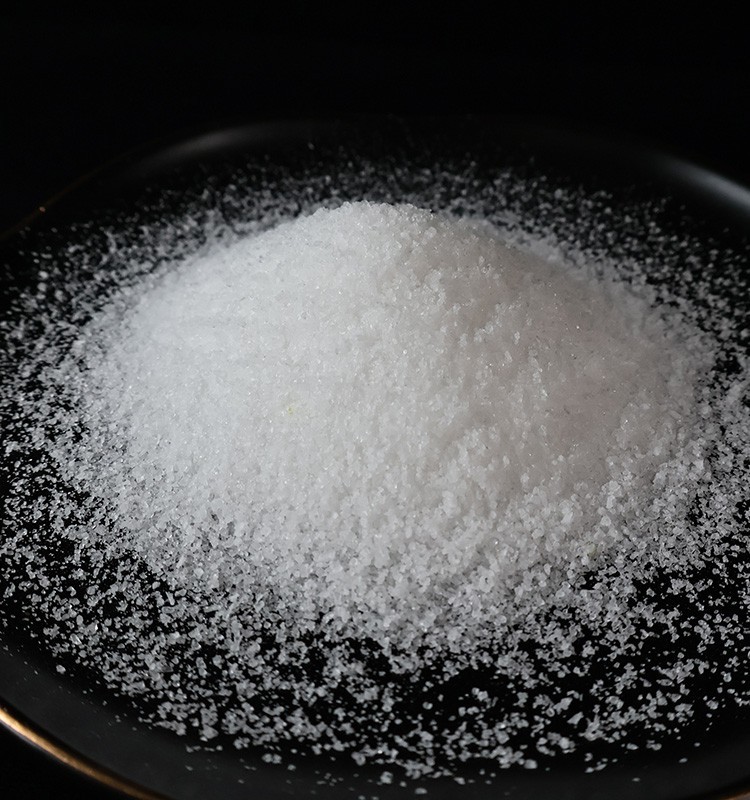
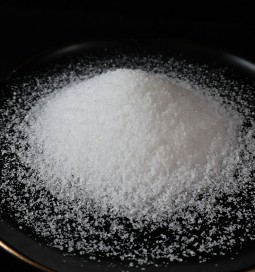
Polyacrylamide, abbreviated as PAM, is a synthetic polymer material produced through the polymerization of acrylamide monomers. From a material classification perspective, polyacrylamide belongs to water-soluble polymers. Its most distinctive feature is excellent solubility in water, forming a solution system with specific viscosity and functional properties. Under standard temperature and pressure conditions, polyacrylamide typically exists as a white or off-white powder, granules, or emulsion. It possesses no noticeable pungent odor and exhibits relatively stable chemical properties. Due to its highly adjustable molecular structure, a series of products with distinct performance characteristics can be obtained through different manufacturing routes and modification methods, thereby meeting diverse application requirements across various industries and operating conditions.
Chemically, polyacrylamide's backbone consists of stable carbon-carbon bonds, while its side chains bear numerous amide groups (—CONH₂). This structure confers exceptional hydrophilicity and adsorption capacity.
In aqueous solutions, polyacrylamide molecules unfurl to form extended chains. When suspended particles, colloids, or organic impurities are present in water, PAM molecules exert their effects through the following mechanisms:
- Adsorption: Active groups on the molecular chains adsorb onto particle surfaces
- Bridging: A single chain can simultaneously connect multiple particles
- Charge neutralization: Certain PAM types neutralize surface charges on particles
Through these combined mechanisms, polyacrylamide effectively promotes the flocculation, sedimentation, and separation of suspended solids.
To adapt to diverse industrial scenarios and water quality conditions, polyacrylamide has evolved into multiple types in practical applications, typically classified based on molecular chain charge properties.
Nonionic polyacrylamide chains carry no significant charge, exhibiting strong adaptability to water quality. It remains stable in neutral or weakly acidic environments and demonstrates relatively good salt tolerance. Common applications include mineral processing, coal washing, textile processing, and certain industrial wastewater treatments.
Anionic polyacrylamide molecules contain negatively charged groups, making them suitable for treating water containing numerous positively charged particles. They are extensively applied in municipal sewage treatment, industrial wastewater, and mine tailings processing, ranking among the most widely used types in the current market.
Cationic polyacrylamide carries positive charges along its molecular chain. It demonstrates excellent treatment efficacy for water bodies with high organic content and complex sludge properties, offering distinct advantages in sludge dewatering, paper mill wastewater treatment, and food processing wastewater treatment.
Amphoteric polyacrylamide contains both positively and negatively charged groups, making it suitable for a broader range of water qualities. It is commonly used in challenging industrial wastewater treatment or specialized process systems.
- High Efficiency: Achieves noticeable results with minimal dosage
- Strong Adaptability: Suitable for diverse water qualities and operational conditions
- Simple Operation: Rapid dissolution facilitates automated dosing
- Cost-Effectiveness: Low overall usage cost
- High Compatibility: Can synergize with various inorganic flocculants
Reduces flocculant dosage: When used as a coagulant aid alongside other flocculants to achieve equivalent water quality, polyacrylamide significantly lowers flocculant consumption. Improves water quality: In water treatment and industrial wastewater applications, polyacrylamide combined with inorganic flocculants markedly enhances water quality. Enhancing Floc Strength and Settling Rate: The flocs formed by polyacrylamide exhibit high strength and excellent settling properties, accelerating solid-liquid separation and facilitating sludge dewatering. Corrosion and Scale Prevention in Circulating Cooling Systems: Using polyacrylamide substantially reduces the need for inorganic flocculants, preventing inorganic deposits on equipment surfaces and slowing corrosion and scaling.
Polyacrylamide is a versatile oilfield chemical treatment agent widely used in drilling, cementing, completion, workover, fracturing, acidizing, water injection, water blocking and profile adjustment, and tertiary oil recovery operations during petroleum extraction. It is particularly prominent in drilling, water blocking and profile adjustment, and tertiary oil recovery applications. Polyacrylamide aqueous solutions exhibit high viscosity and provide effective thickening, flocculation, and rheology modification. They serve as oil displacement agents and drilling mud modifiers in petroleum extraction. During the mid-to-late stages of oil production, China primarily promotes polymer flooding and ternary composite flooding technologies to enhance oil recovery rates. Injecting polyacrylamide aqueous solutions improves the oil-water flow rate ratio, increasing crude oil content in produced fluids. Adding polyacrylamide in tertiary recovery boosts oil displacement capacity, prevents reservoir breakdown, and elevates reservoir recovery efficiency. China's petroleum industry is a major consumer of polyacrylamide. Technological advancements in polyacrylamide have propelled the development of China's petroleum sector, while the industry's demand has accelerated the pace of polyacrylamide innovation and sector growth.
In the pulp and paper sector, polyacrylamide is widely used as a flow aid, filter aid, and uniformity agent to enhance paper quality, improve pulp dewatering performance, increase retention rates of fine fibers and fillers, reduce raw material consumption, and minimize environmental pollution. When employed as a dispersant, it improves paper uniformity. In the papermaking industry, polyacrylamide primarily serves two purposes: first, to increase the retention rate of fillers and pigments, thereby reducing raw material loss and environmental pollution; second, to enhance paper strength. Adding polyacrylamide to pulp increases retention rates of fine fibers and filler particles on the wire, accelerates pulp dewatering, and facilitates water filtration from the pulp through floc formation. This reduces fiber loss in white water, minimizes environmental pollution, and improves the efficiency of filtration and sedimentation equipment.
Food Industry: Used for juice clarification in cane and beet sugar production, and phosphofloating extraction of sugar syrup. In enzyme preparation fermentation liquid flocculation clarification, it is also used for feed protein recovery. It offers stable quality and excellent performance. The recovered protein powder has no adverse effects on chicken survival rates, weight gain, or egg production. Applications extend to synthetic resin coatings, water-stopping grouting materials in civil engineering, the building materials industry for improving cement quality, construction adhesives, joint filling and repair, water-stopping agents, soil improvement, electroplating, and dyeing industries.
Globally, accelerating industrialization and increased environmental investments drive sustained growth in polyacrylamide demand. Particularly in water treatment, environmental engineering, and resource recycling sectors, demand for high-performance, customized polyacrylamide products continues to rise.
Future trends in the polyacrylamide industry include:
(1) Products will evolve toward higher molecular weights and enhanced stability.
(2) Application solutions will become more customized and refined.
(3) Demands for environmental performance and sustainability will intensify.
(4) International market demand will continue to expand.
Overall, polyacrylamide is a high-performance water-soluble polymer synthesized from acrylamide using modern chemical processes. With its outstanding flocculation, adsorption, thickening, and stabilizing properties, polyacrylamide has become an indispensable material in modern industrial systems and environmental protection projects. In the ongoing process of industrial upgrading and green development, the depth and breadth of polyacrylamide applications will continue to expand, further unlocking its material value.

 E-mail:jcl@jichanglong.com
 WhatsApp:+8618560709619
 Address:Block B, Polymer Materials Industry Innovation Park,No. 51, Lutai Avenue, High-tech Zone, Zibo City, Shandong Province
China vanadium inhibitors manufacturer Shandong Jichanglong Environmental Engineering Co., Ltd.
Jichanglong specializes in vanadium inhibitor , dehumidification and drying block, calcium hypochlorite disinfectant tablets, polyacrylamide and other products. With over 20 years of experience, we offer quality assurance and wholesale prices.