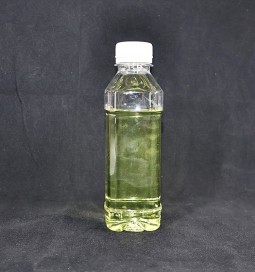
Biocides are chemical products capable of inhibiting, controlling, or killing bacteria, fungi, algae, and other microorganisms. They are widely used in sectors such as water treatment, industrial circulating cooling systems, papermaking, coatings, textiles, petrochemicals, agriculture, and general hygiene management. In industrial production, the proliferation of microorganisms can lead to the formation of biofilms on equipment surfaces, pipeline blockages, water quality deterioration, product spoilage, and equipment corrosion. Consequently, the appropriate use of biocides is essential for maintaining the stable operation of production systems.
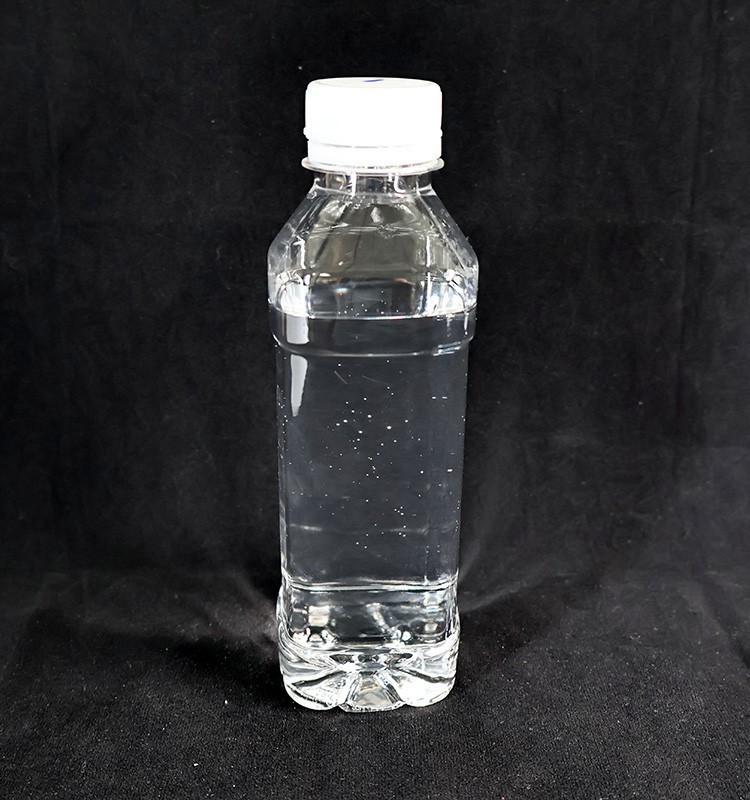
Biocides are products designed to control the growth and reproduction of microorganisms. Depending on their chemical composition and intended application, they can target bacteria, fungi, yeasts, algae, and other microorganisms. In industrial settings, biocides are primarily used to manage microbial contamination. For instance, in circulating cooling water systems, bacteria and algae can grow on the surfaces of pipes, heat exchangers, and cooling basins, forming biofilms that reduce heat-exchange efficiency and complicate equipment cleaning. In the production of coatings and adhesives, microbial contamination can cause unpleasant odors, discoloration, changes in viscosity, or reduced storage stability. In the papermaking industry, microorganisms can form "slime," which negatively impacts paper quality and the operation of production equipment.
(1) Disrupting microbial cell structures: Some biocides target the cell membranes of microorganisms, compromising their integrity and causing the leakage of intracellular contents, which ultimately prevents the microorganisms from surviving.
(2) Interfering with protein and enzyme function: Microorganisms rely on various proteins and enzymes to sustain normal metabolic activities. Certain biocides interact with these intracellular proteins or enzymes, disrupting their normal function and thereby inhibiting microbial growth.
(3) Affecting genetic material and cellular metabolism: Some biocides interfere with the synthesis of genetic material or other critical metabolic processes, preventing microorganisms from reproducing normally.
(4) Inhibiting microbial growth: Not all biocides are designed primarily to rapidly kill microorganisms. Some products control microbial populations by inhibiting cell growth and reproduction, thereby reducing the likelihood of further contamination.
Because the mechanisms of action vary among different biocides, their speed of efficacy, scope of application, and duration of effect also differ. When selecting a product, one should consider the target microorganisms and the specific application environment.
There is no uniform duration of efficacy for biocides. Given the significant differences in chemical properties, usage methods, and application environments, the duration of effect for one product cannot be directly applied to another. In practical application, it is necessary to distinguish between two concepts: first, the contact time required for a biocide to exert its killing or inhibitory effect; and second, the duration for which the agent can maintain an effective concentration or continue to control microorganisms within a system.
The duration of biocidal action refers to the time required—following contact between the biocide and the target microorganisms—to achieve the intended killing or inhibitory effect. Some products can act quite rapidly under optimal conditions, while others may require a longer contact time. The actual time needed depends on the active ingredients, the type of microorganisms, the initial microbial load, the concentration used, and environmental conditions. For instance, certain rapid-acting oxidizing biocides can produce a significant effect on susceptible microorganisms within a short period, whereas some non-oxidizing biocides may require a specific contact time—as dictated by the product’s technical specifications—to achieve the desired outcome.
The duration of sustained control refers to the length of time a biocide can effectively manage microbial populations within a given application environment. In industrial circulating water systems, for example, a biocide may be affected by factors such as water flow, make-up water, blowdown, sunlight, temperature, and the presence of organic matter. Even if a product demonstrates strong biocidal efficacy upon initial application, its control capability within the system may decline as the active ingredients are gradually consumed. In products such as coatings, adhesives, and other industrial materials, the mode of action for preservatives and biocides differs; some are designed to protect formulations during storage, while others are intended to control microorganisms on the surfaces of materials or within the environment where they are used. The duration of effectiveness must be evaluated by considering the product formulation, storage conditions, and actual usage circumstances.
It is important to note that the mere detection of a biocide’s residue in an environment does not guarantee that it retains sufficient biocidal efficacy. Even if an active ingredient remains present within a system, it may fail to achieve the desired effect due to insufficient concentration, binding with other substances, or a lack of sensitivity in the target microorganisms. Therefore, the effectiveness of a biocide cannot be judged solely by whether or not it remains present as a residue. In industrial applications, a more sound approach is to assess whether a biocide remains effective by integrating product technical data, active ingredient analysis, microbial monitoring, and system operational status.
Different types of biocides possess varying degrees of chemical stability and distinct mechanisms of action. They are generally categorized into oxidizing and non-oxidizing biocides. Oxidizing biocides primarily disrupt the essential structures and metabolic functions of microorganisms through oxidation; common examples include chlorine-based agents, chlorine dioxide, ozone, and peroxide-based products. Non-oxidizing biocides, by contrast, exert their effects through other chemical mechanisms—such as compromising cell membranes, interfering with protein function, or inhibiting critical metabolic processes. Examples include isothiazolinones, quaternary ammonium compounds, glutaraldehyde, and other specialized biocides. Because these products differ in their chemical stability and the ways in which they are consumed, their duration of activity varies accordingly.
The concentration at which a biocide is applied influences its ability to control microorganisms. An insufficient concentration may fail to achieve the intended results; conversely, an excessively high concentration does not necessarily extend the duration of effectiveness and may instead increase risks related to material corrosion, product incompatibility, or environmental discharge. Consequently, the actual application concentration should be determined based on product manuals, technical data sheets, and specific operational conditions—simply increasing the dosage is not a reliable method for extending the duration of effectiveness.
In water treatment systems, water quality is a critical factor affecting the efficacy of a biocide. Organic matter, suspended particles, reducing agents, and other chemical constituents present in water can react with biocides, thereby consuming their active ingredients or altering their distribution. For instance, certain oxidizing biocides readily react with reducing agents and organic pollutants in the water. If a system has a high contamination load, a significant portion of the biocide may be consumed before it ever reaches the target microorganisms. Consequently, in industrial water treatment, it is essential not only to select an appropriate biocide but also to focus on water quality management, filtration, and system cleaning.
Temperature influences both the reproduction rate of microorganisms and the chemical stability of certain biocides. Within a temperature range conducive to microbial growth, the microbial population can increase rapidly if the system is not effectively controlled. Conversely, higher temperatures may accelerate the decomposition or consumption of certain active ingredients. Therefore, the effective duration of a biocide in a high-temperature industrial system may differ significantly from that in an ambient-temperature environment.
The pH level of the water or product system affects the chemical form and activity of many biocides. For example, the composition of active ingredients and the biocidal efficacy of chlorine-based agents can vary depending on the pH. Other types of biocides also have specific optimal pH ranges. If the system's pH falls outside the range recommended for a given product, the desired results may not be achieved, even if the correct agent is used. Thus, it is crucial to verify that a biocide is compatible with the system's pH conditions before application.
Different microorganisms exhibit varying degrees of sensitivity to biocides. Due to differences in cell structure and physiological characteristics among bacteria, fungi, yeasts, and algae, a single biocide may not be equally effective against all of them. Furthermore, the initial level of contamination influences the actual control outcome. When microbial populations are high or thick biofilms have formed within a system, it becomes difficult for a biocide to make sufficient contact with the microorganisms located deep within. Therefore, in industrial systems with severe microbial contamination, simply increasing the dosage of a biocide may not be an effective solution; it is also necessary to implement system cleaning and control the sources of contamination. (7) Light Exposure and Environmental Conditions
Some biocides are sensitive to light and may undergo photodegradation when exposed to sunlight, leading to a reduction in their active ingredients. This is a particular concern for open-air pools, outdoor water storage facilities, and agricultural applications. Furthermore, factors such as airflow, evaporation, adsorption by materials, and storage conditions can also affect the stability of biocides.
Recirculating cooling water systems represent a major application area for biocides. Due to the continuous circulation of water, these systems are prone to the accumulation of bacteria, algae, and other microorganisms. Microorganisms can form biofilms on surfaces such as piping, cooling tower packing, heat exchangers, and basin walls, which can impede water flow and impair heat transfer efficiency. In this context, the duration of a biocide’s effectiveness is influenced by factors including make-up water volume, blowdown rates, water temperature, pH levels, organic matter content, and the operational status of the system. Consequently, facilities typically need to establish water quality and microbial monitoring protocols, developing chemical management strategies tailored to specific operational conditions rather than relying solely on fixed dosing schedules.
In water-based coatings and other aqueous industrial formulations, microbial contamination can lead to issues such as unpleasant odors, changes in viscosity, color abnormalities, and reduced storage stability. Preservative biocides are commonly used to maintain product quality during storage and use. The duration of their effectiveness depends on factors such as the formulation composition, packaging integrity, storage temperature, the hygienic condition of raw materials, and the level of microbial contamination. Since different coating formulations have varying requirements for biocide compatibility, it is essential to determine the appropriate product through formulation testing and stability evaluations.
During the papermaking process, microbial contamination can occur within water circulation systems, pulp slurries, and on the surfaces of production equipment. Bacteria and fungi can form "slime," which interferes with the operation of production machinery and negatively impacts paper quality. In the paper industry, the duration of a biocide’s effectiveness is influenced by factors such as pulp composition, the quality of recirculating water, temperature, production speed, and the microbial load. Facilities must evaluate the effectiveness of their microbial control measures on a regular basis, taking into account the specific characteristics of their production systems.
During the extraction, transport, and storage of oil and gas, aqueous environments can become breeding grounds for microorganisms. Certain microbial activities are also linked to equipment corrosion, sediment formation, and pipeline contamination. Biocides can be used to control these microorganisms; however, their actual efficacy is influenced by factors such as the composition of the aqueous phase, the oil-to-water ratio, temperature, pressure, mineral content, and the flow dynamics of the system. Biocides intended for use in the oil and gas sector typically require professional suitability assessments, which must account for equipment materials, process safety, and environmental requirements.
Agricultural fungicides (and bactericides) are primarily used to control plant-pathogenic fungi, bacteria, or other disease-causing microorganisms. Depending on the product, the mode of action may be protective, curative, or based on other specialized control mechanisms. The duration of efficacy is influenced by factors such as rainfall, irrigation, sunlight exposure, temperature, the growth stage of the plants, the specific type of pathogen, and the product formulation. For instance, rainfall can affect the residual levels of foliar-applied agents on plant surfaces, while newly developed leaves may remain unprotected by previously applied treatments. Agricultural biocides must be used strictly in accordance with the instructions on their registered labels—including specified crops, permitted scope of use, dosage, application intervals, and safety requirements—and cannot be used in the same manner as industrial biocides.
(1) Monitor the concentration of active ingredients or other relevant indicators. For products that can be analyzed, the concentration of the active ingredient should be measured using appropriate analytical methods to verify whether it remains within the range specified for the product.
(2) Conduct regular microbial monitoring. By testing for microbial counts in water, on product surfaces, or on equipment, one can assess the current level of microbial contamination and the effectiveness of the biocide in controlling it.
(3) Observe the operational status of the system. Phenomena such as turbidity in circulating water systems, the emergence of unpleasant odors, an increase in slime/biofilm, or a decline in heat-exchange efficiency may indicate microbial contamination or other water quality issues. However, these signs alone do not definitively prove that a biocide has lost its efficacy; such conclusions should be supported by water quality analysis and microbial testing.
(4) Pay attention to the storage condition of the product. For packaged biocides, if any abnormalities such as discoloration, phase separation, sedimentation, damaged packaging, or expiration beyond the stated shelf life are observed, the product’s instructions and the supplier’s recommendations should be consulted to determine whether it remains suitable for use.
It is important to note that relying solely on visual inspection—such as observing the color, odor, or appearance of a biocide—is generally insufficient to accurately assess the concentration of its active ingredients or its biocidal efficacy. For industrial applications, laboratory testing and on-site monitoring provide more reliable assessments.
There is no universal standard for the duration of a biocide’s effectiveness. Different types of biocides vary in their mechanisms of action, chemical stability, and scope of application. Furthermore, their actual performance is influenced by factors such as dosage concentration, temperature, pH levels, water quality, the specific types of microorganisms present, and the operating conditions of the system. In practice, it is essential to distinguish between the time required for a biocide to take effect (the onset time) and the duration for which it maintains effective control. The presence of residual biocide does not necessarily guarantee that it remains sufficiently effective against microorganisms.
To achieve consistent microbial control, industrial facilities should implement a comprehensive management strategy encompassing product selection, the control of contamination sources, water quality management, standardized application procedures, and regular monitoring. Simply increasing the dosage or extending the dosing interval is not an effective solution. As industries such as industrial water treatment, coatings manufacturing, and petrochemicals place increasingly stringent demands on product quality and production stability, the application of biocides is evolving toward greater specialization and precision. By selecting the appropriate biocide and establishing a scientifically sound application and monitoring program tailored to specific operational processes, companies can maximize product performance and mitigate the impact of microbial contamination on their production operations.

 E-mail:jcl@jichanglong.com
 WhatsApp:+8618560709619
 Address:Block B, Polymer Materials Industry Innovation Park,No. 51, Lutai Avenue, High-tech Zone, Zibo City, Shandong Province
China vanadium inhibitors manufacturer Shandong Jichanglong Environmental Engineering Co., Ltd.
Jichanglong specializes in vanadium inhibitor , dehumidification and drying block, calcium hypochlorite disinfectant tablets, polyacrylamide and other products. With over 20 years of experience, we offer quality assurance and wholesale prices.